
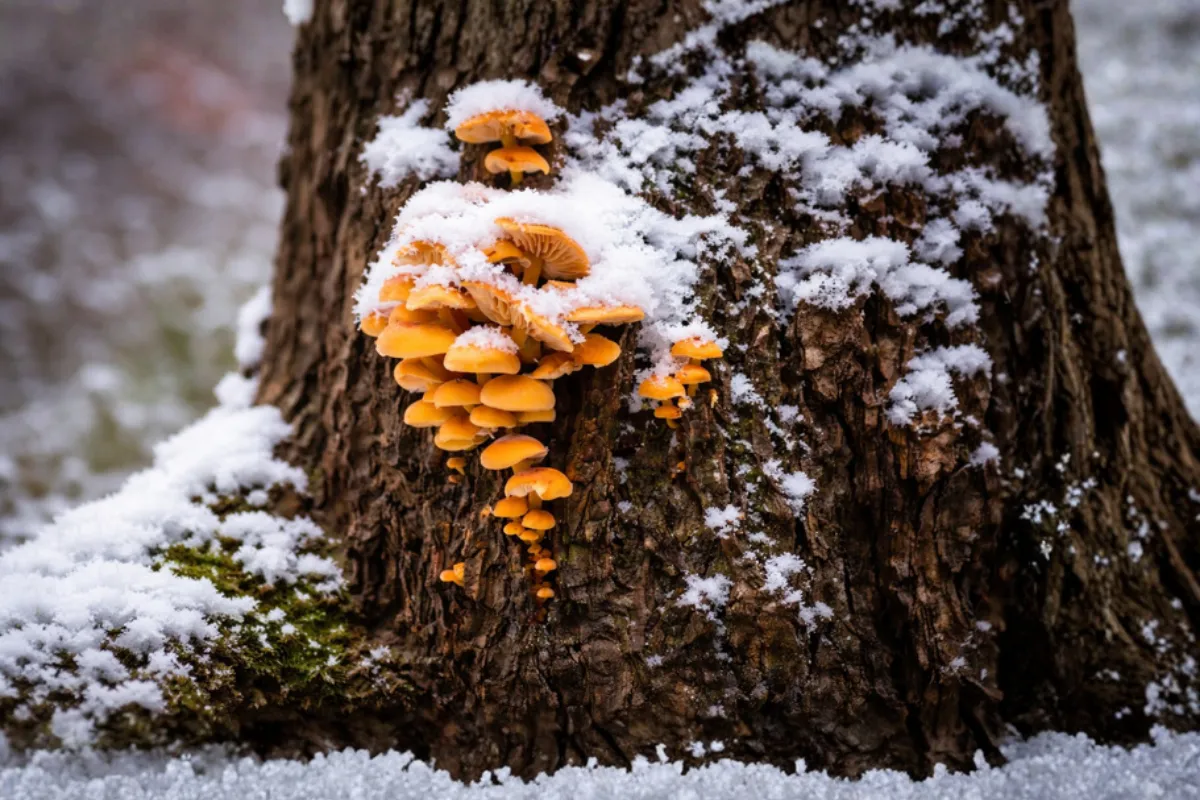
Velvet Shank Warms Winter Hearts: Velvet Shank, Flammulina velutipes
Velvet Shank Warms Winter Hearts: Multipurpose Mushroom of the Week
By: Benjamin Ashpole
When winter's chill drives many fungi underground, bright orange clusters emerge on tree stumps across North America from the Velvet Shank mushroom, scientifically known as Flammulina velutipes. While grocery stores sell its darkroom-cultivated cousin as white, threadlike “Enoki” mushrooms, the wild version sports rusty orange caps and a distinctive velvety stem that gives this winter wanderer its name.

Prized in Asian cultures for over 1,200 years, this mushroom has earned its reputation through scientifically documented health properties. Research suggests that compounds in Velvet Shank may support immune function by stimulating certain immune cells and increasing antibody production in laboratory and animal studies. The mushroom's polysaccharides activate immune cells and demonstrate anti-tumor properties in laboratory settings, with one extracted protein called FVE showing cancer-fighting activity against liver cancer cells in animal models. Animal studies further show it reduces cholesterol, blood pressure, and triglycerides while enhancing antioxidant defenses.
Beyond immune support, Velvet Shank may protect brain function. Studies found that extracts enhance nerve cell growth and help restore memory in animal models of cognitive impairment. The mushroom contains ergothioneine, a rare antioxidant that accumulates in the brain and may defend against age-related decline. Nutritionally, these mushrooms deliver significant B vitamins like niacin, thiamine, and pantothenic acid, plus fiber, potassium, copper, and selenium, all for just 37 calories per 100 grams with virtually no fat.
Velvet Shank has a strong safety record in culinary use. The compounds studied (polysaccharides, ergothioneine, and various proteins) are present in edible mushrooms generally and pose no known toxicity risk when consumed as food. However, people taking immunosuppressant medications or those with certain immune conditions should consult healthcare providers before significantly increasing mushroom consumption, as compounds that enhance immune function might interact with their treatment.
Growing Velvet Shank at home is straightforward. Indoors, it thrives on sterilized hardwood sawdust blocks supplemented with wheat bran, colonizing in two to three weeks at room temperature before fruiting at 45-55°F. Outdoors, inoculated logs produce flushes after 12-18 months.
Join The Mushroom Journey
Peak foraging season runs November through March, but remember, this article isn't a guide to identifying mushrooms and isn't medical advice. Always purchase mushrooms from reputable sources and cook them thoroughly. Never eat foraged mushrooms without expert human identification, as deadly lookalikes exist. Ben Ashpole is a certified forager and runs a mushroom education channel. To discover hundreds of native gourmet, functional, and practical mushrooms, join his free newsletter at NourishCap.com.


