Friendly Foragers
Learn Indiana's natural mushrooms and plants!
Before joining us, please read the rest of this page, and then complete the waiver form. We will add you to our email list after you sign the waiver. Confirm hike dates and times every time before showing up. We look forward to meeting you!
When
5:30 pm Eastern on Thursdays without snow or severe weather. Otherwise, we will sometimes meet in a conference room in person to talk about mushroom presentations and cooking; sign the waiver (below) to receive our notifications!
Our hikes typically last around 1 to 2 hours, during which participants collect and identify (but do not consume raw or without identity confirmation!) the mushrooms and berries they find. Light precipitation won't stop us.
Where
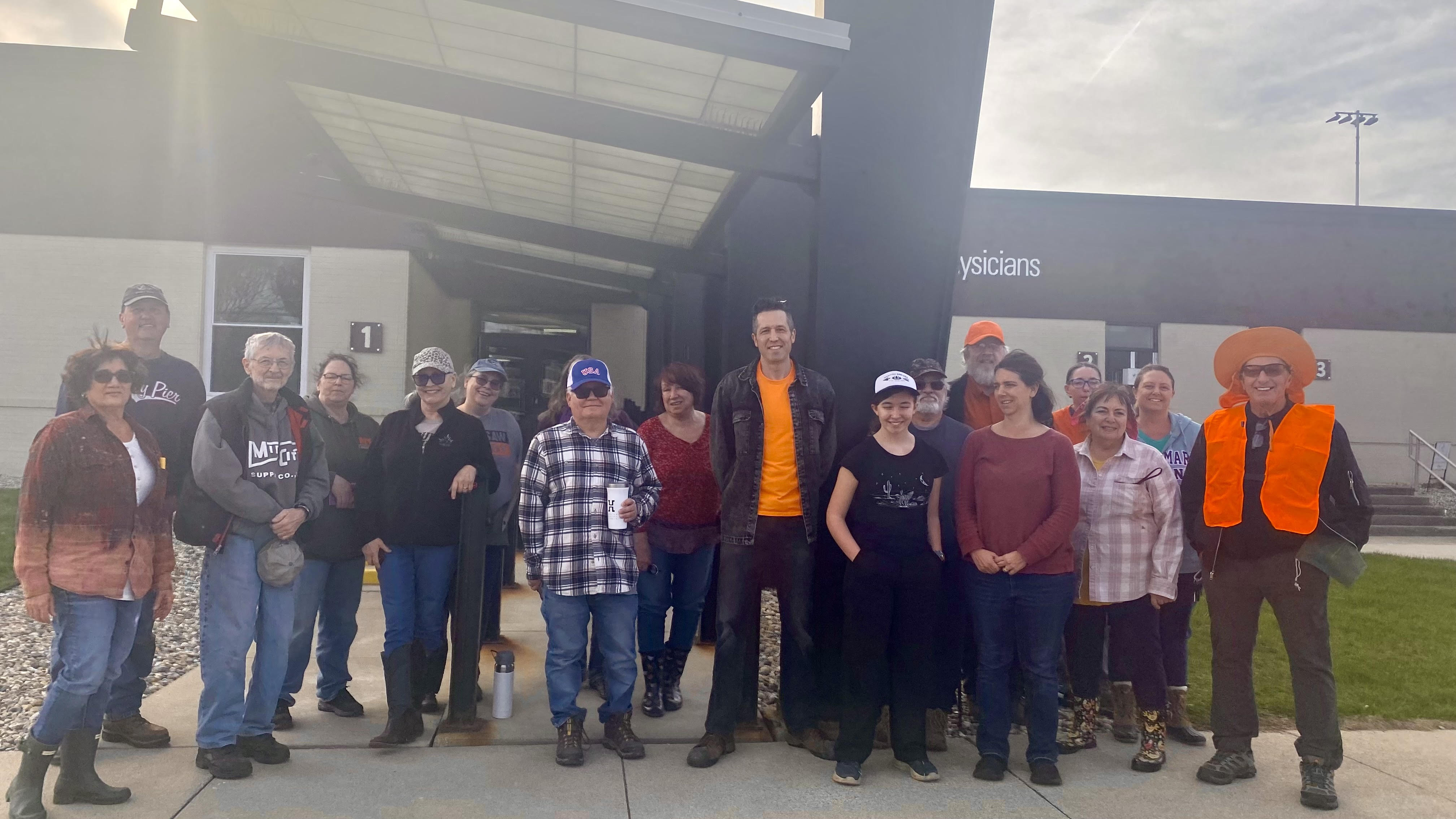
Meet at the North Webster Community Center, outside by the awning at 301 N Main St, North Webster, IN 46555.
We'll then caravan (or carpool if some wish) to the nearby 3,569 acre Tri-County Fish & Wildlife Area where foraging berries, fruits, nuts, fallen cones, mushrooms, leaves, and greens is expressly permitted.
What
Join an experienced mushroom identification expert. Stay within visual range of the group leader at all times as we walk to new places.
Objective: Explore and identify
Focus: Native, edible species, foraged responsibly
Safety: Stick with the group, and don't eat what you don't know! Follow our guidelines.
Would help us get the word out by posting pictures of what you find to our social media pages, please?! facebook.com/NourishCap and instagram.com/nourish.cap
Ben will typically bring his camera and video equipment to gather footage related to mushrooms for the NourishCap YouTube channel.
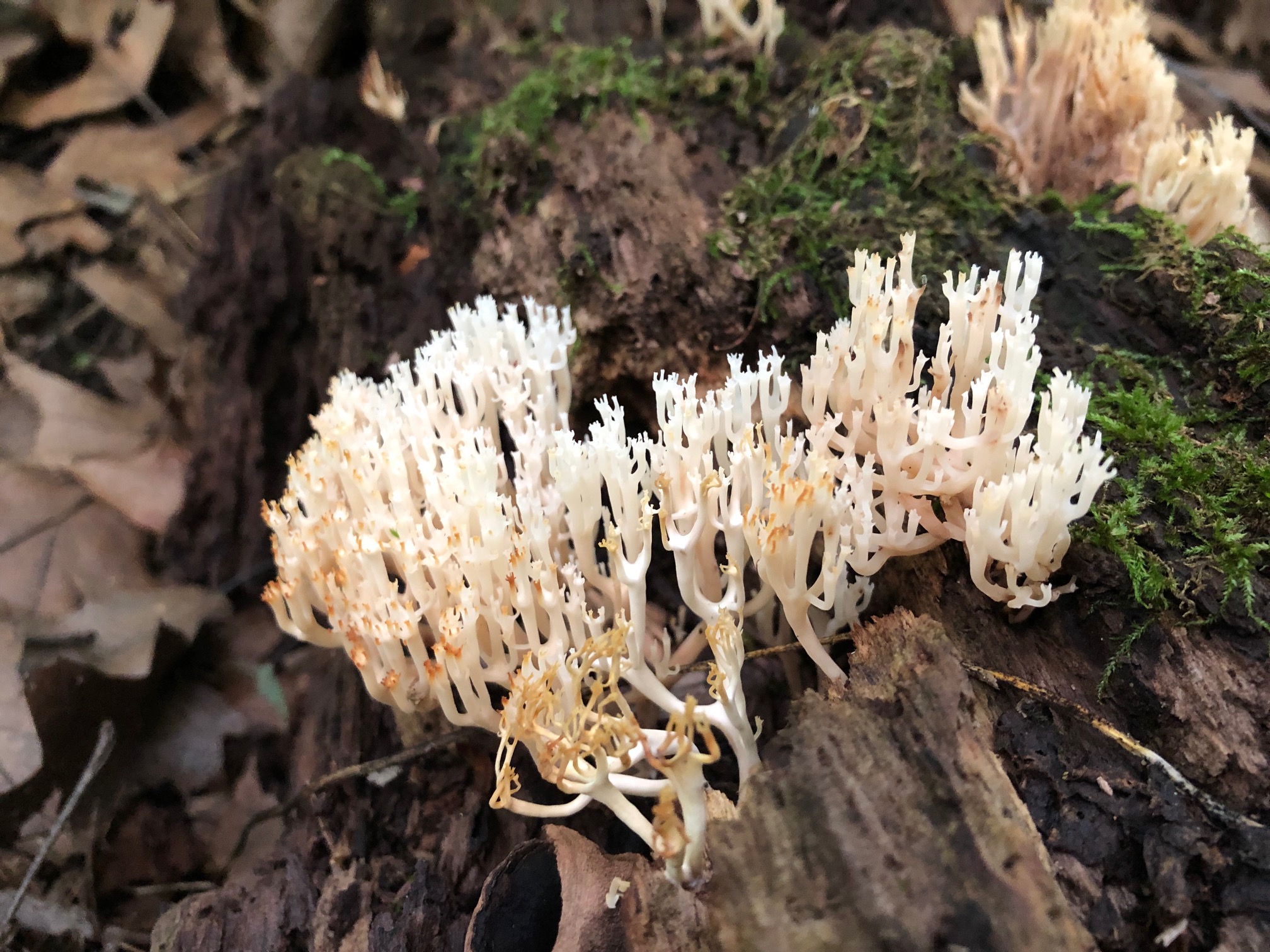
Crown-tipped Coral in Tri-County
Who
From having zero knowledge about the wilds of Indiana to experienced foragers, all are welcome to join us.
Keep in mind that we’ll be walking through uneven and sometimes difficult terrain, often off-trail. If you have young children or any medical conditions, consider whether such activity is suitable for you.
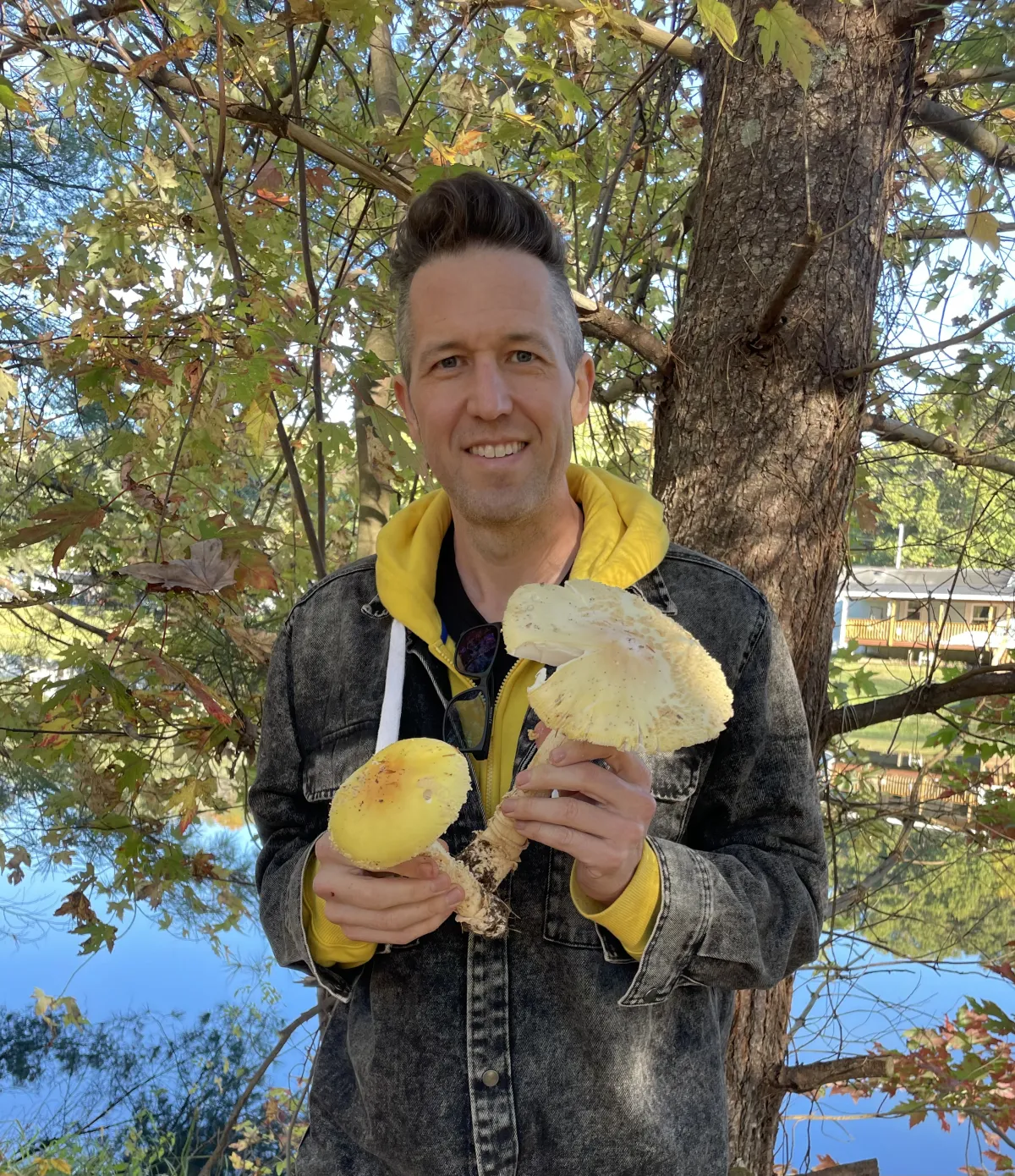
Friendly Foragers is organized by Ben Ashpole, a lifelong forager with certifications covering 15 mushroom species, practical experience identifying many more, and knowledge of a growing number (pun intended!) of plants.
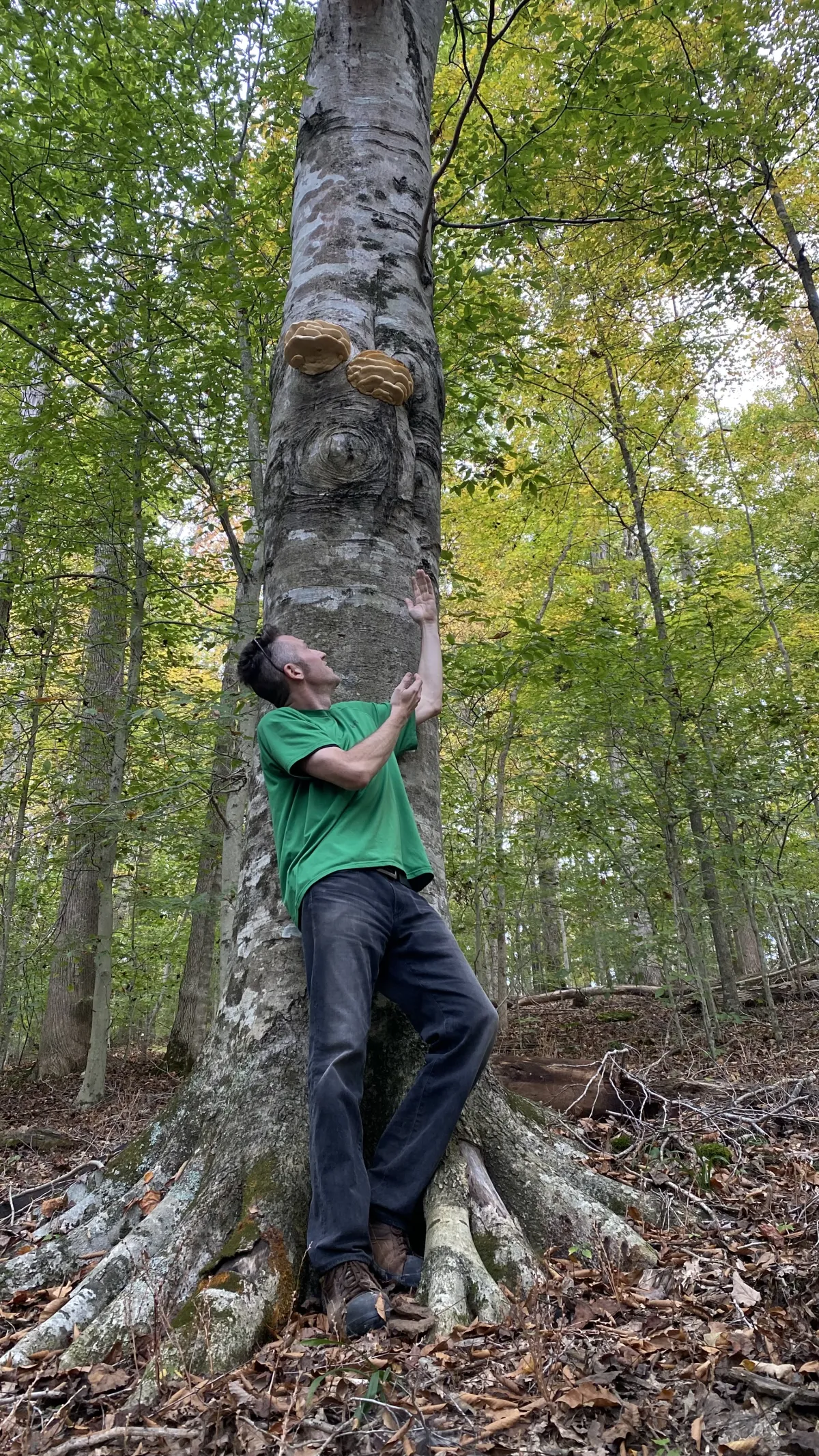
Ben and a Chicken of the Woods
Why
Fun, food, fresh air, helping each other learn, and making friends!
Price
Free!
There are no dues or fees, at least for now. That said, Ben is trying to make a living from providing mushroom education to the public. So, if it is within your means, he would be grateful if you would buy mushrooms and mushroom-related products from the NourishCap Market, such as the calendar of mushrooms we're likely to find, where a portion of every purchase supports Ben and his team's goal to focus on mushroom education. Ben also plans to offer mushroom education courses and is happy to accept tips.
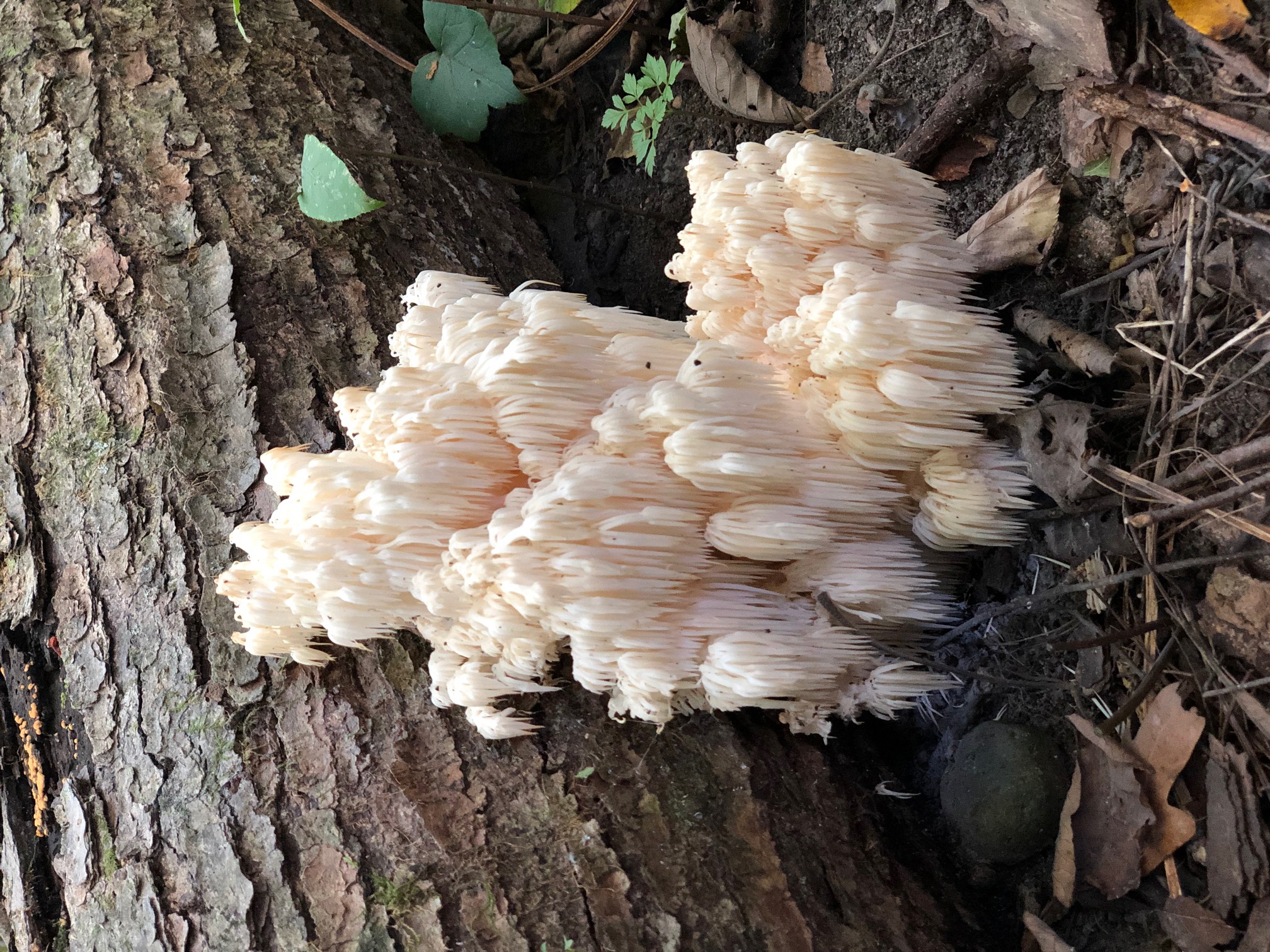
Bear's Head in Tri-County
Wear
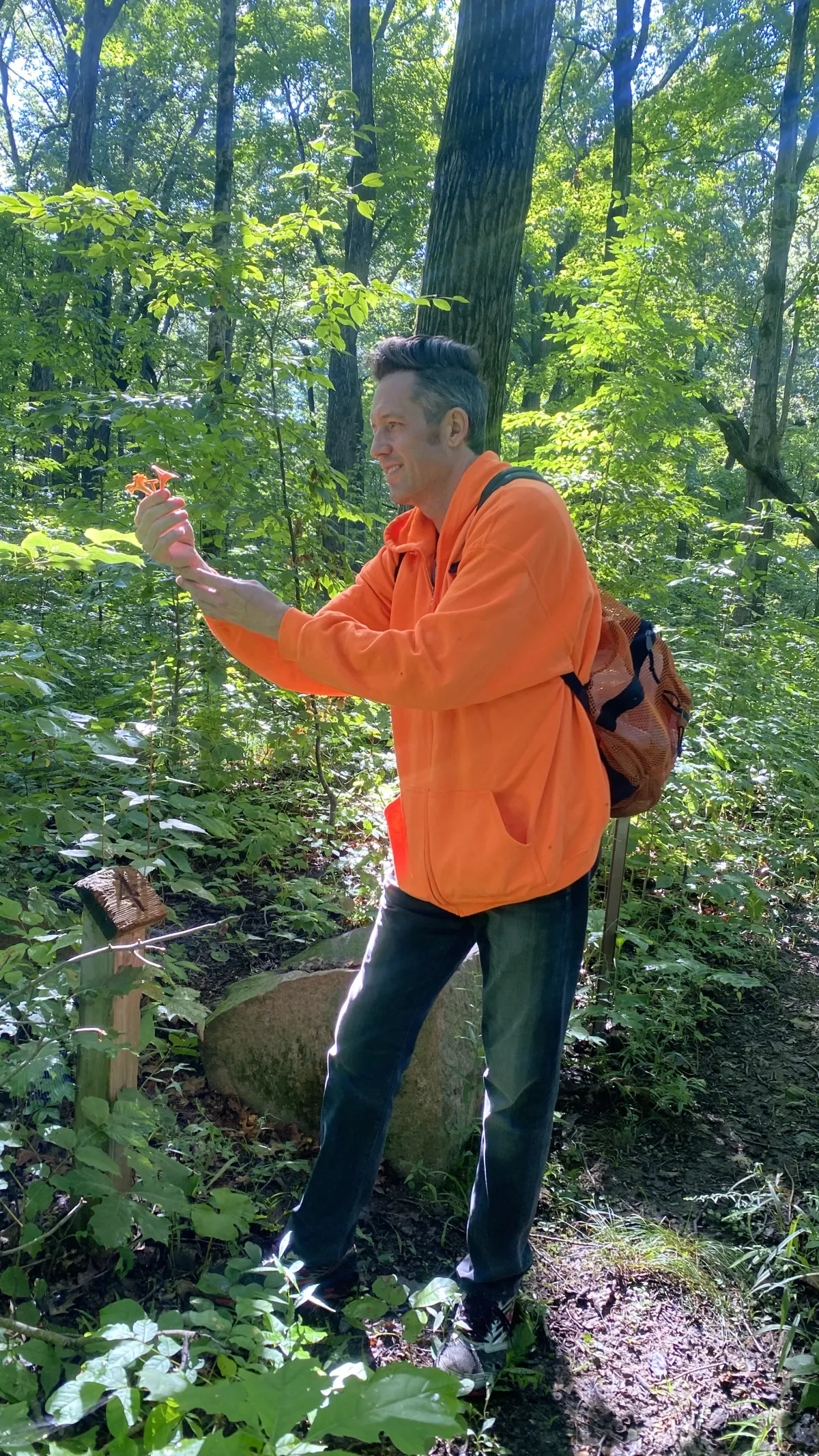
At least one bright “hunter orange” item, such as a hat, shirt, coat, or backpack (we recommend dressing in light layers)
Shoes that can handle mud
Long pants (jeans are ideal) and sleeves:
Be prepared for thorns and nettles but also to shed layers when you get warm
Bring (definitely)
Digital camera for taking photos of your finds; cell phones work well
Non-alcoholic beverage of your choice
A bag for holding waste you make or find (like beverage containers)
It's good luck to help clean up the woods as we go!
Bring (optionally)
A sturdy, breathable basket or a mesh bag for what you gather
Several small paper bags to keep different types of mushrooms separated
A marker or pen to label the bags
A small knife for cutting mushrooms (because it improves cleanliness to leave dirt and bark behind)
Mushroom and plant field guides such as from the Audubon Society
A notebook, iNaturalist app, or offline-capable mobile spreadsheet (like Google Sheets) to track what you’ve found
Tick gaitors (or long socks)
Whistle (for safety in case you stray from the group)
Compass and printed map of the area (or download an offline version for mobile) from https://www.in.gov/dnr/fish-and-wildlife/files/tri.pdf or explore Tri-County via Google Maps
Snacks
Tissues or toilet paper (there are vault toilets at the shooting range and restrooms at the office, but neither are nearby)
Waterproof clothing or pocket-poncho
First Aid Kit
Bug spray and antihistamine lotion
Regular and black-light flashlights
Hand lens or magnifying glass (for close-up identification)
Reading and distance glasses
Binoculars
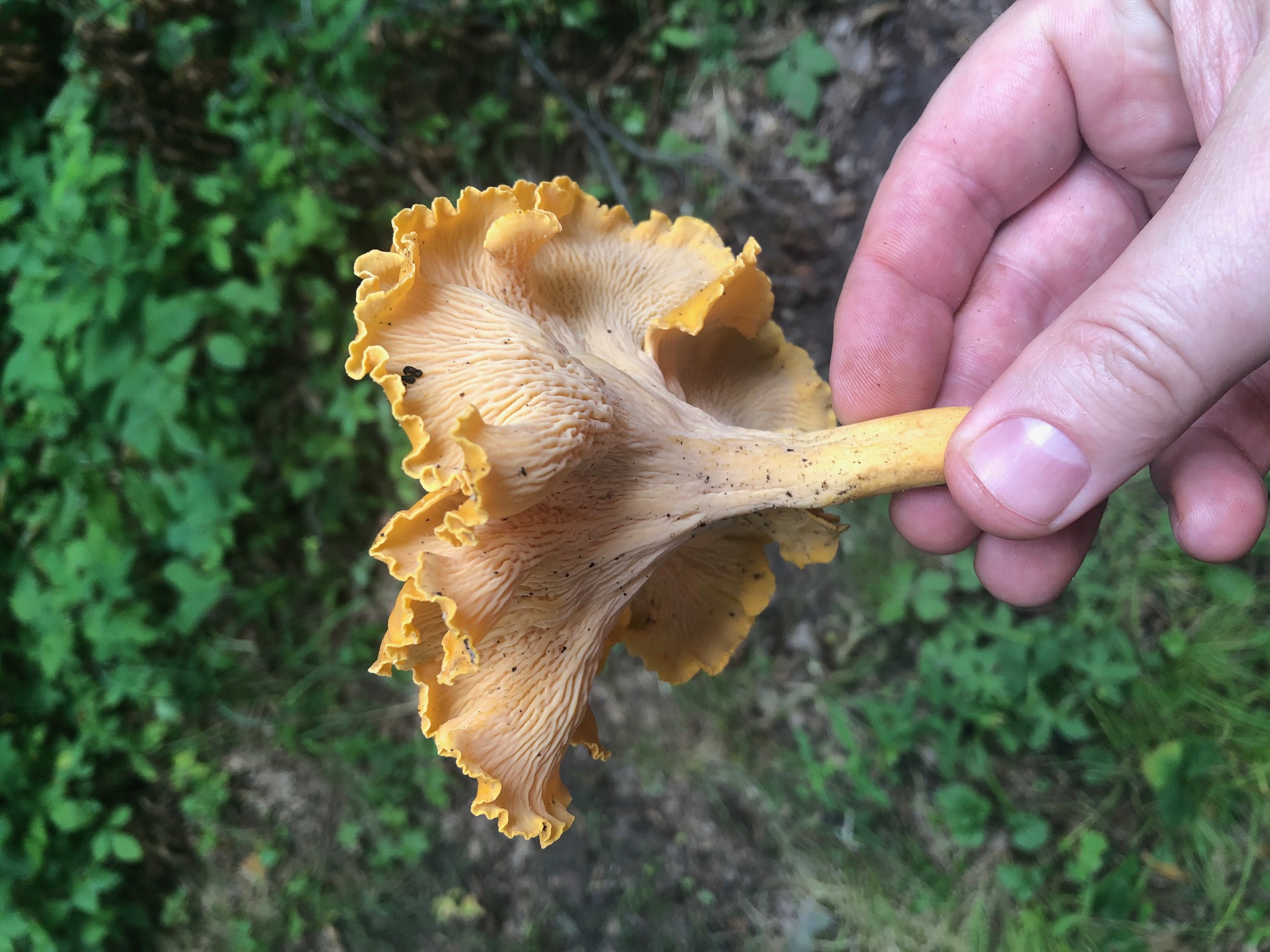
Chanterelle in Tri-County
Emergencies
In case of an allergic reaction or accidental ingestion of a toxin, seek medical help immediately by calling 911.
Most of Tri-County gets cell phone reception for the major cell services, but stay close to the group just in case!
Have emergency personal contacts ready and know the nearest hospital's location.
Read the safety information, below.
Before Joining Us, Please Sign this!
NourishCap Friendly Foragers Accident Waiver & Release Liability Form
This form must be completed by individuals participating in foray, coaching, and other interactions with Benjamin Ashpole (“Benjamin Ash” or “Ben”) and his companies, such as NourishCap, a division of Bashpole Software, Inc. Please read the form below carefully, fill in the fields at the end, and sign to signify your acceptance of the terms. If you have any questions, contact [email protected].
Thank you!
ACCIDENT WAIVER AND RELEASE OF LIABILITY
I, the Participant, acknowledge that this Accident Waiver and Release of Liability Form will be used by the guides, coaches, event holders, sponsors, supporting teams, and organizers of the activity or event in which I may participate, and that it will govern my actions and responsibilities at said activity or event.
In consideration of my application and permitting me to participate in this event, I hereby take action for myself, my executors, administrators, heirs, next of kin, successors, and assigns as follows:
(A) I WAIVE, RELEASE, AND DISCHARGE from any and all liability, including but not limited to, liability arising from the negligence or fault of the entities or persons released, for my death, disability, personal injury, property damage, property theft, or actions of any kind which may hereafter occur to me including my traveling to and from this event, THE FOLLOWING ENTITIES AND PERSONS: Benjamin Ashpole (aka “Benjamin Ash” or “Benjamin”) and his companies, such as NourishCap and PromoterMotor, divisions of Bashpole Software, Inc.
I certify that I am physically fit, have sufficiently prepared or trained for participation in the activity or event, and have not been advised to not participate by a qualified medical professional. I certify that there are no health-related reasons or problems which preclude my participation in this activity or event. I certify that I have studied and understood the laws and local rules pertinent to my involvement and will comply with them. For safety, I will wear or carry at least one bright orange item and appropriate attire for rugged terrain and weather. Safety is my responsibility and priority.
(B) I INDEMNIFY, HOLD HARMLESS, AND PROMISE NOT TO SUE the entities or persons mentioned in this paragraph from any and all liabilities or claims made as a result of participation in this activity or event, whether caused by the negligence of release or otherwise.
I acknowledge that this activity or event may involve a test of my physical and mental limits and may carry with it the potential for death, serious injury, and property loss. The risks may include, but are not limited to, those caused by terrain, facilities, temperature, weather, condition of participants, equipment, vehicular traffic, allergies, natural spaces with all they contain, my actions, actions of other people including, but not limited to, participants, volunteers, spectators, organizers, leaders, third-parties who may be encountered, and lack of hydration. I know that some people will have adverse reactions to eating, touching, or smelling plants, fungi, etc., that other people do not, and I accept all risks from anything I choose to eat, smell, or touch.
I CERTIFY THAT I HAVE READ THIS DOCUMENT, AND I FULLY UNDERSTAND ITS CONTENT. I AM AWARE THAT THIS IS A RELEASE OF LIABILITY AND A CONTRACT AND I SIGN IT OF MY OWN FREE WILL.
I hereby consent to receive medical treatment which may be deemed advisable in the event of injury, accident, and/or illness during this activity or event.
I understand that at this event or related activities, I may be photographed and recorded. I agree to allow my photo, video, or film likeness to be used for any legitimate purpose by the event holders, producers, sponsors, organizers, and assigns.
The accident waiver and release of liability shall be construed broadly to provide a release and waiver to the maximum extent permissible under applicable law.
I HEREBY ASSUME ALL OF THE RISKS OF PARTICIPATING AND/OR VOLUNTEERING IN ALL FORAY, COACHING, And CONSULTING RELATED FIELD TRIPS, TRAVEL, PARTICIPATION, EDUCATION, ORGANIZATIONAL ACTIVITIES, PERSONAL ACTIVITIES OUTSIDE OF THE PLANNED TIME, OR ALL OTHER RELATED EVENTS, including by way of example and not limitation, any risks that may arise from negligence or carelessness on the part of the persons or entities being released, from dangerous or defective equipment or property owned, maintained, or controlled by them, or because of their possible liability without fault.
If Participant is a minor, this form must be executed by a parent or legal guardian.
Safety Is Our #1 Priority
Stick Together: Always stay within sight of the group leader. The forest can be disorienting, and it's easy to lose your way. The trails are primitive at best, plus we go off-trail.
Look, Don't Eat: Never eat anything (mushroom or otherwise!) unless an expert identifies it for you every time. Many toxic species look similar to edible ones, so double check it even if someone recently confirmed an identification of something similar.
No Consumption Without Verification: Even if you're confident, do not consume any mushrooms without a final check by the group leader. They will inspect all finds before anyone eats or handles them for culinary purposes. Consume at your own risk.
Common sense: Don’t eat things you don’t know, whether that’s a mushroom or anything else! Thousands of mushrooms and plants call Indiana home. No one person can identify all of them, and some are new to science. Foragers learn gradually and carefully.
Know the Risks of Misidentification: Mistaking a toxic species for an edible one can have serious consequences. Some toxic species cause mild discomfort, but others can lead to liver failure or death. Carefully follow the identification process.
Always Cook: Never eat foraged mushrooms raw, nor certain plants.
Carry Appropriate Tools: Use baskets, mesh, or paper bags to carry your finds. This allows spores to spread and promotes responsible foraging. Avoid plastic bags, which can accelerate decomposition, mold, and bacteria.
Wear Protective Gear: Dress for the terrain. Wear long sleeves and pants to protect against ticks, poison ivy, and scratches. Sturdy footwear is a must for uneven ground. Consider using bug repellent.
Be Aware of Your Surroundings: The woods are full of surprises—watch for uneven terrain, fallen logs, and low-hanging branches. Move slowly and mindfully to avoid injury.
Use GPS: Use your mobile phone’s compass app to find GPS coordinates to give to emergency workers if you need to call for rescue. Save the GPS coordinates of your car or point you want to return to, even if you start from somewhere that does not have cell phone reception. You can always see your GPS coordinates, even when you do have Internet access to run the maps app (which is not the same as the compass app).
Remain Calm: Public wild lands in Indiana range from hundreds to thousands of acres of space, but walking in a roughly straight line in any direction for usually less than 3 miles usually leads out, hits a road or trail, or intersects some aspect of civilization. Trails can be much longer when they wind or curve. Check the rules of each location for whether off-trail hiking is allowed (such as in Tri-county, where off-trail is allowed).
Respect Nature:
Don't Over-Harvest: Leave some mushrooms behind to allow for regrowth. Take only what you need.
Dispose of Waste Properly: Carry out anything you bring in. This includes any tools, bags, or packaging.
Proactively pick up and remove trash left by others.
Follow Indiana DNR rules: For Tri-County Fish and Wildlife Area, see https://www.in.gov/dnr/fish-and-wildlife/properties/tri-county-fwa/ (there is no sign in or day permit required for foraging in Tri-County, and foraging should be limited to afternoons only).
Regarding Poisonous Plants and Mushrooms
Mushrooms v. Plants: No mushroom is so poisonous as to be dangerous to bare, healthy skin. However, this is not true of plants! Many plants sting, scratch, or cause rashes upon contact, so be careful.
Allergic Reactions: Some people may be allergic to consuming mushrooms or plants even if they're generally considered edible. Always start with cooking small amounts, one species a day maximum when trying a new species, and wait to see how your body reacts.
Poisonous Lookalikes: Many edible mushrooms and plants have inedible cousins. There are no simple rules for whether "all with this or that" are poisonous or not; proper identification considers many factors together. Misidentification can be deadly. When in doubt, leave it out.
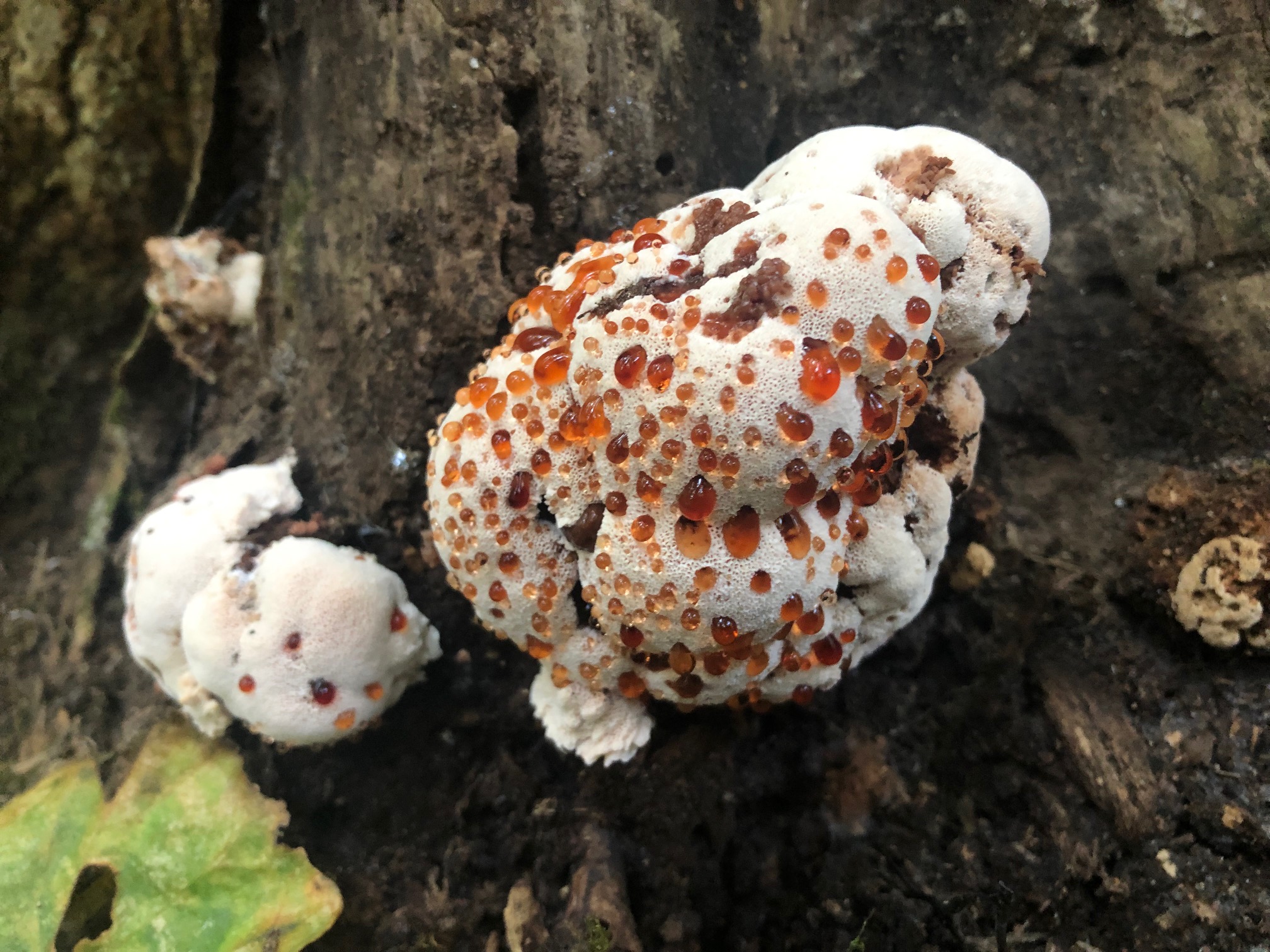
This one was NOT poisonous, but some of the plants around it were!
Resources
Services
Find Out First, Here
See how we educate and entertain the public as a community of high quality members who are committed to integrity:
Copyright © 2026 NourishCap. All rights reserved.
Bashpole Software, Inc. does business as NourishCap.com and PromoterMotor.com, and we co-market with The Center for Mushroom Understanding, Science, and Health (CMUSH).
NourishCap produces Educational, Documentary, Scientific, and Artistic (EDSA) content that Discourages Illegal Behavior. Our videos present educational concept overviews in the form of documentary or news commentary on scientific topics of cultural and historical significance. We do NOT promote or depict illegal activities, do NOT provide medical or legal advice, and do NOT advocate for the use of illegal substances. Please do not take any actions without consulting appropriate professionals first. Neither NourishCap's nor our vendors' statements or products have been evaluated by the Food and Drug Administration; they are not intended to diagnose, treat, cure, or prevent any disease.


