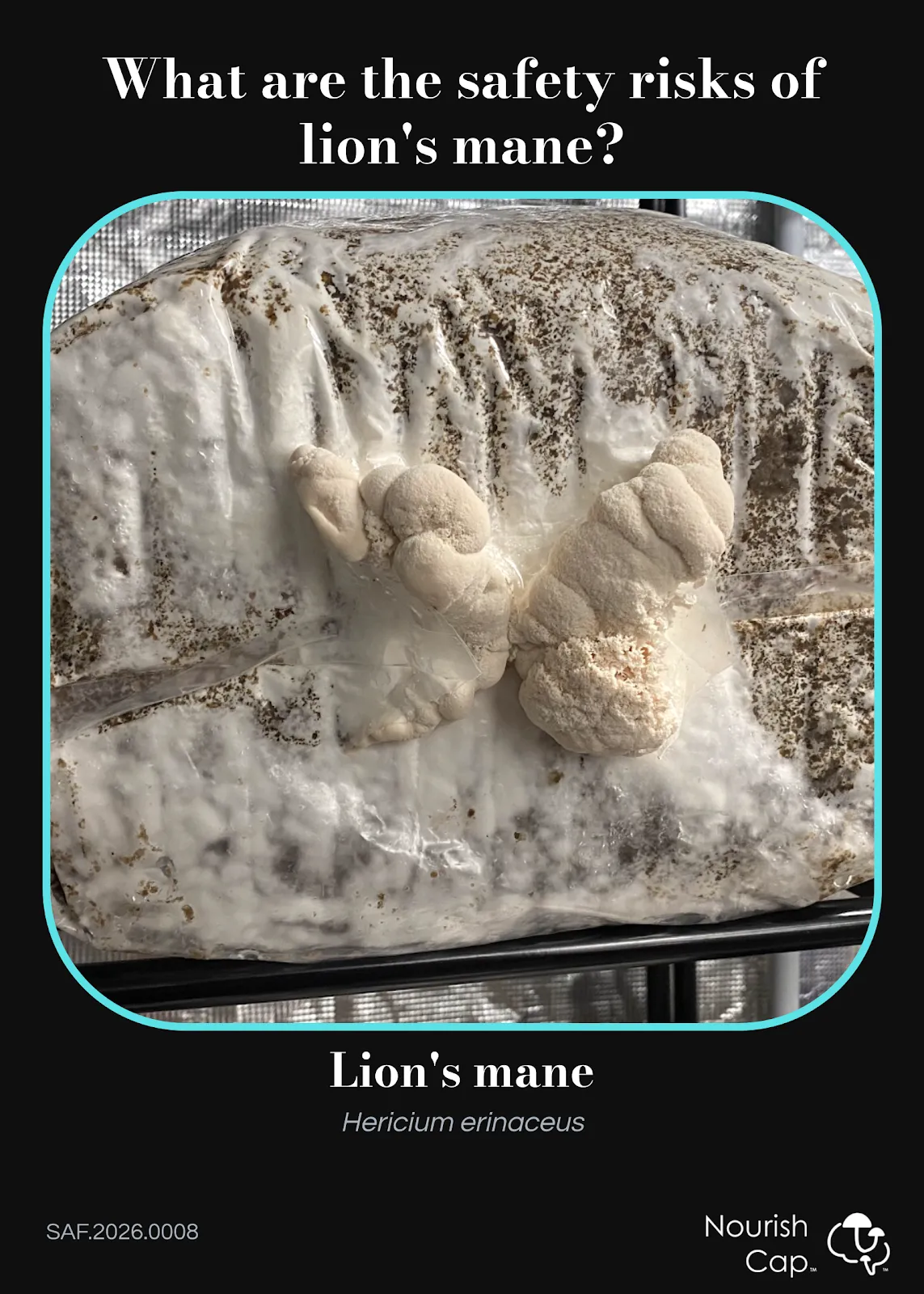
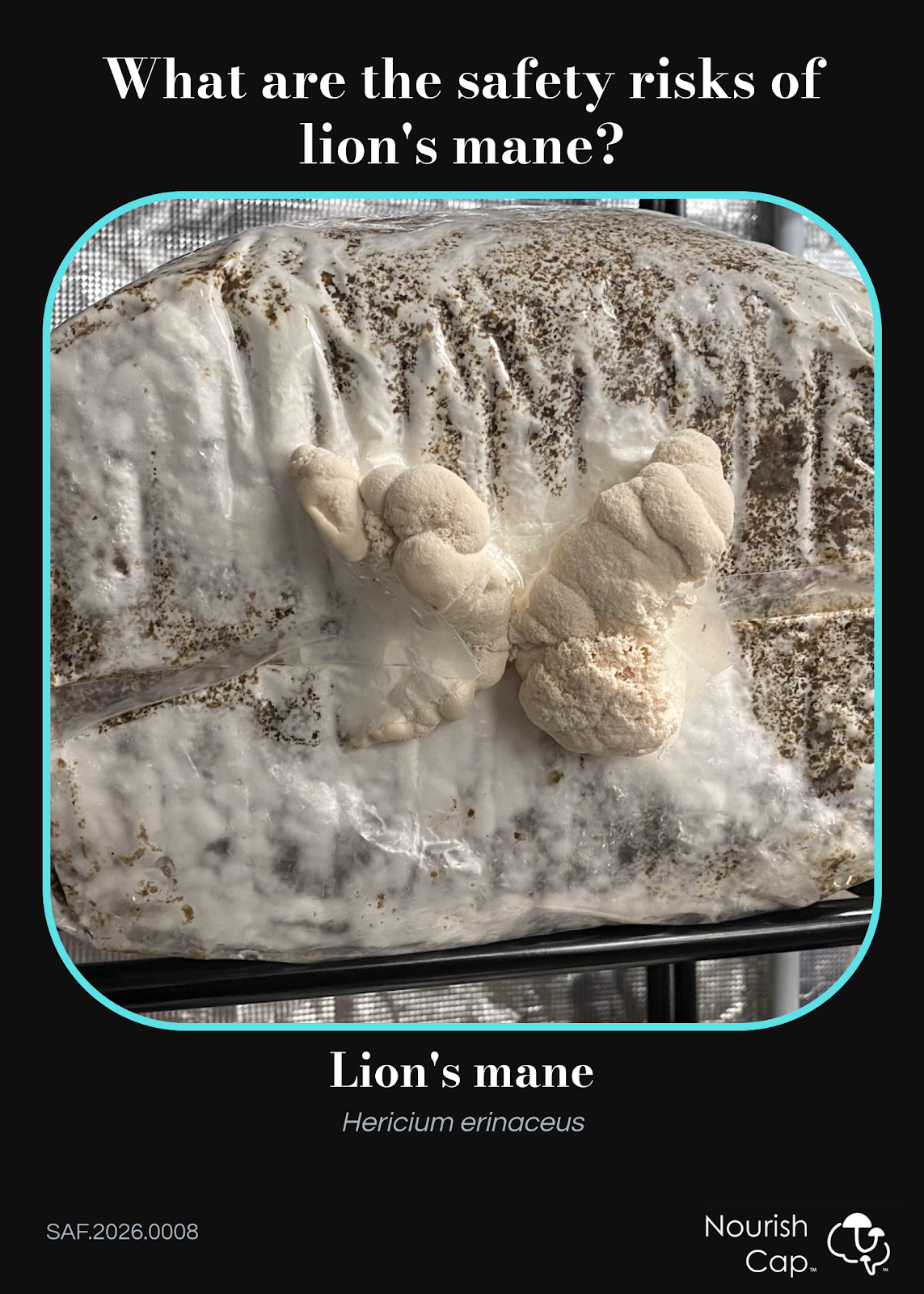
What are the safety risks of lion's mane?
- Design
- Systematic review and limited meta-analysis following PRISMA guidelines
- Participants
- 1224 records identified; 23 primary studies included (12 animal studies, 8 in vitro studies, 3 human clinical trials)
- Dose
- Various forms, including aqueous, ethanolic, and methanolic extracts, mycelial and fruiting body preparations, and isolated bioactive compounds
- Measured
- Neuroprotective and antioxidant effects, neurodegenerative disease-related outcomes, study quality, and safety profiles
Flash card
The source
Source 1
Neuroprotective Effects of Hericium erinaceus: Evidence from Experimental and Clinical Studies: A Systematic Review and Limited Meta-Analysis
Ninyo et al., Food as Medicine 2026
Open access. Excerpts are drawn from the published full text.
The trial, in plain words
- Literature Search. Conducted a systematic search of PubMed and Google Scholar for studies published between 2000 and 2026 following PRISMA guidelines.
- Study Selection. Screened 1224 records by title and abstract after removing duplicates, resulting in 42 total studies evaluated, with 23 identified as primary studies.
- Quality Assessment. Assessed study quality and risk of bias using SYRCLE tools for animal studies and Cochrane tools for human clinical trials.
- Data Extraction. Extracted key information systematically, including author, year, study type, duration, sample characteristics, preparation form, quantity, outcomes, and conclusions.
- Data Synthesis. Performed a narrative synthesis and a limited meta-analysis using Meta-Essentials software where sufficient numerical data were available.
The source's own bottom line
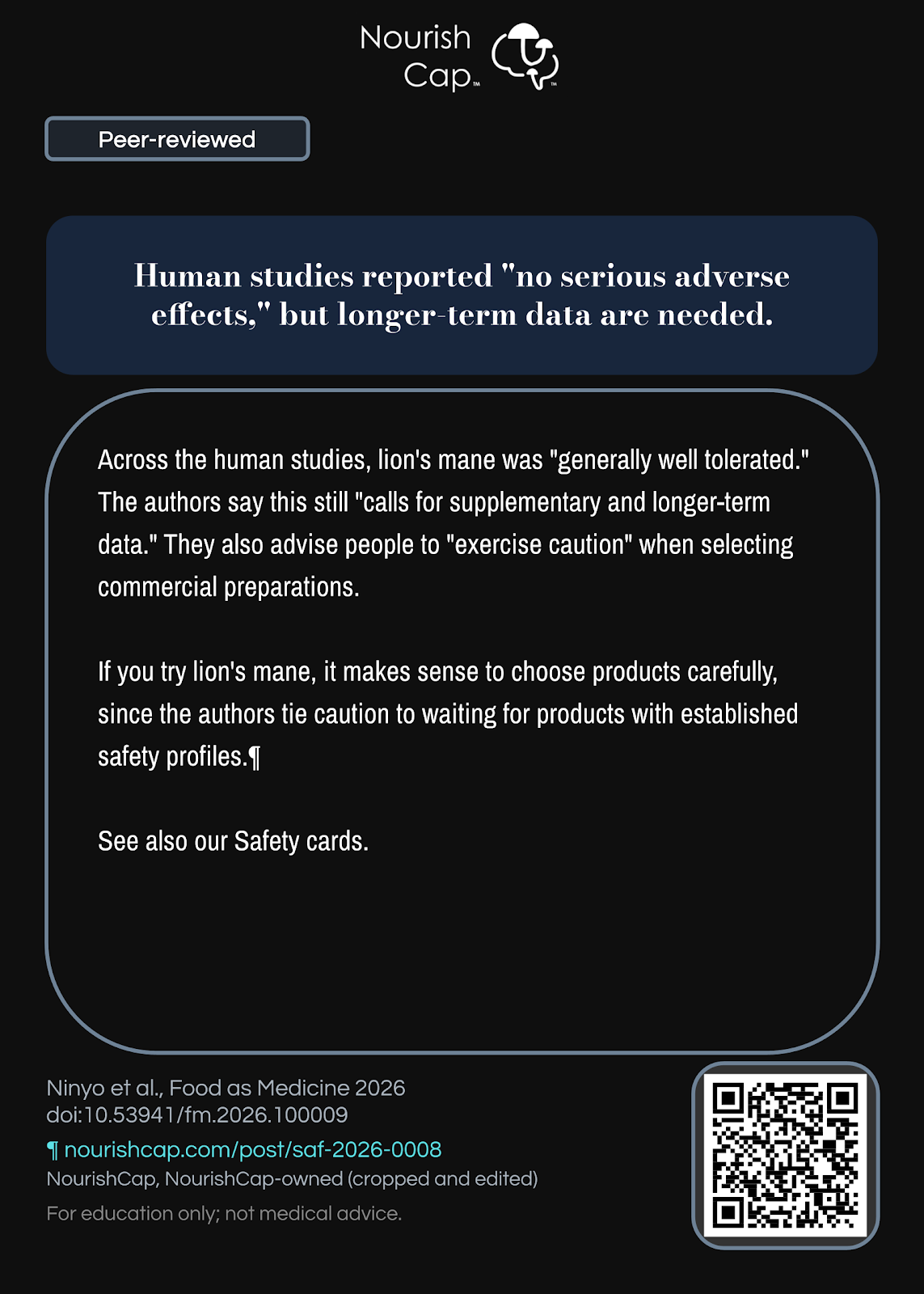
The authors reported that across the human studies, Hericium erinaceus was "generally well tolerated" and consistently shown to be safe for administration.
The study found "no serious adverse effects" reported in human trials following 12 weeks, 28 days, and 4 weeks of supplementation.
The authors noted that this favorable short-term safety profile still "calls for supplementary and longer-term data" to fully establish safety in patients with diagnosed neurodegenerative diseases, and advised caution when selecting commercial preparations.
What you can trust
| Card | Straight from the source |
|---|---|
| What are the safety risks of lion's mane? | "Hericium erinaceus (Lion’s Mane mushroom) has attracted increasing attention due to its reported neuroprotective and antioxidant properties."1 () |
| Human studies reported "no serious adverse effects", but longer-term data are needed. | "Safety Profile As gathered from all three human trials in this review, Hericium erinaceus was consistently shown to be safe for administration and well-tolerated by the participants studied."1 () "The absence of serious side effects across these primary clinical trials is consistent with a favourable short-te rm safety profile of Hericium erinaceus but still calls for supplementary and longer-term data to fully establish its safety in patient s with diagnosed neurodegenerative diseases."1 () |
| Across the human studies, lion's mane was "generally well tolerated". | "Across the included human studies, Hericium erinaceus was generally well tolerated, with no serious adverse effects reported, supporting a favourable short-term safety profile."1 () |
| The authors say this still "calls for supplementary and longer-term data". | "The absence of serious side effects across these primary clinical trials is consistent with a favourable short-te rm safety profile of Hericium erinaceus but still calls for supplementary and longer-term data to fully establish its safety in patient s with diagnosed neurodegenerative diseases."1 () |
| They also advise people to "exercise caution" when selecting commercial preparations. | "Consumers and clinicians should therefore exercise caution when sel ecting commercial preparations until standardised formulations with established safety profiles become available."1 () |
| If you try lion's mane, it makes sense to choose products carefully, since the authors tie caution to waiting for products with established safety profiles.¶ See also our Safety cards. | "An additional study from Muhanna et al. [40] notes that Hericium erinaceus seems to be safe for consumption in humans but reported a case of anaphylaxis after the mushroom was taken in its fresh form, suggesting that processed preparations should be used for future research as well as for long-term use."1 () "Consumers and clinicians should therefore exercise caution when sel ecting commercial preparations until standardised formulations with established safety profiles become available."1 () |
The limits, stated plainly
- Limited Human Clinical Data. Much of the current evidence originates from in vitro and animal studies, with human clinical data remaining limited.
- Healthy Participant Focus. Existing human studies generally involve relatively small sample sizes and are frequently conducted in healthy individuals rather than patients diagnosed with neurodegenerative diseases.
- Methodological Heterogeneity. Substantial variability exists in the composition, quality, preparation methods, dosage regimens, and intervention durations of Hericium erinaceus used across studies.
- Lack of Antioxidant Measurement in Humans. None of the human trials directly measured antioxidant biomarkers such as ROS, MDA, SOD, catalase, or glutathione-related enzymes.
- Short Animal Study Durations. Animal studies were held for short durations ranging from 2 to 18 weeks, which do not reflect the long-term effects of the mushroom.
- Publication Bias. The nutraceutical literature is susceptible to positive publication bias, where studies reporting significant or beneficial effects are more likely to be published.
- Not medical advice.
Retraction watch
Last checked 2026-11-02: no retraction notice, correction, or expression of concern appears on Crossref, OpenAlex and PubMed.
What the labels on the card mean
Plain-word definitions
- Hericium erinaceus. An edible and medicinal mushroom commonly known as Lion's Mane, traditionally used in East Asian countries and studied for its potential neurological benefits.
- Systematic review. A structured summary of all available studies that address a specific clinical question using transparent and reproducible methods.
- Meta-analysis. A statistical technique that combines the numerical results from multiple separate studies to estimate an overall effect size.
- In vitro. Studies conducted using cells or biological molecules outside of a living organism, typically in a laboratory dish.
- Oxidative stress. An imbalance between free radicals and antioxidant defenses in the body that can lead to cellular damage.
- Neuroprotection. The preservation of neuronal structure and function, or prevention of neuron loss in the central nervous system.
- Anaphylaxis. A severe, potentially life-threatening allergic reaction that can occur rapidly after exposure to an allergen.
Spot something wrong?
Found an inaccuracy or anything we got wrong? Send a report with your email.
Get every new card by email
New cards and the research behind them, once a week. Join over 1,500 readers. No hype, unsubscribe anytime.
This page summarizes a published source; we did not conduct this research. Wording is our editorial compression. Where our summary differs from the source, the source governs.
This page is for education only and is not medical advice. Talk to your clinician before changing anything about your health routine. Dietary supplements are not evaluated by the FDA to treat, prevent, or cure any disease. Results describe the study's participants, not a promise of your outcome. Read the limitations before acting on anything here.
Photo on the card: NourishCap, NourishCap-owned (cropped and edited). For education only; not medical advice.


