
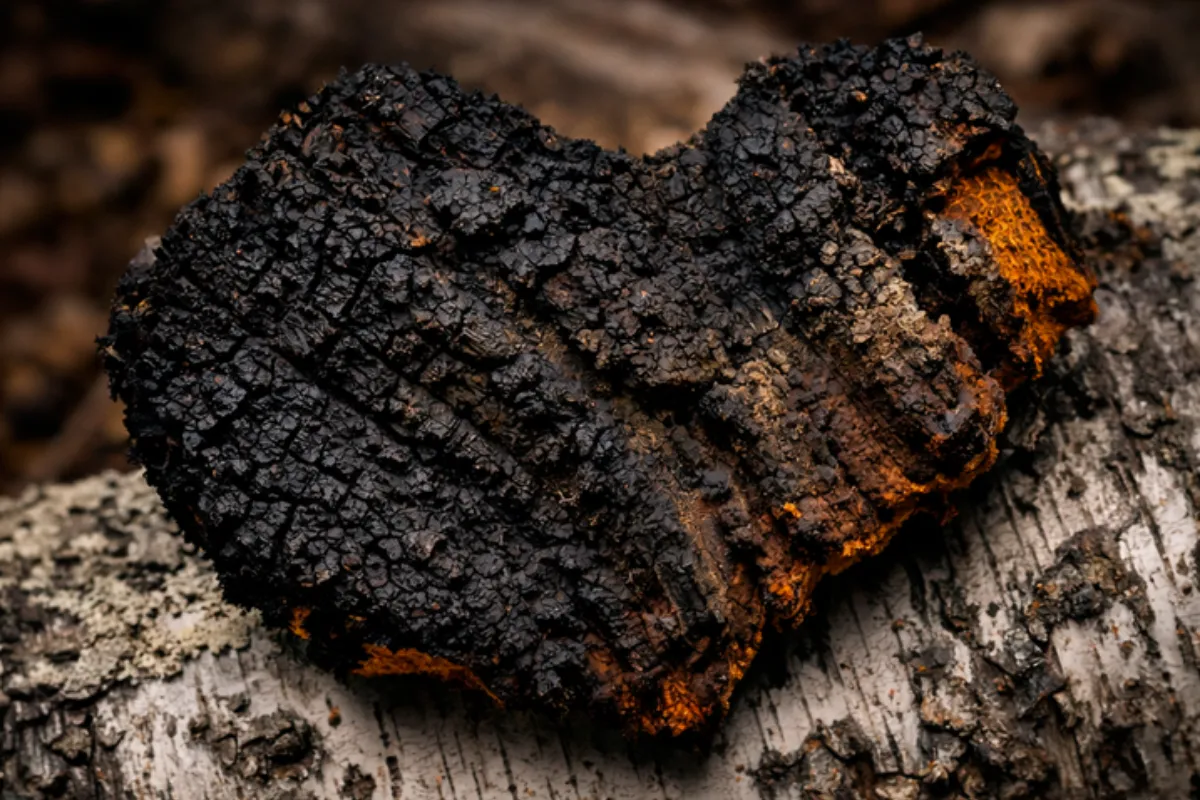
Northern Treasure Grows Nearby: Chaga, Inonotus obliquus
Northern Treasure Grows Nearby: Multipurpose Mushroom of the Week
By: Benjamin Ashpole, Oli Genn-Bash, Ben Taylor
Hoosier forests hide a charcoal-black fungus growing quietly—waiting to share secrets that have captivated healers and foragers for centuries. Chaga (Inonotus obliquus), occurs naturally on living trees in Kosciusko County. While Indiana sits at the southern edge of its natural range, this mushroom's remarkable properties make it worth celebrating.

The black outer layer of chaga is rich in melanin, a powerful antioxidant compound. Beneath lies a golden-orange, cork-like mass that contains the concentrated bioactive compounds used medicinally. Unlike grocery store mushrooms, Chaga isn't eaten whole. Its woody texture requires brewing. Chaga tea has an earthy, slightly bitter flavor accented by natural vanilla notes. Beyond the teacup, historically, it made exceptional fire-starting tinder, and its rich melanin content produced natural dyes for textiles.
Globally, chaga has earned names like "King of Mushrooms" and "Black Gold." As early as the 12th century, Siberian Khanty peoples may have brewed it as medicinal tea, while North American tribes including the Cree called it "pōsākan," using it for immune support and ceremonial purposes. Traditionally simmered 1-2 hours to extract bioactive compounds, only wild (not farmed) Chaga concentrates extraordinary compounds from host trees, especially betulinic acid. While chaga occasionally also grows on beech trees, only birch- and alder-hosted specimens contain the highly prized betulinic acid.
Modern research confirms its status as nature's antioxidant champion, with an Oxygen Radical Absorbance Capacity “ORAC” value of 146,700—nearly 50% higher than açai berries (102,700) and approximately 117 times greater than brewed green tea (1,253). However, Chaga contains oxalates that should be avoided by those with kidney conditions.
Despite being called the 'black diamond of the forest,' chaga is more common than folklore suggests. While a widely circulated internet myth claims it grows on only 1 in 10,000–20,000 birch trees, forestry research tells a different story: a 2004 USDA report found chaga grows in up to 20% of birch trees in Russian forests, while studies in New England document it in rates of 2–4% of individual trees.
Just remember: never forage wild mushrooms without expert identification—mistakes can be serious. Buy them from a reputable source, instead. When exploring new species, try only one type per day and always cook wild mushrooms thoroughly (though Chaga requires brewing).
Join The Mushroom Journey
To discover more about fascinating native and naturalized species in our region each week, join the free newsletter at NourishCap.com.


