
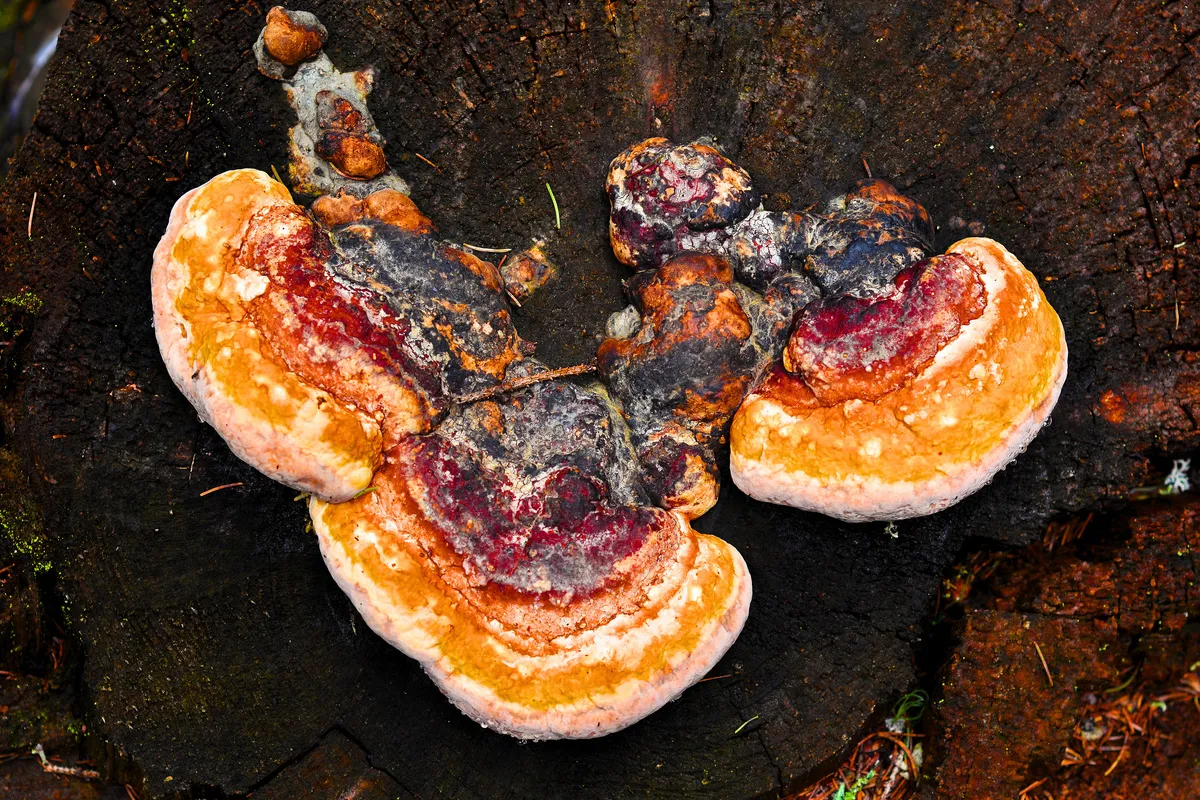
Forest First-Aid on Logs: Red Belted Polypore, Fomitopsis mounceae, Fomitopsis schrenkii, Fomitopsis pinicola
By: Benjamin Ashpole
If you’ve walked near pine or spruce trees in the North, you've likely already met this week’s mushroom. The Red Belted Polypore (Fomitopsis mounceae in Eastern North America, its western equivalent F. schrenkii, and the European F. pinicola) form thick, hoof-shaped shelves on dead or dying conifers, banded in creams, browns, and a striking rusty red.
Most modern studies focus on F. pinicola from Europe and Asia, whose extracts show antioxidant, anti-inflammatory, antimicrobial, and immune-modulating effects, along with promising anti-cancer and blood-sugar–regulating activity in test-tube and animal studies. Closely related North American species such as F. mounceae are assumed to share some of these compounds, but they are far less studied, so any health use today is still experimental and should be discussed with a healthcare professional.
Historically, Indigenous peoples across the boreal and Rocky Mountain regions used tough tree conks like these as fire carriers, tinder, and even as styptic dressings to help slow bleeding—practical forest “first-aid kits” that could ride along on long journeys. Dried pieces also served as slow-burning embers when moving camp, a role similar fungi played in Europe's mountain cultures.
On the plate, the Red Belted Polypore is no portobello. Its flesh is too woody to be sautéed. Instead, thinly sliced pieces are simmered to make dark teas or added to broths, then strained out, more like a spice than a vegetable.
Locally, this fungus is a major brown-rot decomposer in conifer and mixed forests across the Great Lakes and upper Midwest, helping turn fallen trunks into soil and long-term carbon storage. You can spot fresh, vividly banded conks most easily from September through November, though they persist year-round—even brightening winter hikes with color.
Home cultivation is possible but slow: growers typically inoculate freshly cut conifer or hardwood logs with mushroom spawn, then stack them in a cool, shady, moist corner of the yard and wait one to several years for conks to form. Indoor sawdust blocks have been fruited experimentally, but this remains a specialist project rather than a beginner crop.
Join The Mushroom Journey
Remember, this article is not a field guide or medical advice. Always source mushrooms from trusted suppliers and cook them thoroughly, and never eat foraged mushrooms without confirmation from a qualified human expert. If you'd like to learn about foraging events or cultivation guidance, contact Ben. To keep discovering surprising mushrooms each week, join the free newsletter at NourishCap.com.

Sources Cited
https://www.mushroomexpert.com/fomitopsis_mounceae.html
https://pmc.ncbi.nlm.nih.gov/articles/PMC12053173/
https://www.pei-untamed.com/post/red-belted-polypore
https://grownandgathered.wordpress.com/gathering/red-belted-polypore/
http://www.autumnsteam.com/fomitopsis-mounceae.html
https://www.mushroom-appreciation.com/red-belted-polypore.html


