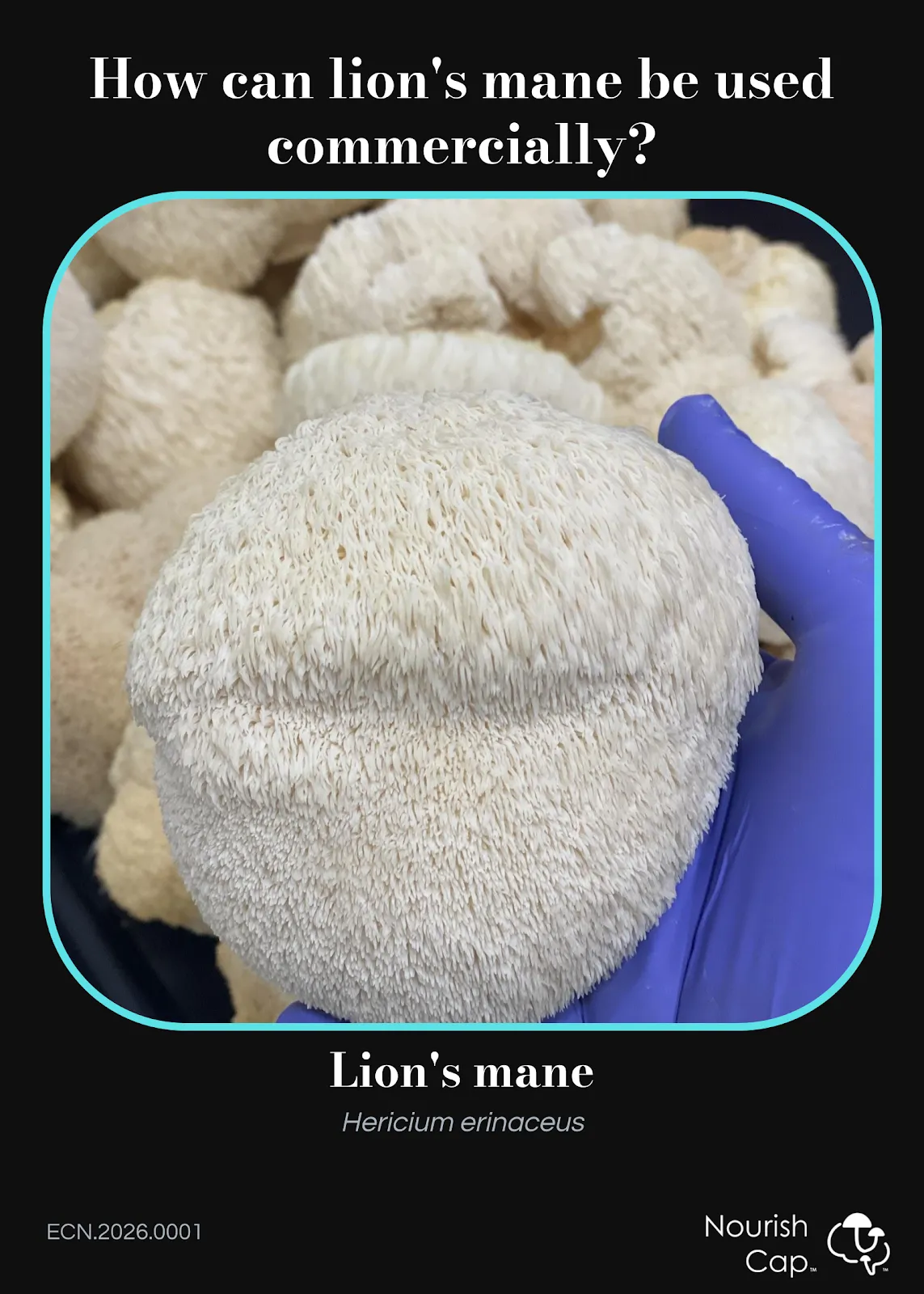
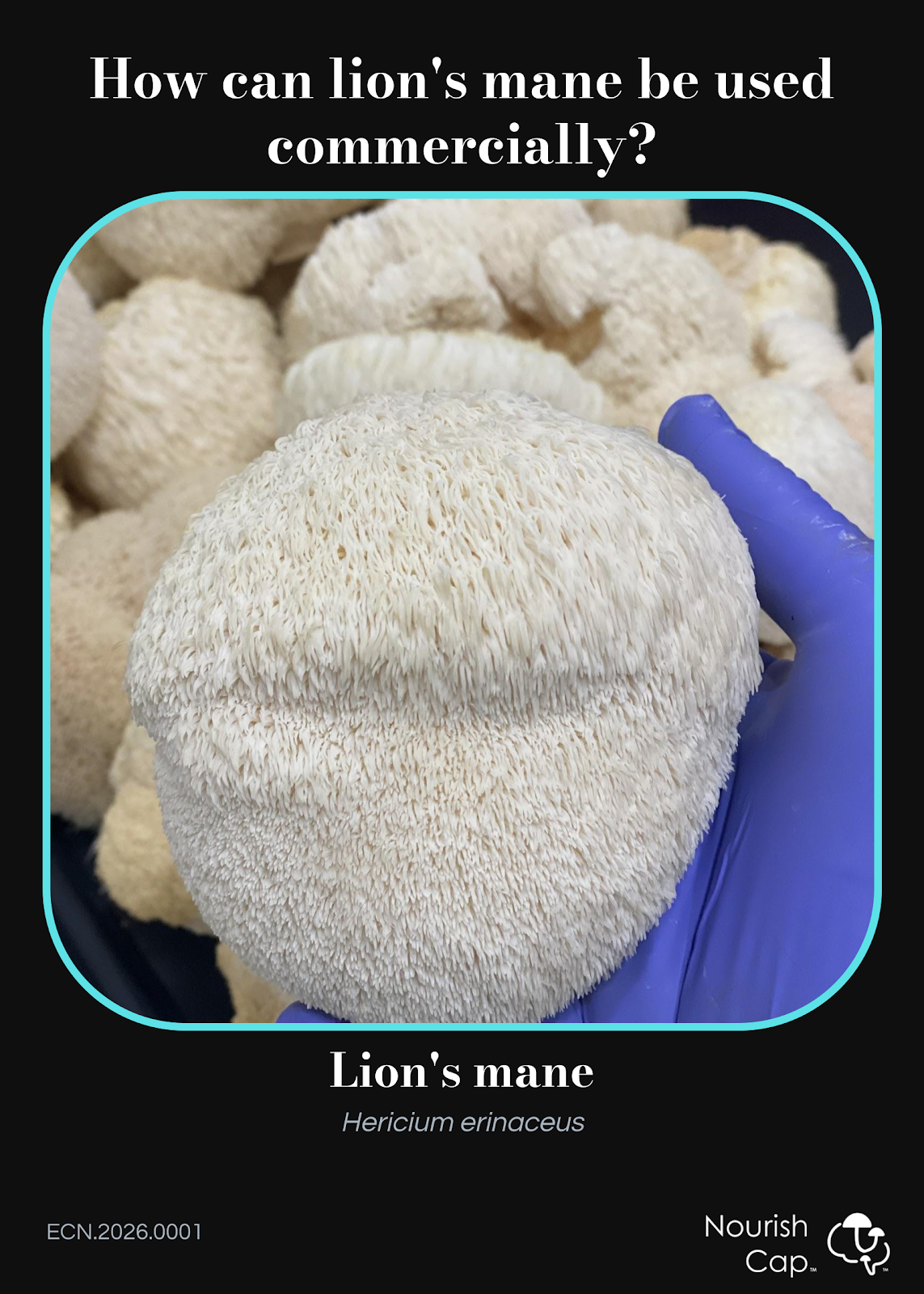
How can lion's mane be used commercially?
- Design
- Comprehensive narrative review of literature from 2000 to 2025
- Samples
- PubMed, Scopus, Web of Science, Google Scholar, and CNKI database records
- Conditions
- Extraction strategies, bioactive components, health benefits, and food applications
- Measured
- Phytochemical constituents, pharmacological activities, commercial products, and safety
Flash card
The source
Source 1
Bioactive constituents of Hericium erinaceus: extraction strategies, health benefits and food applications
Gurung et al., Frontiers in Natural Products 2026
DOI: 10.3389/fntpr.2026.1872464
Funding: the paper declares a possible conflict of interest: The author(s) declared that this work was conducted in the absence of any commercial or financial relationships that could be construed as a potential conflict of interest.
Open access. Excerpts are drawn from the published full text.
The study, in plain words
- Literature Search. The authors searched PubMed, Scopus, Web of Science, Google Scholar, and CNKI databases for studies published primarily between 2000 and 2025.
- Search Terms. Keywords included Hericium erinaceus, Lion's mane mushroom, erinacines, hericenones, polysaccharides, beta-glucans, NGF, BDNF, neuroprotection, cognitive function, nutraceutical, and functional food.
- Selection Criteria. Original or synthesized data on bioactive compounds, extraction techniques, pharmacological activity, safety, and food uses were included.
- Exclusions. Editorials, duplicate records, and non-peer-reviewed articles were excluded from the review.
- Extraction Analysis. The review evaluated conventional methods alongside green and advanced technologies like ultrasound-assisted, microwave-assisted, and supercritical fluid extraction.
The source's own bottom line
The authors reported that Lion's mane mushroom is increasingly utilized in commercial foods such as coffee, protein bars, gummies, and ready-to-drink beverages, driven by solid market momentum and rising consumer demand for cognition-related and immune-supportive products.
The study found that the bioactive constituents of Hericium erinaceus, particularly polysaccharides and terpenoids, exhibit robust neuroprotective, antioxidant, and immunomodulatory properties that support its integration into functional foods and dietary supplements.
The authors concluded that while preclinical evidence is strong, future research must prioritize standardized clinical trials, enhanced extraction consistency, and rigorous long-term efficacy studies to validate market-ready commercial applications.
What you can trust
| Card | Straight from the source |
|---|---|
| How can lion's mane be used commercially? | "erinaceus), better known as Lion’s Mane mushroom, is an edible and medicinal fungus that has been an integral part of traditional Asian medicine practices."1 (Abstract) |
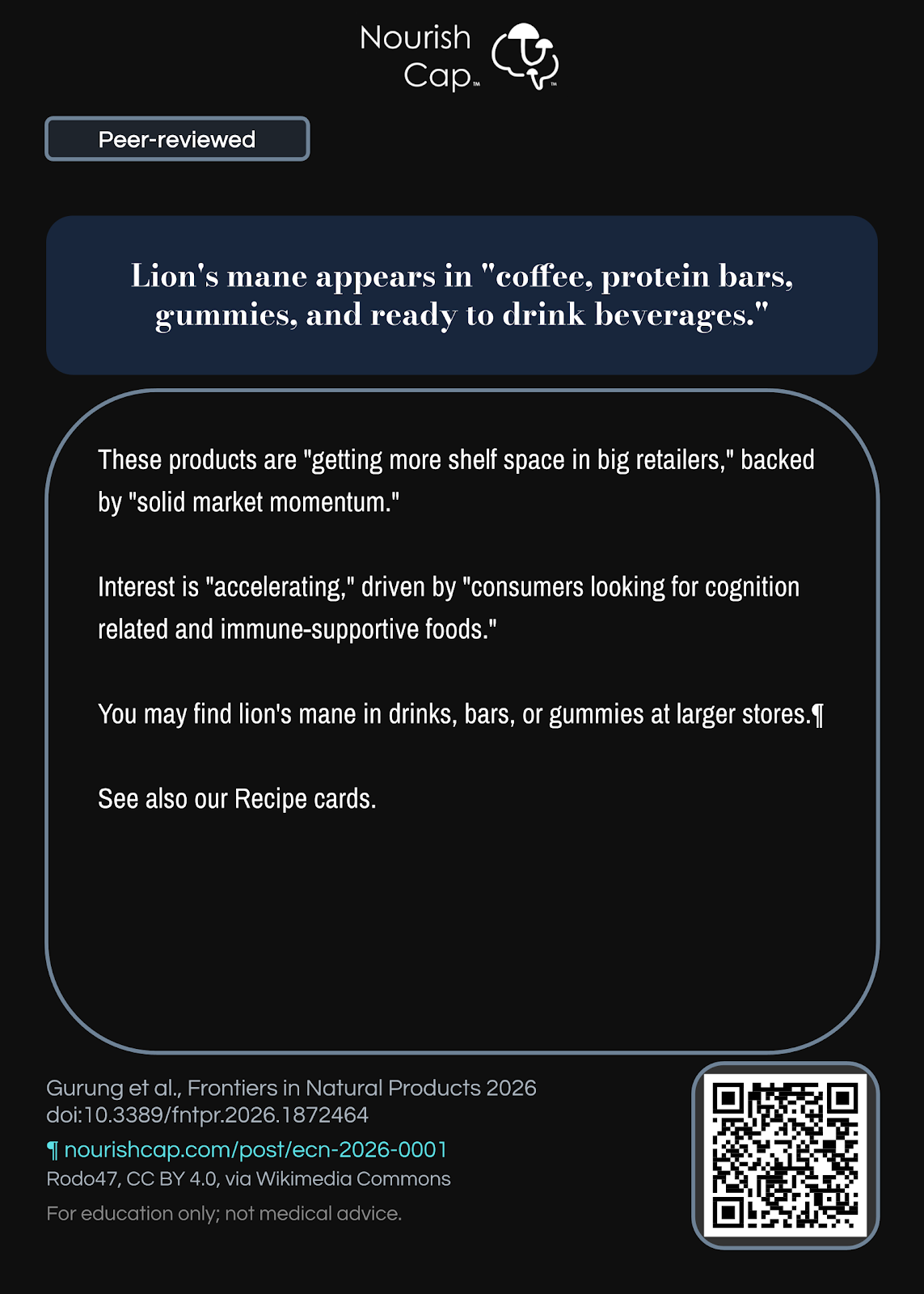
| Lion's mane appears in "coffee, protein bars, gummies, and ready to drink beverages." | "Whole mushroom powder and aqueous or hydroalcoholic extracts are used in soups and broths, bakery products, noodles, cereal-based foods, snack bars, dairy substitutes, and ready-to-drink beverages."1 (7.1 Functional foods and beverages) "Hericium erinaceus extracts have been tested in beverage systems, such as herbal teas, functional coffees, smoothies, and fermented drinks that enhance cognitive abilities and gut health."1 (7.1 Functional foods and beverages) |
| These products are "getting more shelf space in big retailers," backed by "solid market momentum." | "Things like Lion’s Mane coffee, protein bars, gummies, and ready to drink beverages are getting more shelf space in big retailers, and this is backed by solid market momentum (CAGR numbers roughly 10%–19% in some recent summaries)."1 (7.2 Nutraceuticals and dietary supplements) |
| Interest is "accelerating," driven by "consumers looking for cognition related and immune-supportive foods." | "Commercial interest seems to be accelerating, the global functional mushroom market (including Lion’s Mane) is expected to grow a lot more, driven by consumers looking for cognition related and immune-supportive foods (Raja-Razali et al., 2026)."1 (7.2 Nutraceuticals and dietary supplements) |
| You may find lion's mane in drinks, bars, or gummies at larger stores.¶ See also our Recipe cards. | "Whole mushroom powder and aqueous or hydroalcoholic extracts are used in soups and broths, bakery products, noodles, cereal-based foods, snack bars, dairy substitutes, and ready-to-drink beverages."1 (7.1 Functional foods and beverages) |
The limits, stated plainly
- Clinical Evidence. The authors reported that only a limited number of human clinical trials have been conducted, with most evidence derived from in vitro and animal studies.
- Sample Sizes. Human studies evaluated in the literature frequently featured very small sample sizes and short intervention durations.
- Bioavailability. More investigations remain necessary to enhance the bioavailability of active compounds within physiological systems.
- Long-Term Safety. The evidence base establishing human safety for durations exceeding one year remains inadequate.
- Special Populations. Data regarding safety during pregnancy, lactation, or concurrent medication use is currently insufficient.
- Not medical advice.
Retraction watch
Last checked 2026-11-03: no retraction notice, correction, or expression of concern appears on Crossref, OpenAlex and PubMed.
What the labels on the card mean
Plain-word definitions
- Hericium erinaceus. The scientific name for Lion's mane mushroom, an edible and medicinal fungus characterized by a unique appearance resembling a flowing mane.
- Erinacines. Cyathane diterpenoids found primarily in the mycelia of Hericium erinaceus that stimulate nerve growth factor production.
- Hericenones. Aromatic compounds found in the fruiting bodies of Hericium erinaceus that cross the blood-brain barrier to support neurotrophin synthesis.
- Beta-glucans. Macromolecular polysaccharides consisting of glucose polymers that serve as primary active components for immune support and antioxidant activity.
- Nerve Growth Factor (NGF). A secreted protein that promotes the survival and differentiation of sympathetic and sensory neurons.
- Brain-Derived Neurotrophic Factor (BDNF). A neurotrophin protein that supports neuronal survival, growth, and synaptic plasticity in the central nervous system.
- Supercritical Fluid Extraction. An advanced green extraction technique using supercritical carbon dioxide and food-grade co-solvents to isolate lipophilic bioactive compounds efficiently.
Spot something wrong?
Found an inaccuracy or anything we got wrong? Send a report with your email.
Get every new card by email
New cards and the research behind them, once a week. Join over 1,500 readers. No hype, unsubscribe anytime.
This page summarizes a published source; we did not conduct this research. Wording is our editorial compression. Where our summary differs from the source, the source governs.
This page is for education only and is not medical advice. Talk to your clinician before changing anything about your health routine. Dietary supplements are not evaluated by the FDA to treat, prevent, or cure any disease. Results describe the study's participants, not a promise of your outcome. Read the limitations before acting on anything here.
Photo on the card: Rodo47, CC BY 4.0, via Wikimedia Commons. For education only; not medical advice.


