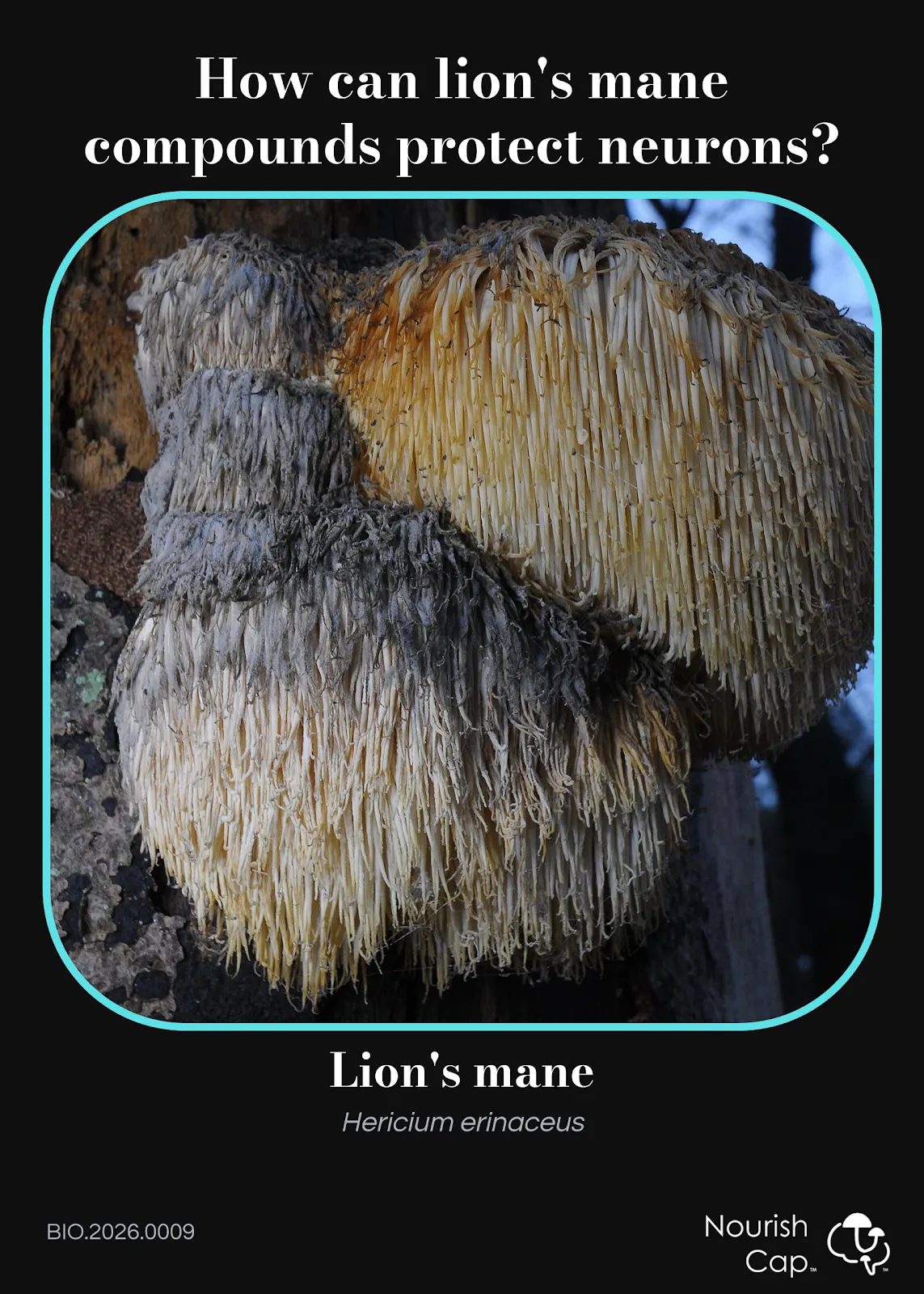
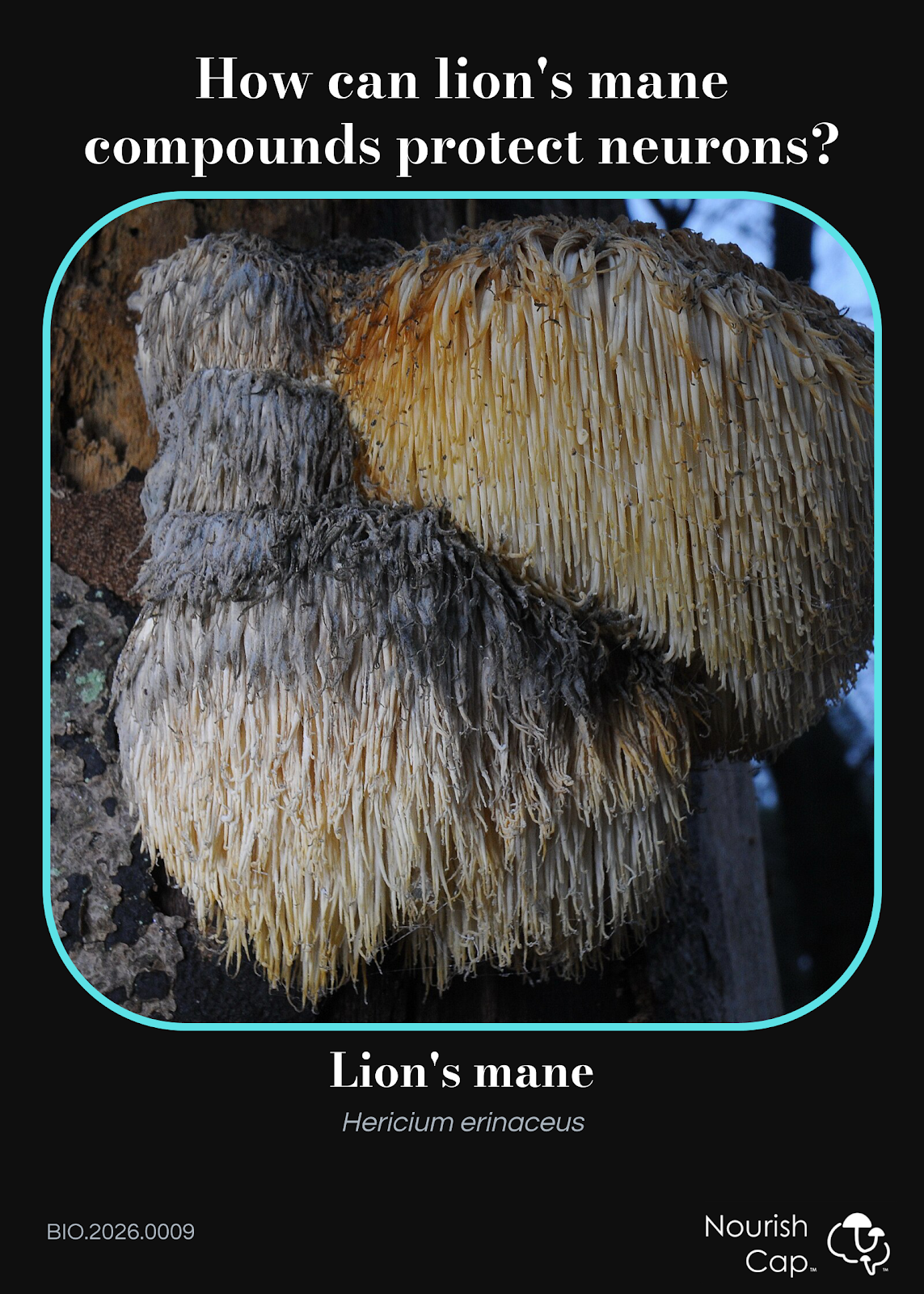
How can lion's mane compounds protect neurons?
- Design
- Systematic review and limited meta-analysis
- Participants
- 23 primary research studies comprising animal studies, in vitro studies, and human clinical trials
- Dose
- Various forms including aqueous, ethanolic, and methanolic extracts, mycelial and fruiting body preparations, and isolated bioactive compounds
- Measured
- Neuroprotective markers, neurotrophic factors, antioxidant markers, and cognitive function
Flash card
The source
Source 1
Neuroprotective Effects of Hericium erinaceus: Evidence from Experimental and Clinical Studies: A Systematic Review and Limited Meta-Analysis
Ninyo et al., Food as Medicine 2026
Open access. Excerpts are drawn from the published full text.
The trial, in plain words
- Database search. Conducted a systematic search of PubMed and Google Scholar following PRISMA guidelines for studies published between 2000 and 2026.
- Study selection. Identified 1224 records, from which 23 primary research studies met the inclusion criteria.
- Study categorization. Grouped studies into animal studies, in vitro studies, and human clinical trials.
- Bias assessment. Assessed study quality and risk of bias using SYRCLE and Cochrane tools.
- Data synthesis. Performed a narrative synthesis alongside a limited meta-analysis due to methodological heterogeneity and graphical data presentation.
The source's own bottom line
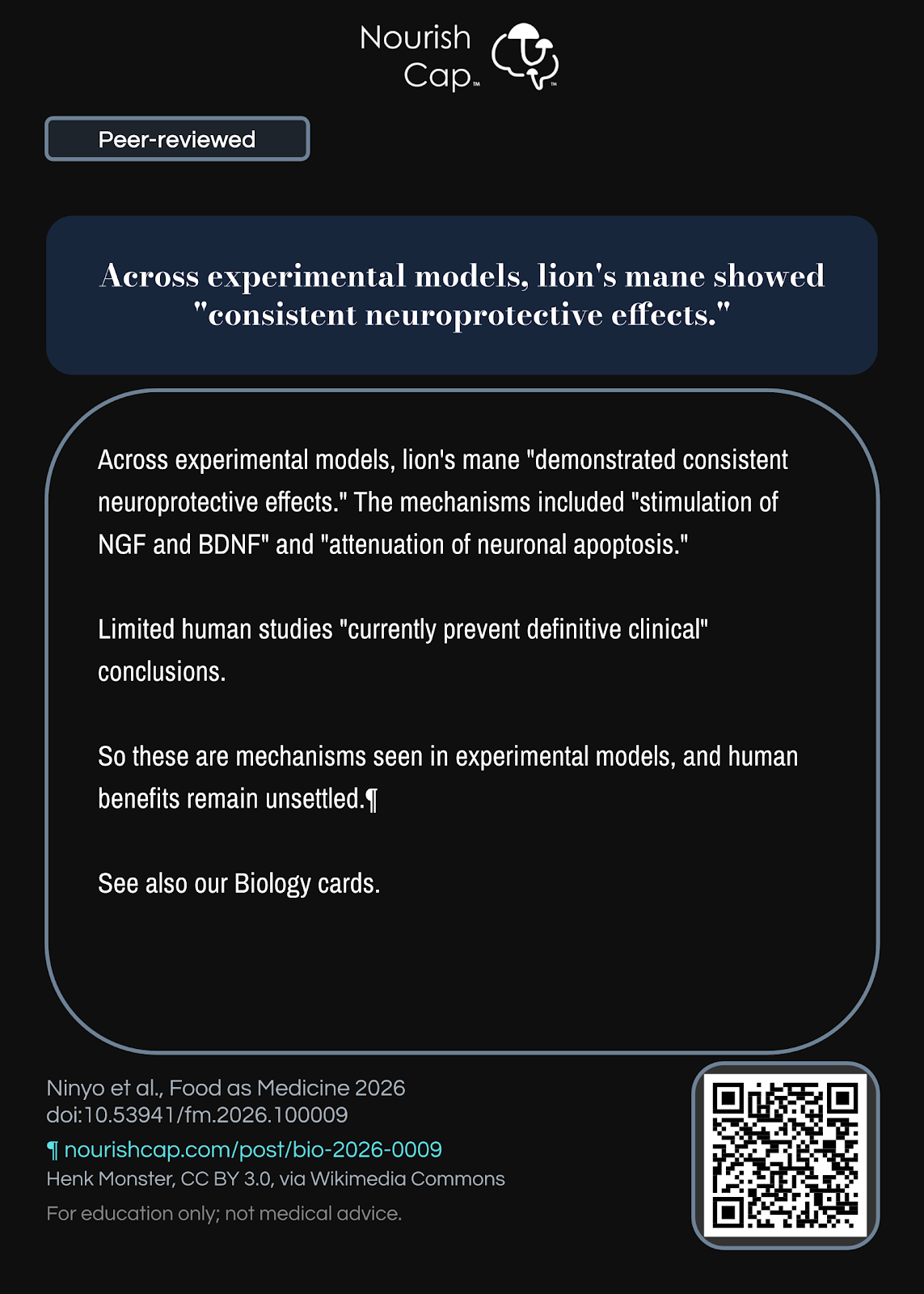
Across experimental models, Hericium erinaceus demonstrated consistent neuroprotective effects, which appeared to be mediated through multiple mechanisms, including enhancement of nerve growth factor and brain-derived neurotrophic factor signalling, activation of antioxidant defence pathways such as nuclear factor erythroid 2-related factor 2 (Nrf2) signalling, suppression of NLRP3 inflammasome activity, reduction of oxidative stress, and attenuation of neuronal apoptosis.
Limited human studies suggested potential benefits for cognitive function and mood. Quantitative synthesis supported the neuroprotective potential of Hericium erinaceus, with improvements in oxidative stress-related biomarkers observed across experimental studies. However, substantial heterogeneity and limited clinical evidence precluded definitive conclusions.
Overall, Hericium erinaceus shows promising preclinical neuroprotection through multiple interconnected mechanisms, including antioxidant, anti-inflammatory, neurotrophic and anti-apoptotic pathways. However, its clinical efficacy in neurodegenerative disease remains unconfirmed.
What you can trust
| Card | Straight from the source |
|---|---|
| How can lion's mane compounds protect neurons? | "Hericium erinaceus , commonly known as Lion’s Mane mushroom, is an edible and medicinal mushroom traditionally used in East Asian countr ies and increasingly studied for its po tential neurological benefits [4]."1 () "Neurotrophic Mechanisms: NGF, BDNF and Neurite Outgrowth One of the most consistently reported neuroprotective mechanisms of Hericium erinaceus was its ability to modulate neurotrophic signalling pathways, particularly those involving nerve growth factor (NGF), brain-derived neurotrophic factor (BDNF), and neurite outgrowth."1 () |
| Across experimental models, lion's mane showed "consistent neuroprotective effects". | "Across experimental models, Hericium erinaceus demonstrated consistent neuroprotective effects, which appeared to be mediated through multiple mechanisms, including enhancement of nerve growth factor and brain-derived neurotrophic factor signalling, activation of antioxidant defe nce pathways such as nuclear factor erythroid 2-related factor 2 (Nrf2) sign alling, suppression of NLRP3 inflammasome activity, reduction of oxidative stress, and attenuation of neuronal apoptosis."1 () "Neuroprotective Effects Hericium erinaceus was demonstrated to have ne uroprotective effects across the in vitro, animal, and human studies, with most evidence being present in preclini cal trials."1 () "Despite this heterogeneity and limited quantitative s ynthesis, the findings across the included studies were generally consistent, showing Hericium erinaceus to demonstrate neuroprotective and antioxidant effects across models of oxidative stress and neurodegeneration."1 () |
| Across experimental models, lion's mane "demonstrated consistent neuroprotective effects". | "Across experimental models, Hericium erinaceus demonstrated consistent neuroprotective effects, which appeared to be mediated through multiple mechanisms, including enhancement of nerve growth factor and brain-derived neurotrophic factor signalling, activation of antioxidant defe nce pathways such as nuclear factor erythroid 2-related factor 2 (Nrf2) sign alling, suppression of NLRP3 inflammasome activity, reduction of oxidative stress, and attenuation of neuronal apoptosis."1 () "Neuroprotective Effects Hericium erinaceus was demonstrated to have ne uroprotective effects across the in vitro, animal, and human studies, with most evidence being present in preclini cal trials."1 () "Despite this heterogeneity and limited quantitative s ynthesis, the findings across the included studies were generally consistent, showing Hericium erinaceus to demonstrate neuroprotective and antioxidant effects across models of oxidative stress and neurodegeneration."1 () |
| The mechanisms included "stimulation of NGF and BDNF" and "attenuation of neuronal apoptosis". | "Across experimental models, Hericium erinaceus demonstrated consistent neuroprotective effects, which appeared to be mediated through multiple mechanisms, including enhancement of nerve growth factor and brain-derived neurotrophic factor signalling, activation of antioxidant defe nce pathways such as nuclear factor erythroid 2-related factor 2 (Nrf2) sign alling, suppression of NLRP3 inflammasome activity, reduction of oxidative stress, and attenuation of neuronal apoptosis."1 () "Key mechanisms included ac tivation of Nrf2 signalling, stimulation of NGF and BDNF, inhibition of NLRP3 inflammasome activity, mitochond rial protection, reduction of oxidative stress, and attenuation of neuronal apoptosis."1 () |
| Limited human studies "currently prevent definitive clinical" conclusions. | "However, substantial heterogeneity and limited clinical evidence precluded definitive conclusions."1 () "Nevertheless, the limited number of human studies, the absence of trials in patients with neurodegenera tive diseases, and the lack of standard isation in mushroom preparations and outcome measures currently prevent definitive clinical co nclusions from being drawn."1 () |
| So these are mechanisms seen in experimental models, and human benefits remain unsettled.¶ See also our Biology cards. | "However, substantial heterogeneity and limited clinical evidence precluded definitive conclusions."1 () "Nevertheless, the limited number of human studies, the absence of trials in patients with neurodegenera tive diseases, and the lack of standard isation in mushroom preparations and outcome measures currently prevent definitive clinical co nclusions from being drawn."1 () "Overall, Hericium erinaceus showed promising neuroprotective effects, predominantly in in vitro and animal studies, with current eviden ce insufficient to provide evidence suggesting clinical efficacy in patients with neurodegenerative diseases."1 () |
The limits, stated plainly
- Preclinical reliance. Much of the current evidence originates from in vitro and animal studies, whereas human clinical data remain limited.
- Participant demographics. Existing human studies involve relatively small sample sizes and are frequently conducted in healthy individuals rather than patients diagnosed with neurodegenerative diseases.
- Methodological heterogeneity. Considerable heterogeneity exists regarding the form of Hericium erinaceus used, extraction methods, dosage regimens, and intervention durations.
- Data presentation. Numerical data were frequently presented in graphs rather than extractable numerical forms, limiting quantitative synthesis.
- Study duration. Animal studies were held for short durations, ranging from 2 to 18 weeks, which do not reflect long-term effects.
- Biomarker measurement. None of the human trials directly measured antioxidant biomarkers, neurotrophic factors, or inflammatory biomarkers.
- Not medical advice.
Retraction watch
Last checked 2026-11-02: no retraction notice, correction, or expression of concern appears on Crossref, OpenAlex and PubMed.
What the labels on the card mean
Plain-word definitions
- Hericium erinaceus. An edible and medicinal mushroom commonly known as Lion's Mane mushroom, traditionally used in East Asian countries and studied for potential neurological benefits.
- Nerve growth factor. A protein essential for the survival, differentiation, and maintenance of target neurons.
- Brain-derived neurotrophic factor. A neurotrophic factor that supports neuronal survival, synaptic plasticity, and repair processes in the brain.
- Nuclear factor erythroid 2-related factor 2. A key regulatory transcription factor that activates antioxidant defense systems.
- NLRP3 inflammasome. A multiprotein complex whose activation contributes to neuroinflammation in neurodegenerative conditions.
- Blood brain barrier. A highly selective permeability barrier that separates circulating blood from the brain extracellular fluid in the central nervous system.
Spot something wrong?
Found an inaccuracy or anything we got wrong? Send a report with your email.
Get every new card by email
New cards and the research behind them, once a week. Join over 1,500 readers. No hype, unsubscribe anytime.
This page summarizes a published source; we did not conduct this research. Wording is our editorial compression. Where our summary differs from the source, the source governs.
This page is for education only and is not medical advice. Talk to your clinician before changing anything about your health routine. Dietary supplements are not evaluated by the FDA to treat, prevent, or cure any disease. Results describe the study's participants, not a promise of your outcome. Read the limitations before acting on anything here.
Photo on the card: Henk Monster, CC BY 3.0, via Wikimedia Commons. For education only; not medical advice.


