Chapter 2: Starting a Culture from Live Tissue
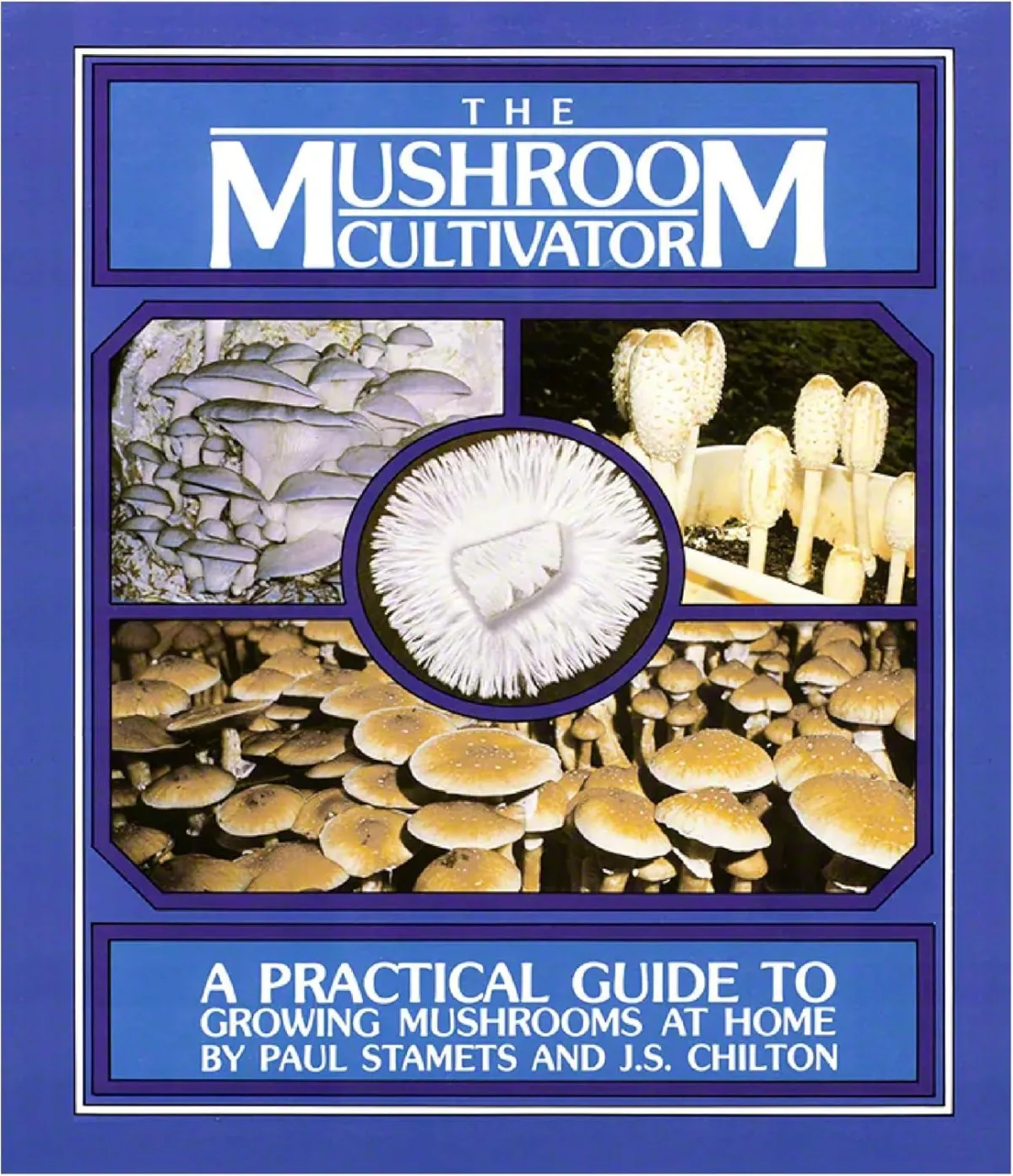
High Detail Review Video of The Mushroom Cultivator by Paul Stamets and J.S. Chilton
Mycological and marketing expert Benjamin Ashpole details starting a culture from live tissue, an assured method for cloning a living mushroom and preserving its exact genetic character. Learn to sterilize tools (e.g., flaming a scalpel), select fresh mushroom specimens, tear them open to expose interior tissue, and quickly transfer a fragment to a nutrient-filled petri dish.
Play the video above
Chapter 2: Starting a Culture from Spores
Find key topics:
Starting a culture from live tissue to clone a living mushroom and preserve its genetic character.
Practical steps for tissue culture, including selecting fresh specimens, sterilizing tools, tearing the mushroom open, and transferring tissue to a nutrient-filled petri dish.
Preventing and managing contamination by ensuring clean conditions, isolating mycelia through successive transfers, and maintaining pure cultures free of bacteria and molds.
Starting Your Mushroom Culture from Spores
When it comes to cultivating specific mushroom strains with desired traits, starting a culture from live tissue stands out as a highly effective and assured method. Drawing from Paul Stamets and J.S. Chilton's "The Mushroom Cultivator," and enhanced by detailed commentary from Benjamin Ashpole of Nourish Cap Promoters, this approach allows for the cloning of a living mushroom and the precise preservation of its exact genetic character. This contrasts with multi-spore culture, which tends to create new genetic strains.
The Foundation of a Pure Culture: Selecting and Preparing Your Specimen
The first step in this process is collecting spores by taking a spore print. To do this, the cap of a fresh, clean mushroom is severed from its stem and placed gills-down on a non-porous surface such as white paper, clean glass (like a microscope slide), aluminum foil, or even black paper for better contrast depending on the spore color. Mushroom spores exhibit a diverse range of colors, including white, brown, purple, and black. If the mushroom specimen is partially dried, adding a drop or two of water to the cap's surface can aid in spore release. To prevent evaporation and dispersal by air currents, a cup or glass is often placed over the mushroom cap. After several hours, the spores will have fallen in a pattern reflecting the radiating symmetry of the gills.
Mastering the Sterile Transfer: From Mushroom to Petri Dish
The process of transferring tissue requires stringent sterile conditions, ideally performed under a flow hood or in a still airbox, sometimes referred to as a glove box.
Sterilize your tools: Immediately flame a scalpel until it is red hot, then cool it quickly within a media-filled petri dish.
Excise the tissue: Carefully cut into the exposed mushroom flesh and remove a small fragment of tissue. It is important to avoid areas near where fingers may have touched the mushroom.
Rapid transfer: As quickly as possible, transfer the tissue fragment to the center of a nutrient-filled petri dish, minimizing the tissue's and agar's exposure to open air.
Repeat for success: It is recommended to repeat this technique for at least three, and preferably five or more, dishes.
Label meticulously: Each dish should be clearly labeled with the species, date, type of culture, and the kind of agar medium used.
If successful, signs of mycelial growth should become evident within 3 to 7 days.
Battling Contamination: The Reality of Cultivation
Contamination is a fact of life for every cultivator. In primary cultures, an overall contamination rate of around 10% is generally tolerable, though wild specimens can sometimes result in rates as high as 25%. The most commonly encountered contaminants in tissue culture are bacteria, often accompanied by yeast and green mold. These often appear near the point of transfer, with their presence depending on the cleanliness of the tissue or spores and the hygiene of the laboratory.
If contamination rates suddenly escalate without a change in routine, new control measures must be introduced immediately. Keeping a laboratory notebook is highly recommended to track each batch, organism, and what has happened, using a numbering system for dishes to save time and prevent memory lapses.
When contamination is observed, the strategy is isolation. If mold colonies develop adjacent to the growing mycelium, the culture should be promptly isolated. This involves continually transferring the target mycelium away from the contaminants into new petri dishes until a pure strain is established. This process is more difficult from a partially contaminated culture, as lifting a petri dish lid can make spores airborne, risking further spread.
It's also crucial to understand that a strain isolated from contaminated media can harbor dormant spores or bacteria that are not visually apparent, especially if the target mycelium grows over them. These hidden contaminants can then become apparent and problematic once the mycelium is inoculated into sterile grain. Therefore, continued testing and transfers are essential to ensure true purity.
Maintaining Purity: Best Practices for Long-Term Success
To minimize contamination, one's attitude toward cleanliness is perhaps more important than any specific equipment. Two general guidelines are vital for first-time cultivators:
Give your first attempt at sterile culture your best effort. Ensure everything—the lab, clothes, tools, and especially the cultivator—is clean.
2. Once a pure culture is established, strive to preserve its purity. Only save cultures that show no signs of mold or bacteria, and discard all contaminated dishes, even if only partially infected.
Failure in initial attempts is not a reason to despair; practice and experience with sterile culture techniques are key to becoming proficient. Agar media serves a crucial role in this early stage because mycelial mass can rapidly multiply from tiny tissue fragments, and contaminants are easily observed on the flat, two-dimensional surface of the agar, making it straightforward to recognize and maintain pure cultures.
Resources
Marketing Services
Find Out First, Here
See how we educate and entertain the public as a community of high quality members who are committed to integrity:


Copyright © 2026 NourishCap. All rights reserved.
NourishCap is a sister division of PromoterMotor.com at Bashpole Software, Inc. We co-market with our members and the Center for Better Communication.
Disclaimers:
NourishCap does not provide legal advice. NourishCap does not provide mental health, clinical, or medical services. NourishCap is not responsible for the actions of its members.
NourishCap does not encourage or condone any illegal activities, including but not limited to the use of illegal substances. NourishCap is not a substitute for medical, psychological, or psychiatric diagnosis, treatment, or advice.