The Yellow Morel, Spring’s Most Hunted Secret
By: Benjamin Ashpole
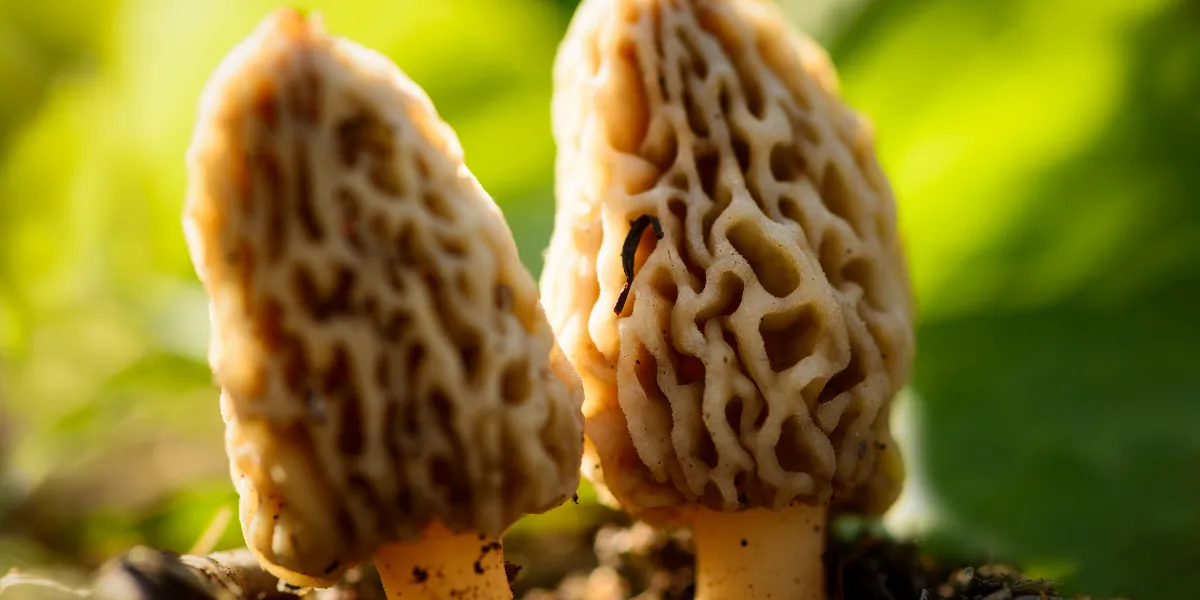
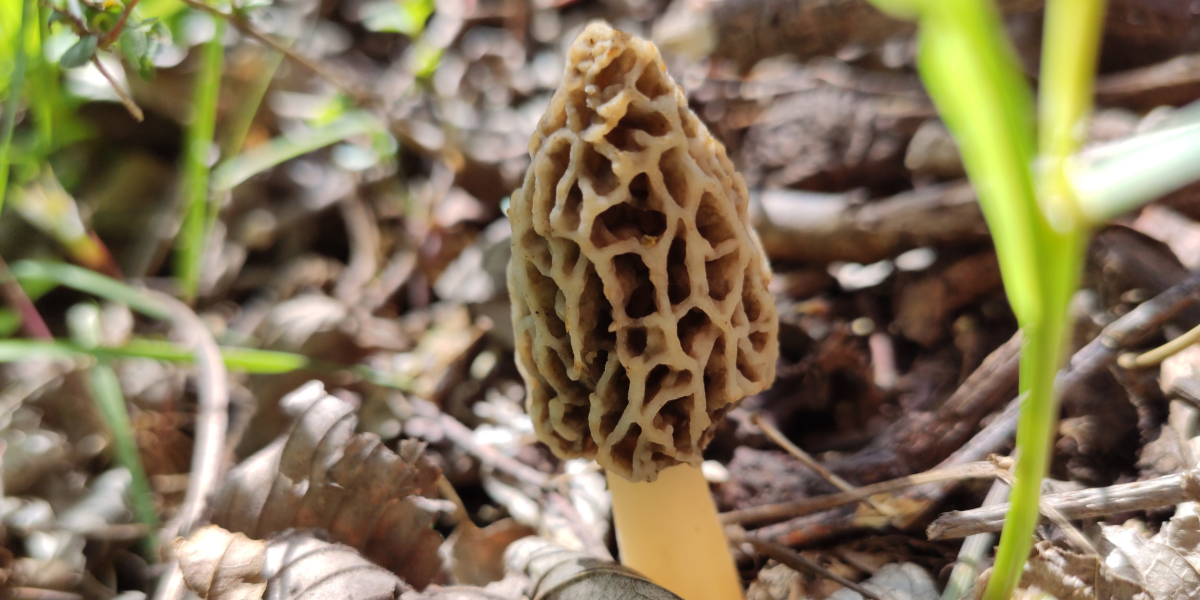
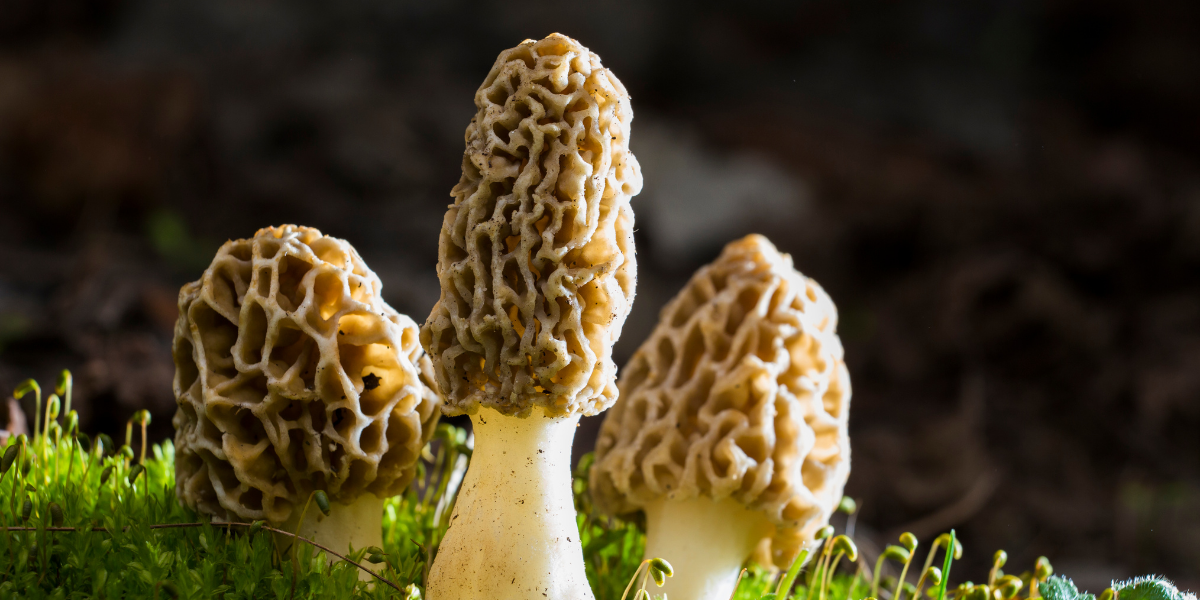
Every April, something remarkable happens in the leaf litter beneath dying elms and old apple trees: the Yellow Morel emerges. Morchella americana is one of the most prized wild fungi in North America. Morels fruit for just a few weeks each spring and then vanish until the following year. Its honeycomb-shaped cap sits atop a pale, hollow stem.
From French haute cuisine to Kashmiri “guchhi” dishes in the Himalayas to fried-morel traditions in Appalachia, morels have earned a near-mythic reputation wherever they grow. Recent market reports suggest that the global morel trade is already worth several billion dollars a year and could grow to a multi‑billion‑dollar industry by the early 2030s. That demand is fueled by fine-dining chefs, makers of mushroom-based health products, and the rapid rise of specialty online food retailers.
Science is catching up to what foragers already knew. Like other morels, Morchella americana contains ergosterol and a suite of phytosterols, with ergosterol acting as a direct precursor to vitamin D2 when exposed to ultraviolet light. In lab and animal studies, these sterols and related compounds show antioxidant, anti‑inflammatory, and cholesterol‑lowering activity, though human research is still limited. Experiments with compounds isolated from closely related morel species have triggered programmed cell death in human lung cancer cells in vitro, hinting at future therapeutic leads while still being very early-stage.
In the kitchen, Yellow Morels are best treated simply: sliced lengthwise to rinse away insects and grit, then pan-fried in butter over medium heat until their rich, nutty aroma deepens and their spongy texture turns meaty. Dried morels intensify rather than diminish in flavor, making them a powerful addition to cream sauces, egg dishes, or wild-game preparations year-round. Only a handful of small producers experimenting with morel powders and blends. Raw or undercooked morels can cause stomach upset, so thorough cooking is essential. Cooking is a simple precaution that applies equally to many other edible species.
After four decades of research, Twin Danish biologists Jacob and Karsten Kirk, are yielding on the order of 20 pounds of morels per square yard per year in climate chambers. Ecologically, morel mycelium acts as both a saprotroph and a tree partner, cycling carbon through forest soils and helping break down woody debris. Foragers often notice their biggest Yellow Morel flushes in ash stands that have been weakened or killed by emerald ash borer.
Join The Mushroom Journey
This article is not a guide to identifying mushrooms and is not medical advice. Always buy mushrooms from reputable sources and cook them thoroughly. Never eat foraged mushrooms without first having them confirmed by a qualified human expert in person. To discover hundreds of native gourmet, functional, and practical mushroom videos, products, and events, join the free newsletter at NourishCap.com.
Sources Cited
Cox, Katie. “Morel Mushroom Season Arrives in Indiana.” WISH-TV, 23 Apr. 2025, https://keyt.com/cnn-regional/2025/04/24/morel-mushroom-season-arrives-in-indiana-heres-everything-you-need-to-know/.
DataIntelo. Morel Mushroom Market Report: Global Forecast 2025 to 2033. DataIntelo, 22 Mar. 2026, https://dataintelo.com/report/morel-mushroom-market.
Katsnelson, Alla. “Danish Biologists Cultivate Morel Mushrooms Year-Round With New Indoor Technique.” Smithsonian Magazine, 2024, https://www.smithsonianmag.com/smart-news/danish-biologists-find-technique-to-cultivate-morel-mushrooms-year-round-180980007/.
Kirk, Jacob, and Karsten Kirk. “The Danish Morel Project: Controlled Indoor Cultivation of Black Morel Mushrooms All-Year-Round.” University of Copenhagen, 2021, https://thedanishmorelproject.com.
Nalli, Thomas. “Analysis of Phytosterols in Two Species of Morel Mushrooms: Morchella tomentosa and Morchella americana.” Research and Creative Achievement Day, Winona State University, 23 Apr. 2025, https://openriver.winona.edu/rca/2025/facultypresentations/3/.
Reigel, Emma. “An Overview of Morel Mushrooms.” Certified Naturally Grown, 6 May 2024, https://www.naturallygrown.org/an-overview-of-morel-mushrooms/.
Tan, Hao, et al. “Multi-Omic Analyses of Exogenous Nutrient Bag Decomposition by the Black Morel Morchella importuna Reveal Sustained Carbon Acquisition and Transferring.” Environmental Microbiology, vol. 21, no. 9, 2019, pp. 3339–3356, https://onlinelibrary.wiley.com/doi/full/10.1111/1462-2920.14741.
Verified Market Research. Morel Mushroom Market Size, Share, Trends and Forecast. Verified Market Research, 2025, https://www.verifiedmarketresearch.com/product/morel-mushroom-market/.
Wang, Yujuan, et al. “Cultivation, Nutritional Value, Bioactive Compounds of Morels, and Their Potential Benefits to Human Health: A Review.” Frontiers in Nutrition, vol. 10, 2023, https://www.frontiersin.org/articles/10.3389/fnut.2023.1159029/full.
Indiana Mushrooms. “Morel Mushrooms.” IndianaMushrooms.com, https://www.indianamushrooms.com/morels.html.
About the Author
Benjamin Ashpole is a certified forager through the Hoosier Mushroom Society, a mushroom educator, and a media producer. Ben writes a widely syndicated column on North American gourmet and functional fungi to inspire mushroom curiosity. As founder of NourishCap.com, he creates educational videos at youtube.com/@NourishCap that demystify everything from forest foraging and home cultivation to the science behind functional and medicinal species. Drawing on years of field experience and ongoing reporting about global fungal science, to support media production, Ben and his team maintain a marketplace of mushroom product vendors and service providers at NourishCap.com so that everyday people can safely benefit from the hidden fungal world around them. Contact Benjamin if you’d like to know more about a specific mushroom, join a foray, request a presentation, or get help with identification at facebook.com/NourishCap. For identification help via Facebook: share pictures of the mushroom’s top, sides, bottom, and habitat along with the name of the closest city and state.


