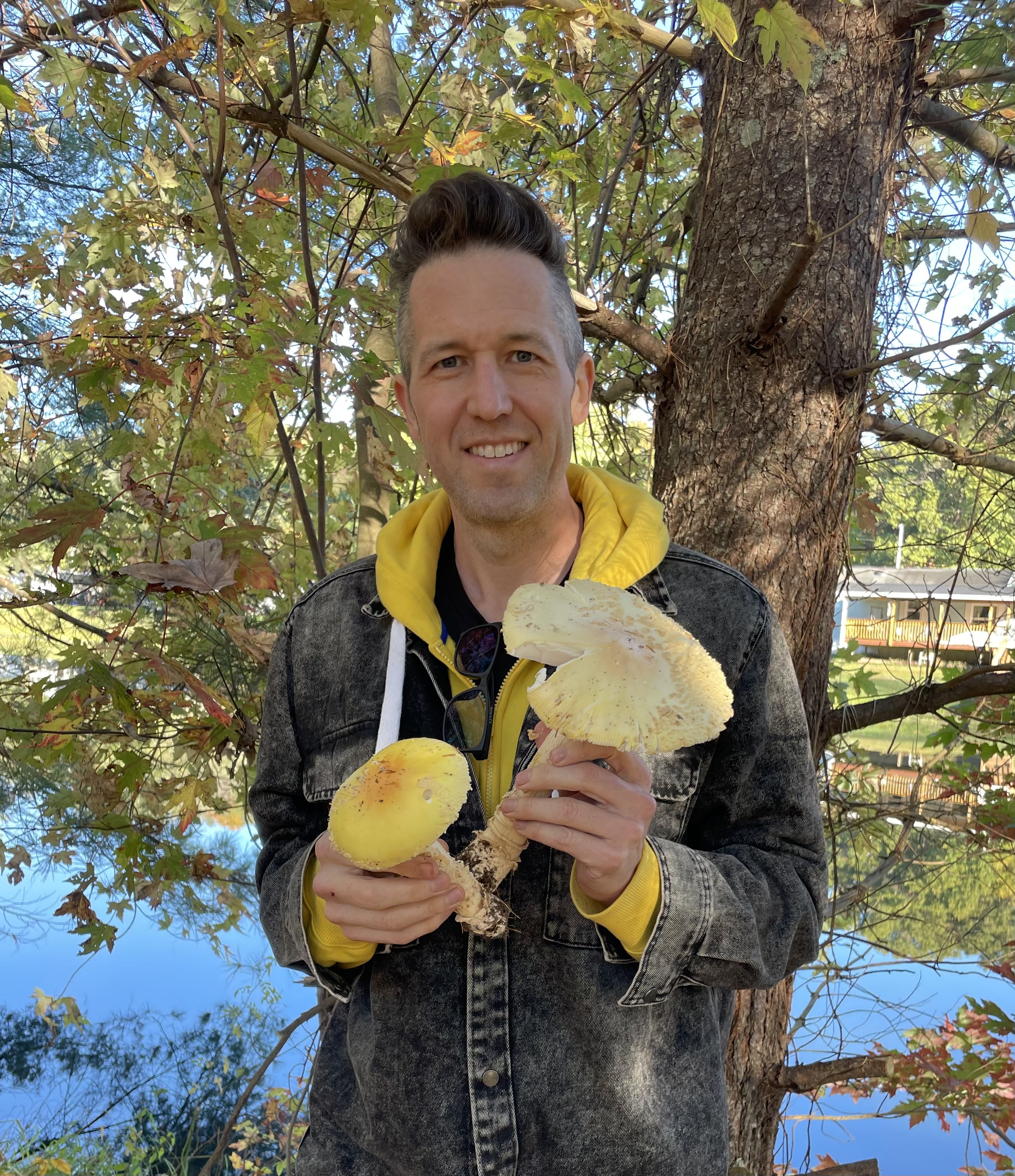
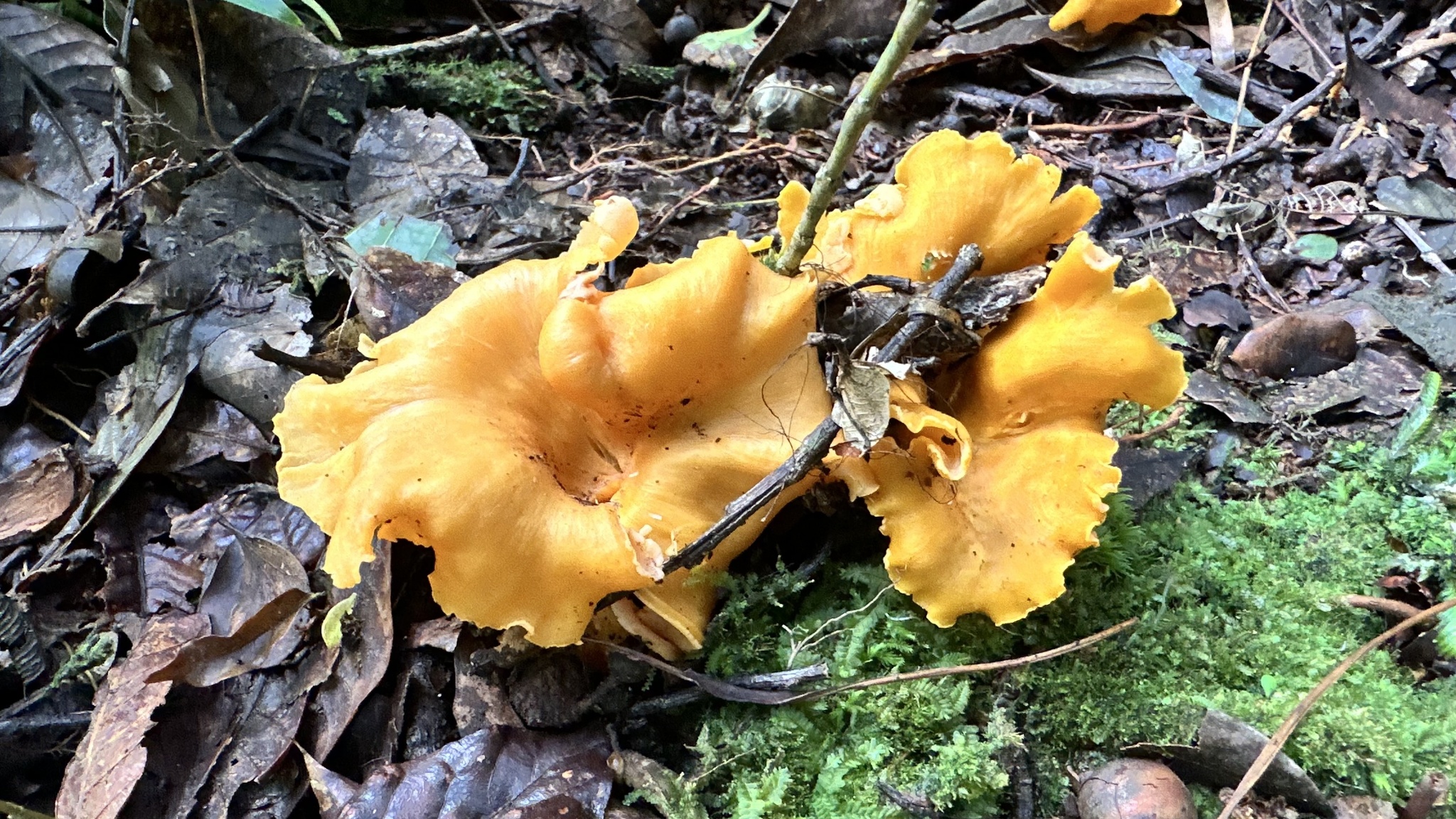
Local Mushroom of the Week, Smooth Chanterelle, The Golden Guardian of Our Oaks
Benjamin Ashpole
In the oak-hickory forests of North America, a vibrant North American native is staging a colorful takeover. First described in 1822 by American mycologist Lewis David de Schweinitz, the Smooth Chanterelle, or Cantharellus lateritius, is no ordinary fungus. It forms symbiotic relationships with trees called Ectomycorrhizas to act as a biological mercenary for hardwood forests. This species is defined by a smooth to shallowly wrinkled spore-bearing surface known as the Hymenium. By creating a protective shield around root tips, it trades essential minerals for sugars while defending saplings from deadly root-rot pathogens.
While historically mistaken for European species, DNA testing confirms this mushroom is a distinct powerhouse native to North America. Globally, these fungi are prized alongside truffles and morels in international forest markets. Unlike common grocery store varieties, the Smooth Chanterelle remains a wild-harvested delicacy that supports sustainable local economies throughout the summer and autumn months.
Scientifically, this mushroom is a high-performance health factory. It contains an unidentified carotene derivative known as Peak 7 that helps stabilize cellular membranes against oxidative stress. When exposed to sunlight, it synthesizes Vitamin D2 at levels that rival industrial supplements. Furthermore, its specialized pigments provide targeted protection for the human liver, while immunologically active polysaccharides called Beta-D-Glucans prime our innate immune cells to detect threats.
In the kitchen, the Smooth Chanterelle is prized for its signature apricot aroma and nutty flavor. To access these benefits, one must use high-heat cooking to break down a structural component of cell walls called chitin. While these are choice edibles, foraged mushrooms can be dangerous if confused with lookalikes such as the poisonous Jack-o'-lantern, which grows in clusters on wood rather than soil.
For those wishing to grow their own, cultivation requires planting oak saplings inoculated with fungal spores and waiting three to seven years for the partnership to mature. Beyond food, this species improves forest health by forming symbiotic relationships with tree roots, supporting nutrient and water uptake.
The peak foraging season runs from June through October, but remember, this article is not a guide to identification and is not medical advice. Always buy mushrooms from reputable sources and cook them well. Never eat foraged mushrooms without human-expert identification first. To discover hundreds of native gourmet, functional, and practical mushroom videos, products, and events, join the free newsletter at NourishCap.com.
Sources Cited
"Cantharellus lateritius." Wikipedia, 25 Apr. 2024, https://en.wikipedia.org/wiki/Cantharellus_lateritius.
"Chanterelle Mushrooms: Are They Safe to Forage?" Zombie Mushrooms, 27 Mar. 2025, https://zombiemyco.com/blogs/mushrooms/chanterelle-mushrooms-are-they-safe-to-forage.
"Comprehensive Analysis of Cantharellus lateritius: Biochemical Fingerprints, Human Physiological Mapping, and Applied Mycological Mechanics." 2026.
Kuo, Michael. "Cantharellus lateritius." MushroomExpert.Com, Mar. 2015, http://www.mushroomexpert.com/cantharellus_lateritius.html.
McHugh, Anna Mary. "Chanterelle Hunting Tips – Where to Find NC Chanterelle Mushrooms." Anna's Blog, 5 May 2015, http://blog.mushroomanna.com/chanterelle-hunting-tips-find-nc-chanterelle-mushrooms/.
"Smooth Chanterelle." Missouri Department of Conservation, 2026, https://mdc.mo.gov/discover-nature/field-guide/smooth-chanterelle.
"Smooth Chanterelle (Cantharellus lateritius)." Zombie Mushrooms, 2026, https://zombiemyco.com/pages/smooth-chanterelle-cantharellus-lateritius.
"The Common Chanterelles (Cantharellus and Craterellus) of Florida." Ask IFAS, 23 Feb. 2023, https://ask.ifas.ufl.edu/publication/PP369.
About the Author
Benjamin Ashpole is a certified forager through the Hoosier Mushroom Society, a mushroom educator, and a media producer. Ben writes a widely syndicated column on North American gourmet and functional fungi to inspire mushroom curiosity. As founder of NourishCap.com, he creates educational videos at youtube.com/@NourishCap that demystify everything from forest foraging and home cultivation to the science behind functional and medicinal species. Drawing on years of field experience and ongoing reporting about global fungal science, to support media production, Ben and his team maintain a marketplace of mushroom product vendors and service providers at NourishCap.com so that everyday people can safely benefit from the hidden fungal world around them. Contact Benjamin if you’d like to know more about a specific mushroom, join a foray, request a presentation, or get help with identification at facebook.com/NourishCap. For identification help via Facebook: share pictures of the mushroom’s top, sides, bottom, and habitat along with the name of the closest city and state.