The Fragrant Ghost of Our Woods
By: Benjamin Ashpole
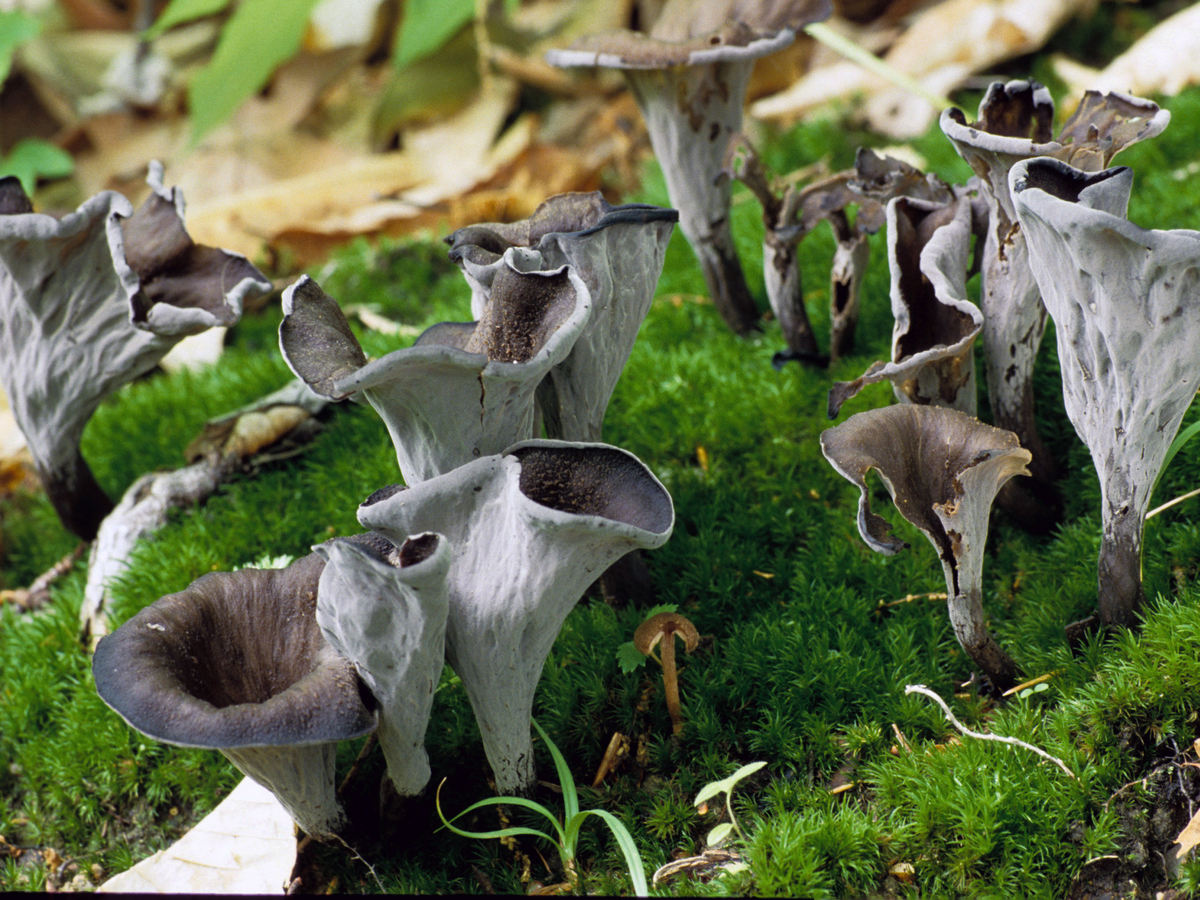
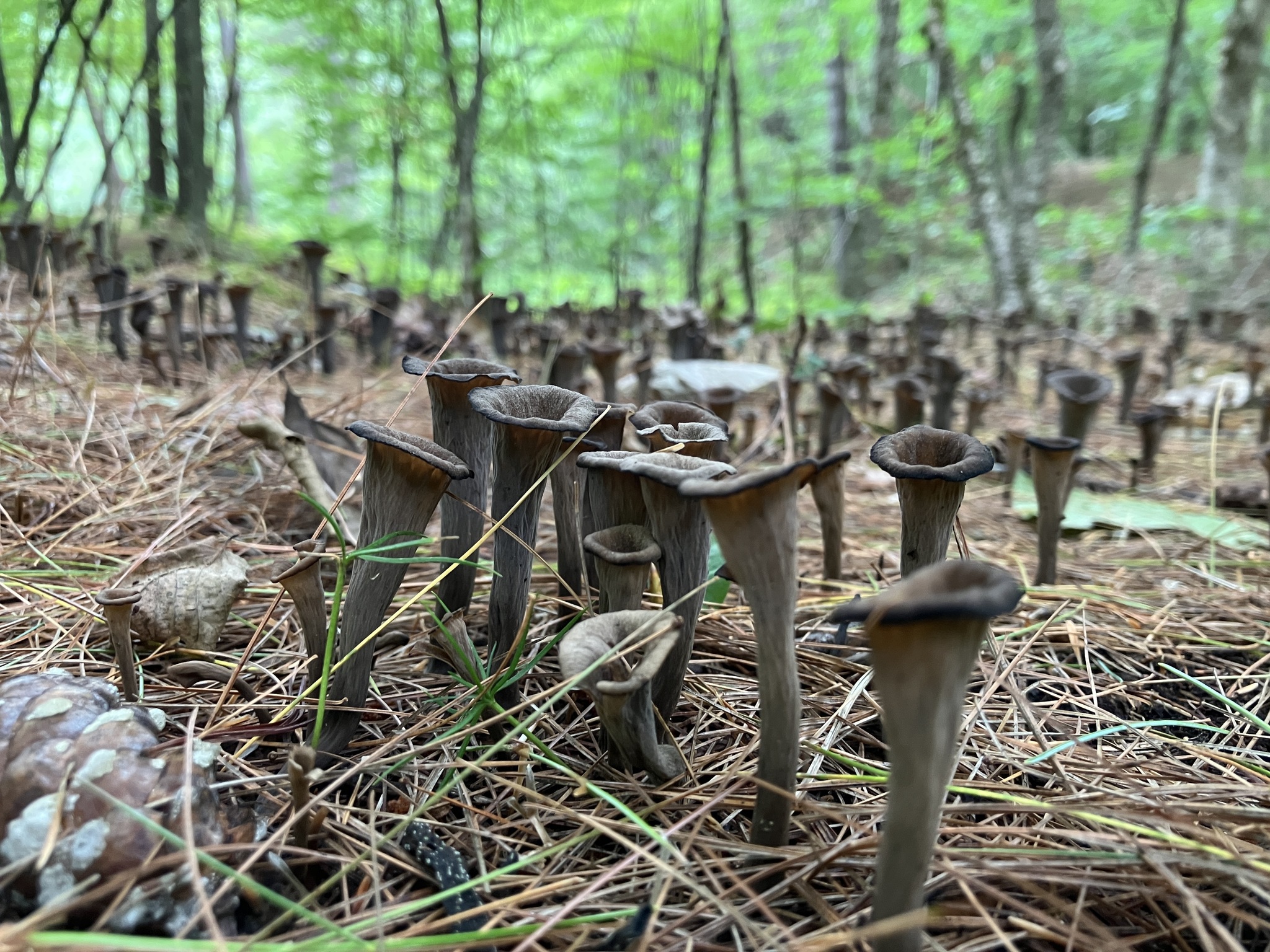
In the mossy woods, a charcoal black hole in the leaves might be a gourmet find. The Black Trumpet, or Craterellus fallax, is a master of camouflage that smells remarkably like overripe apricots. Unlike its European cousin with white spores, our native species produces a distinctive salmon pink spore print. This mushroom is biologically unique, acting in a dual capacity as both a symbiotic tree partner and a recycler of organic matter.
Centuries ago, this funnel shape inspired the Greek myth of the cornucopia, the horn of plenty. Today, that legacy continues in a thriving global market for wild mushrooms. Because they are strictly wild and cannot be farmed, they are prized as high-value boutique products in top restaurants. They are commercially harvested in massive quantities across North America and Europe, remaining one of the most valued exports of the forest.
Science confirms this species is a nutritional powerhouse. A 100-gram portion of the dried mushroom contains an impressive 69 grams of protein. Researchers are studying its bioactive phenols and fatty acids for potent antioxidant and anti-inflammatory effects. These compounds show promise in managing neurodegenerative conditions like Alzheimer’s and Parkinson’s, while specific polysaccharides, such as CCP, help stimulate human immunological activity via the TLR4-NFκB pathway.
In the kitchen, the Black Trumpet is known as the poor man's truffle due to its rich, smoky flavor. Its intense aroma actually improves when dried, making it a favorite for everything from savory risottos to sweet mushroom jams. While they are considered a safe species for beginners because they have no poisonous look-alikes, foraged mushrooms must be fresh and thoroughly cooked to avoid gastric irritation.
Currently, you cannot grow these at home in a garden or kit because they require complex tree relationships. However, they serve a vital practical role in environmental restoration. As a symbiotic partner, they help trees like the Virginia Pine survive in soil contaminated by heavy metals, effectively suppressing toxicity symptoms within the ecosystem.
Join The Mushroom Journey
Peak foraging season spans summer and fall, but keep in mind this piece is neither an identification manual nor a medical prescription. Consistently purchase mushrooms from trusted vendors and prepare them with thorough cooking. Never consume wild mushrooms lacking in person verification by a qualified expert. To uncover hundreds of native gourmet, functional, and practical mushroom videos, products, and events, subscribe to the free newsletter at NourishCap.com.
Sources Cited
Bergo, Alan. "Black Trumpet Mushrooms." Forager | Chef, 25 Mar. 2023.
Bumbu, Mariana-Gabriela, et al. "Comprehensive Review of Functional and Nutraceutical Properties of Craterellus cornucopioides (L.) Pers." Nutrients, vol. 16, no. 6, 14 Mar. 2024.
Jenny. "How to Harvest, Clean, and Cook Black Trumpet Mushrooms." Mushroom Appreciation, 6 June 2025.
Kuo, Michael. "Craterellus fallax." MushroomExpert.Com, Feb. 2015.
Matheny, Patrick Brandon, et al. "Craterellus fallax, a Black Trumpet mushroom from eastern North America with a broad host range." Mycorrhiza, vol. 20, 3 July 2010.
Radović, Jelena, et al. "Black Trumpet, Craterellus cornucopioides (L.) Pers.: Culinary Mushroom with Angiotensin Converting Enzyme Inhibitory and Cytotoxic Activity." Polish Journal of Food and Nutrition Sciences, vol. 72, no. 2, 6 June 2022.
Selemin, Julian. "The Complete Guide to Black Trumpet Mushrooms." Shroomer, 22 Aug. 2023.
Volk, Thomas J. "Craterellus fallax, the black trumpet, Tom Volk's Fungus of the Month for July 1998." TomVolkFungi.net, July 1998.
Wine Forest Wild Foods. "The Wild Bible Entry All About Wild Black Trumpet Mushrooms." Wine Forest Wild Foods, 2026.
About the Author
Benjamin Ashpole is a certified forager through the Hoosier Mushroom Society, a mushroom educator, and a media producer. Ben writes a widely syndicated column on North American gourmet and functional fungi to inspire mushroom curiosity. As founder of NourishCap.com, he creates educational videos at youtube.com/@NourishCap that demystify everything from forest foraging and home cultivation to the science behind functional and medicinal species. Drawing on years of field experience and ongoing reporting about global fungal science, to support media production, Ben and his team maintain a marketplace of mushroom product vendors and service providers at NourishCap.com so that everyday people can safely benefit from the hidden fungal world around them. Contact Benjamin if you’d like to know more about a specific mushroom, join a foray, request a presentation, or get help with identification at facebook.com/NourishCap. For identification help via Facebook: share pictures of the mushroom’s top, sides, bottom, and habitat along with the name of the closest city and state.


