Local Mushroom of the Week, Veiled Oyster, The Forest's Tree-Hugging Predator
Benjamin Ashpole
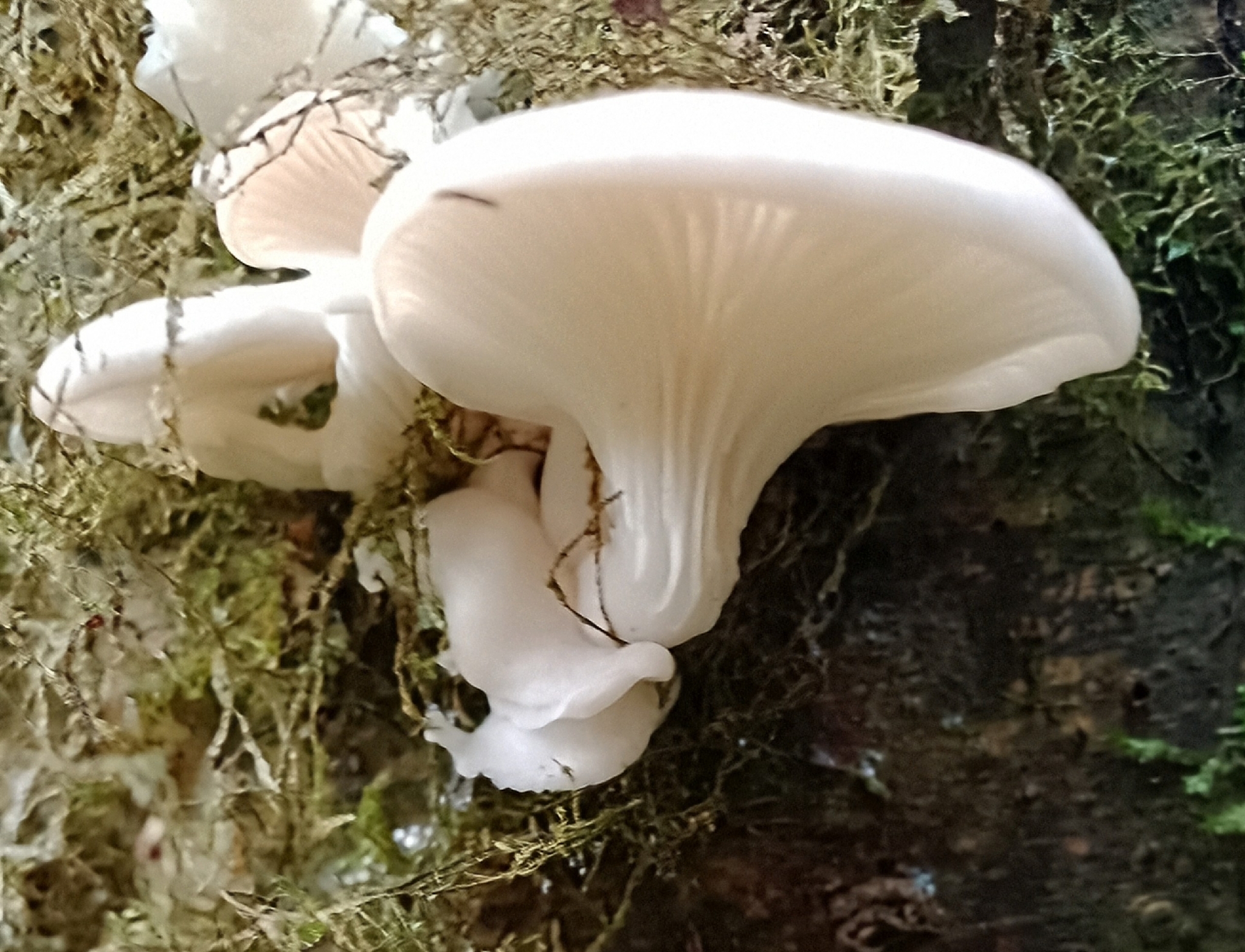
The Veiled Oyster (Pleurotus dryinus) appears in the hardwood forests of North America. It is a saprobic and occasionally weakly parasitic mushroom that fruits on dead or dying broad-leaved trees, especially on oak and beech trees. Unlike many smooth, nearly stemless oyster mushrooms, Pleurotus dryinus often develops a felted to slightly hairy cap surface and a partial veil that can leave hanging fragments on the cap margin or a ring on the stem. Like other oyster mushrooms, the veiled oyster has been reported to attack nematodes. Still, the precise structures and toxins involved are less well studied than in the common oyster, Pleurotus ostreatus.
The veiled oyster often produces a more pronounced, fibrous stem than typical side-stemmed oysters, and older specimens can become quite tough. The species was first described by Christian Hendrik Persoon in 1800 as Agaricus dryinus, which was later transferred to the genus Pleurotus. Recent work on the veiled oyster has focused less on its culinary value and more on its ability to produce unusual secondary metabolites with potential biotechnological applications.
Scientifically, cultures of Pleurotus dryinus produce distinctive burgundy-red meroterpenoid pigments known as dryinones, which have been structurally characterized as aminoquinone-containing secondary metabolites. Like other oyster mushrooms, the veiled oyster contains cell-wall polysaccharides and other compounds that are found in the Pleurotus species as candidates for functional foods.
The mushroom’s reinforced texture, caused by thick-walled skeletal hyphae, requires strategic cooking. Searing thin caps in a dry pan creates caramelized savory chips, while a long-duration simmer, or aqueous decoction, produces a thick, seafood-flavored broth. While generally safe, some individuals may experience allergic reactions to oyster mushrooms.
Home enthusiasts can cultivate this species on hardwood sawdust or agricultural waste with high humidity and blue light triggers. Beyond food, it is an ecological worker. The veiled oyster, Pleurotus dryinus, produces powerful laccase enzymes that can remove certain high-priority pesticides, including the herbicide atrazine, from water in lab trials, and separate work shows it can also generate novel burgundy-red pigments with potential as natural colorants.
Peak foraging is July through November, but this is not an identification guide or medical advice. Always purchase from reputable sources and cook well. Never eat foraged mushrooms without expert identification. For gourmet and functional mushroom resources, join the free newsletter at NourishCap.com.
Sources Cited
* Broel, Niklas, et al. "Dryinones: Structure Elucidation of Red Colorants from Submerged Cultures of Pleurotus dryinus." Journal of Natural Products, vol. 88, no. 11, Nov. 2025, pp. 2602-09. https://pubs.acs.org/doi/10.1021/acs.jnatprod.5c00926.
* Eflora.info. "Pleurotus Sp. - Oyster Mushrooms." June 2023. https://eflora.neocities.org/Pleurotus.
* Kuo, Michael. "Pleurotus dryinus." MushroomExpert.Com, Feb. 2018. http://www.mushroomexpert.com/pleurotus_dryinus.html.
* McHugh, Anna. "Pleurotus Dryinus, the Veiled Oyster Mushroom." Anna's Blog, July 2015. http://blog.mushroomanna.com/pleurotus-dryinus-veiled-oyster-mushroom/.
* O'Reilly, Pat. "Pleurotus dryinus, Veiled Oyster mushroom." First Nature, 2022. https://www.first-nature.com/fungi/pleurotus-dryinus.php.
* Tim Moya Associates. "Pleurotus dryinus - Veiled Oyster." TMA Fungi, 2018. https://www.tma-fungi.co.uk/62.html.
* Wikipedia. "Pleurotus dryinus." May 2025. https://en.wikipedia.org/wiki/Pleurotus_dryinus.
About the Author
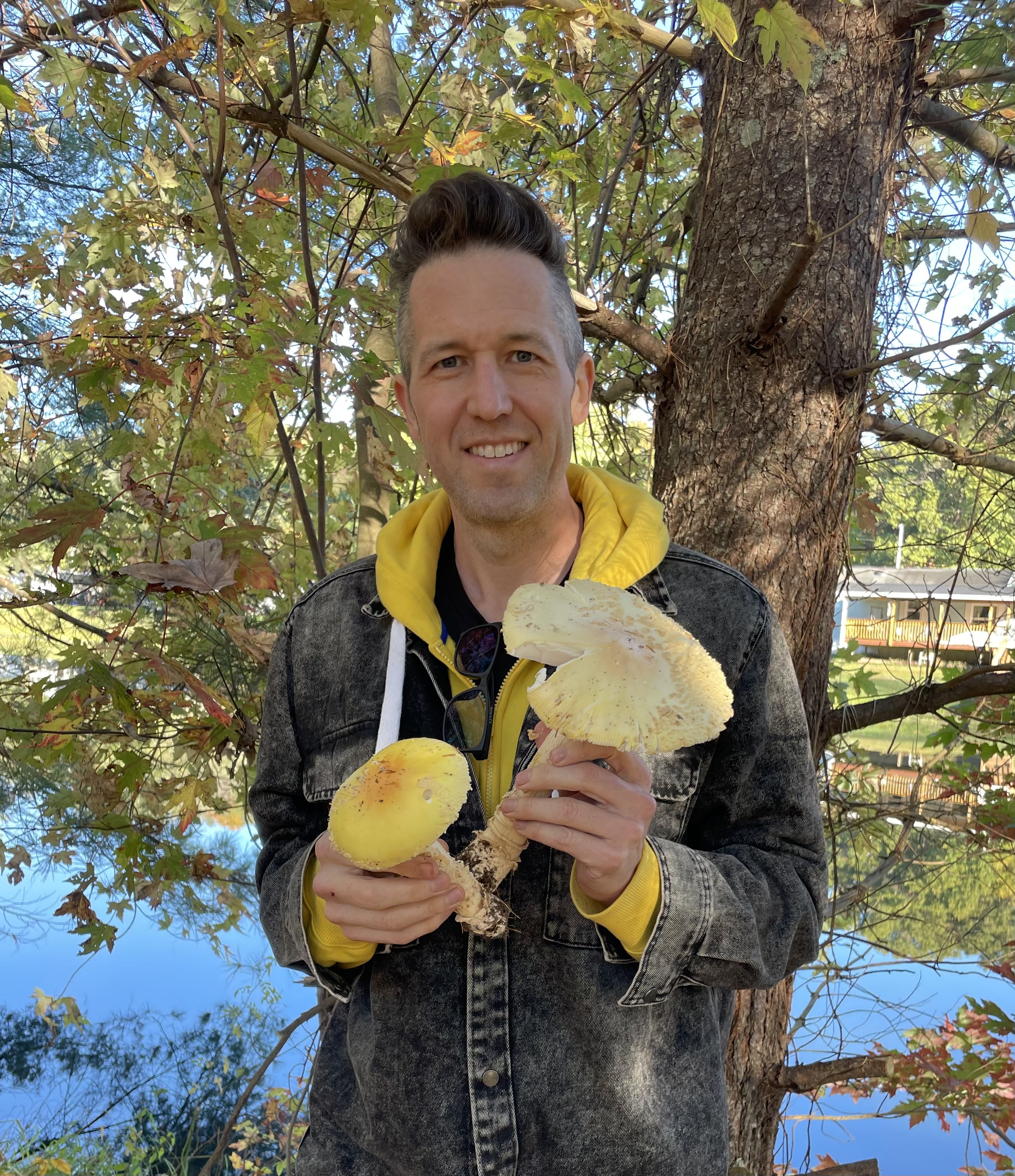
Benjamin Ashpole is a certified forager through the Hoosier Mushroom Society, a mushroom educator, and a media producer. Ben writes a widely syndicated column on North American gourmet and functional fungi to inspire mushroom curiosity. As founder of NourishCap.com, he creates educational videos at youtube.com/@NourishCap that demystify everything from forest foraging and home cultivation to the science behind functional and medicinal species. Drawing on years of field experience and ongoing reporting about global fungal science, to support media production, Ben and his team maintain a marketplace of mushroom product vendors and service providers at NourishCap.com so that everyday people can safely benefit from the hidden fungal world around them. Contact Benjamin if you’d like to know more about a specific mushroom, join a foray, request a presentation, or get help with identification at facebook.com/NourishCap. For identification help via Facebook: share pictures of the mushroom’s top, sides, bottom, and habitat along with the name of the closest city and state.