Local Mushroom of the Week, Birch Bolete, A Wild Mushroom with Surprising Biochemistry by Benjamin Ashpole, NourishCap.com
Benjamin Ashpole
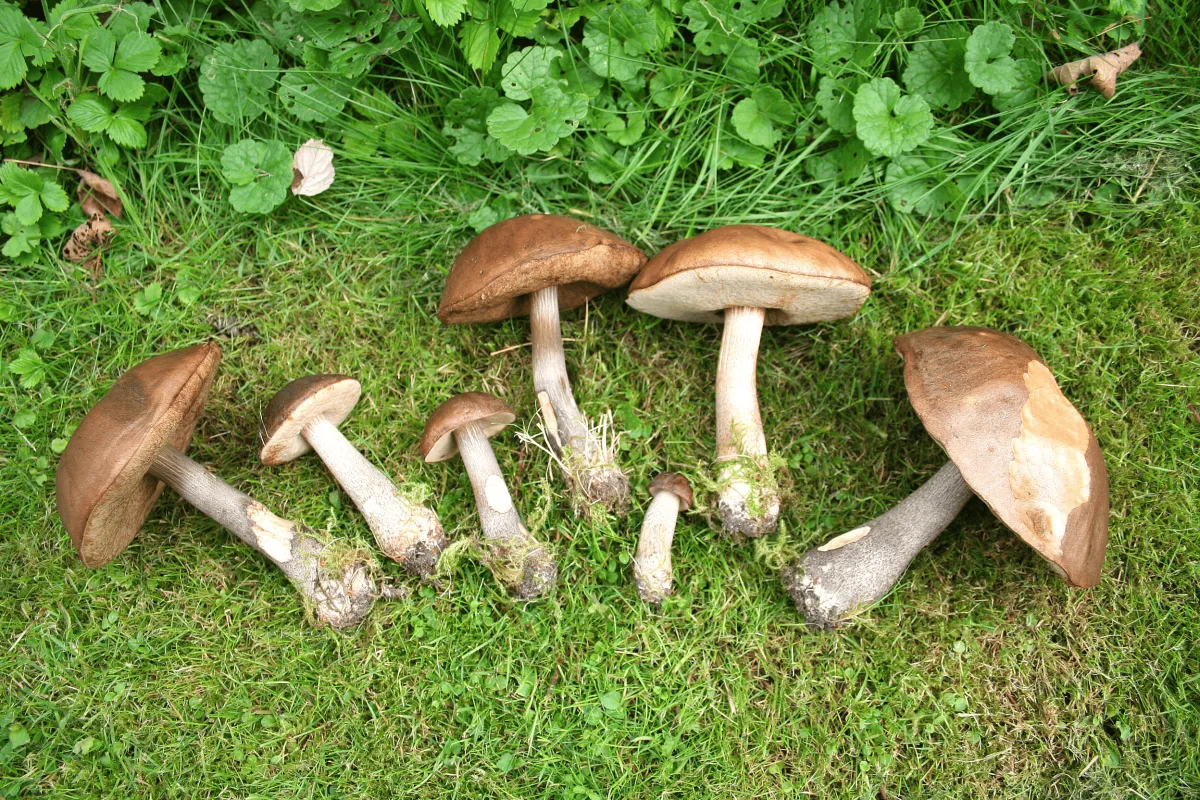
Beneath the birch trees of North America, a unique fungus known as the Birch Bolete, or Leccinum scabrum, is currently appearing. This species forms a mutually beneficial relationship with tree roots known as a mycorrhizal partnership. In North America, it is often called the Scaber Stalk because of the dark, sandpaper-like scales on its stem. While foragers across the continent value its presence, this mushroom hides a biochemical profile that challenges modern pharmacology.
Although the mushroom industry is expanding globally, the Birch Bolete has more of a niche market and is instead mainly foraged. In Eastern Europe, the Birch Bolete is a seasonal staple gathered by the basketful for traditional soups and it remains a wild prize rather than a grocery item because it is an ectomycorrhizal species, meaning it refuses to fruit without a living host tree.
Science has confirmed that this mushroom is a metabolic powerhouse. It contains substances that inhibit enzymes to regulate blood sugar, known as alpha-glucosidase inhibitors. In laboratory studies, its extracts were 60 times more potent than the reference compound 1-deoxynojirimycin. Beyond sugar regulation, it contains a building block of human happiness called 5-HTP. Its bioactive compounds are heat-sensitive, however, drying at 70 degrees Celsius causes a catastrophic loss of over 90 percent of some organic acids, along with significant reductions in phenolics and ergosterol.
In the kitchen, the Birch Bolete offers a surprising twist: its white flesh darkens dramatically, often turning gray-black to nearly black when cooked. This transformation is harmless and reveals a mild, nutty flavor. While generally safe, always make sure to cook thoroughly.
Growing this species at home is an expert challenge because it requires establishing birch saplings to support its lifestyle. Beyond food, the Birch Bolete is exceptionally well at mycoremediation, the process of using fungi to clean the environment. Its mycelium has the potential to degrade toxic DDT pesticides in just 15 days.
Peak foraging runs from June to September, extending into November in the West Coast, but this article is not for identification or medical advice. Buy mushrooms from reputable sources and cook them well. Never ingest foraged mushrooms without expert verification. To see native gourmet, functional, and practical mushroom videos, products, and events, join the free newsletter at NourishCap.com.
Image Credit: Jean-Pol GRANDMONT, Leccinum scabrum JPG7, licensed under CC BY-SA 3.0. Original: Wikimedia Commons. License:https://creativecommons.org/licenses/by-sa/3.0/
Sources Cited
Budau, Ruben, et al. "The Genus Leccinum: Global Advances in Taxonomy, Ecology, Nutritional Value, and Environmental Significance." Journal of Fungi, vol. 12, no. 1, 16 Jan. 2026, p. 70. PubMed Central, https://pmc.ncbi.nlm.nih.gov/articles/PMC12842815/.
"Birch Bolete (Leccinum scabrum)." Zombie Mushrooms, 2026, https://zombiemyco.com/pages/birch-bolete-leccinum-scabrum.
"Brown Birch Bolete (Leccinum scabrum var. brunneogriseolum)." Zombie Mushrooms, 2026, https://zombiemyco.com/pages/brown-birch-bolete-leccinum-scabrum-var-brunneogriseolum.
Ferraro, Valeria, et al. "Hypoglycemic Properties of Leccinum scabrum Extracts—An In Vitro Study on α-Glucosidase and α-Amylase Inhibition and Metabolic Profile Determination." Journal of Fungi, vol. 10, no. 10, 15 Oct. 2024, p. 718. PubMed Central, https://pmc.ncbi.nlm.nih.gov/articles/PMC11508548/.
Gąsecka, Monika, et al. "The effect of drying temperature on bioactive compounds and antioxidant activity of Leccinum scabrum (Bull.) Gray and Hericium erinaceus (Bull.) Pers." Journal of Food Science and Technology, vol. 57, no. 2, 18 Sep. 2019, pp. 513–525. PubMed Central, https://pmc.ncbi.nlm.nih.gov/articles/PMC7016157/.
Gabryel, Stefano. "Birch Bolete (Leccinum Scabrum): Rare in Tuscany." Stefano Gabryel, 6 Feb. 2026, https://stefanogabryel.net/blog/leccinum-scabrum-birch-bolete-tuscany/.
Jones, Julie. "Leccinum scabrum." Burke Herbarium Image Collection, 2026, https://burkeherbarium.org/imagecollection/taxon.php?Taxon=Leccinum%20scabrum.
"Leccinum scabrum." Ultimate-Mushroom.com, https://ultimate-mushroom.com/edible/206-leccinum-scabrum.html.
"Leccinum scabrum." Wikipedia, 27 Oct. 2025, https://en.wikipedia.org/wiki/Leccinum_scabrum.
"Leccinum scabrum, Brown Birch Bolete, identification." First Nature, https://www.first-nature.com/fungi/leccinum-scabrum.php.
Mędyk, Małgorzata, et al. "Inorganic elemental concentrations in birch bolete mushroom (Leccinum scabrum) and top soil: contamination profiles, bioconcentration and annual variations." Journal of Environmental Science and Health, Part B, vol. 53, no. 12, 2018, pp. 831-839. FAO AGRIS, https://agris.fao.org/search/en/providers/122535/records/65df6b3163b8185d9cace68f.
Richart, Jo. "Brown Birch Bolete (Leccinum scabrum)." Charnwood Foraging, 23 Dec. 2024, https://charnwoodforaging.co.uk/brown-birch-bolete/.
Šnirc, Marek, et al. "Risk Assessment of the Wild Edible Leccinum Mushrooms Consumption According to the Total Mercury Content." Journal of Fungi, vol. 9, no. 3, 22 Feb. 2023, p. 287. MDPI, https://www.mdpi.com/2309-608X/9/3/287.
Sotek, Zofia, et al. "Bioactive Compounds and Antioxidant Activity of Boletus edulis, Imleria badia, Leccinum scabrum in the Context of Environmental Conditions and Heavy Metals Bioaccumulation." Molecules, vol. 30, no. 15, 5 Aug. 2025, p. 3277. PubMed Central, https://pmc.ncbi.nlm.nih.gov/articles/PMC12348591/.
About the Author
Benjamin Ashpole is a certified forager through the Hoosier Mushroom Society, a mushroom educator, and a media producer. Ben writes a widely syndicated column on North American gourmet and functional fungi to inspire mushroom curiosity. As founder of NourishCap.com, he creates educational videos at youtube.com/@NourishCap that demystify everything from forest foraging and home cultivation to the science behind functional and medicinal species. Drawing on years of field experience and ongoing reporting about global fungal science, to support media production, Ben and his team maintain a marketplace of mushroom product vendors and service providers at NourishCap.com so that everyday people can safely benefit from the hidden fungal world around them. Contact Benjamin if you’d like to know more about a specific mushroom, join a foray, request a presentation, or get help with identification at facebook.com/NourishCap. For identification help via Facebook: share pictures of the mushroom’s top, sides, bottom, and habitat along with the name of the closest city and state.