The Forest’s Dark Golden Treasure
By: Benjamin Ashpole
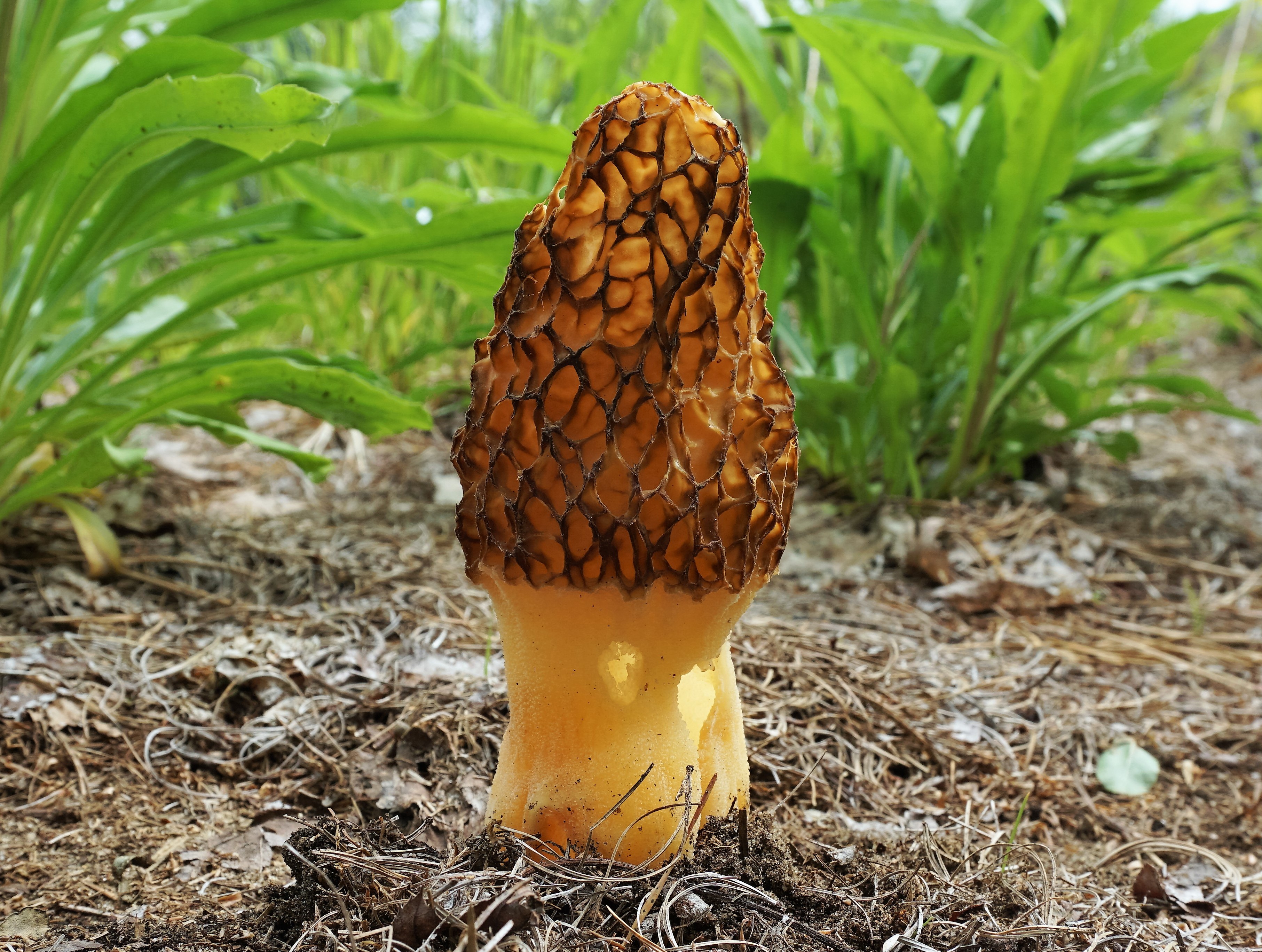
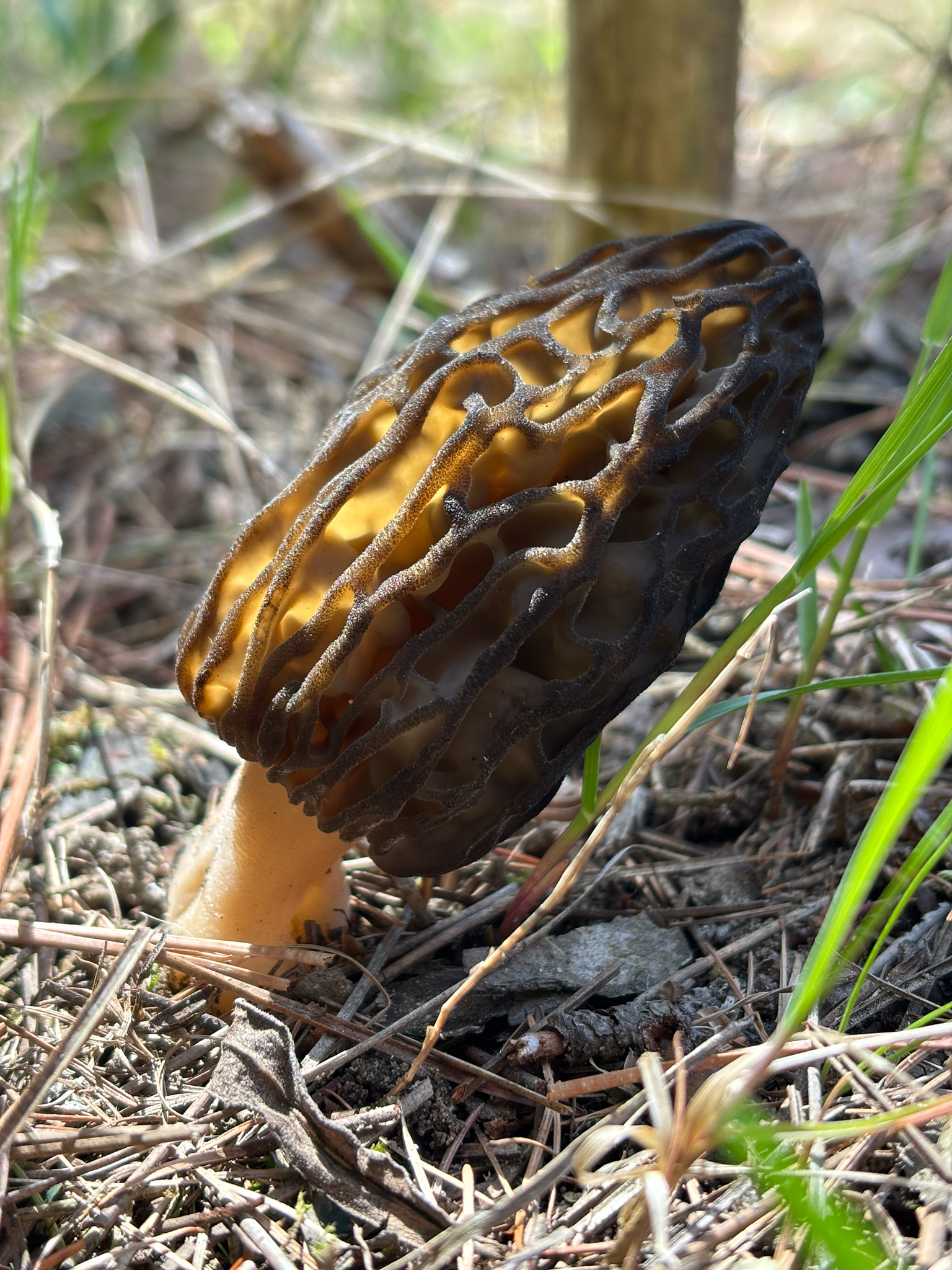
Spring has arrived, bringing a legendary visitor hidden in our forests. The Black Morel, scientifically known as Morchella elata, is a master of survival, first described by Elias Fries in 1822. While long thought to be the same worldwide, DNA testing confirms North American varieties are unique from European relatives. These fungi play a vital role as saprobes, decomposing organic matter to recycle life into local soils.
Globally, morels are so prized they are nicknamed "the gold of edible fungi". This reputation dates back to ancient times. Because commercial cultivation of fruiting bodies remains notoriously difficult due to environmental sensitivities, they are primarily wild-harvested. Consequently, they command exceptionally high market prices as a significant economic driver for rural communities and specialty markets.
Scientifically, Black Morels harbor a powerful biochemical arsenal. They contain unique polysaccharides like MSP1-2, which possess a "fishnet-like" chain structure that enhances immune cell interactions. These compounds act as "liver guardians" by suppressing specific inflammatory pathways, specifically the NLRP3 inflammasome, to prevent tissue injury. Recent studies also suggest they inhibit enzymes related to neurotransmitter breakdown, showing promise for memory support and cognitive health.
In the kitchen, the honeycomb cap acts as a natural sponge, especially when pressure-steamed to maximize absorption. Frying provides a toasted, nutty, and crisp texture. Drying the mushroom is a standard practice to intensify its deep, earthy flavor. These mushrooms must be cooked thoroughly because they contain heat-sensitive toxins that cause stomach pain if eaten raw.
Home cultivation is possible using "exogenous nutrient bags" filled with agricultural waste like wheat grain or wood chips. Beyond food, the Black Morel is a practical powerhouse. Its mycelium can "vacuum" toxic heavy metals like cadmium and lead from contaminated soil. Specialized mutant strains have even been utilized to produce sustainable indigo pigment for non-toxic textile dyeing.
Join The Mushroom Journey
Peak foraging season spans summer and fall, but keep in mind this piece is neither an identification manual nor a medical prescription. Consistently purchase mushrooms from trusted vendors and prepare them with thorough cooking. Never consume wild mushrooms lacking in person verification by a qualified expert. To uncover hundreds of native gourmet, functional, and practical mushroom videos, products, and events, subscribe to the free newsletter at NourishCap.com.
Sources Cited
Kuo, Michael. "Morchella angusticeps." MushroomExpert.Com, Nov. 2012, http://www.mushroomexpert.com/morchella_angusticeps.html.
Li, Xue, et al. "Morel in Heavy Metal-Contaminated Soils." Encyclopedia.pub, 9 Oct. 2023, https://encyclopedia.pub/entry/49944.
Li, Yitong, et al. "Cultivation, nutritional value, bioactive compounds of morels, and their health benefits: A systematic review." Frontiers in Nutrition, vol. 10, 16 Mar. 2023, https://www.frontiersin.org/journals/nutrition/articles/10.3389/fnut.2023.1159029/full.
"THE EASTERN BLACK MOREL (MORCHELLA ANGUSTICEPS) Eastern U.S. Morels #morel #mushroomhunting #fungi." YouTube, uploaded by Mushroom Journeys, 2024, https://www.youtube.com/shorts/KeB3RFJXu4U.
Xu, Lingling, et al. "Challenges and Strategies for Continuous Cropping of Morchella spp.: A Review." Horticulturae, vol. 10, no. 12, 3 Dec. 2024, https://www.mdpi.com/2311-7524/10/12/1288.
About the Author
Benjamin Ashpole is a certified forager through the Hoosier Mushroom Society, a mushroom educator, and a media producer. Ben writes a widely syndicated column on North American gourmet and functional fungi to inspire mushroom curiosity. As founder of NourishCap.com, he creates educational videos at youtube.com/@NourishCap that demystify everything from forest foraging and home cultivation to the science behind functional and medicinal species. Drawing on years of field experience and ongoing reporting about global fungal science, to support media production, Ben and his team maintain a marketplace of mushroom product vendors and service providers at NourishCap.com so that everyday people can safely benefit from the hidden fungal world around them. Contact Benjamin if you’d like to know more about a specific mushroom, join a foray, request a presentation, or get help with identification at facebook.com/NourishCap. For identification help via Facebook: share pictures of the mushroom’s top, sides, bottom, and habitat along with the name of the closest city and state.


