Street-Corner Sparkle: Mica Cap, Coprinellus micaceus
By: Benjamin Ashpole
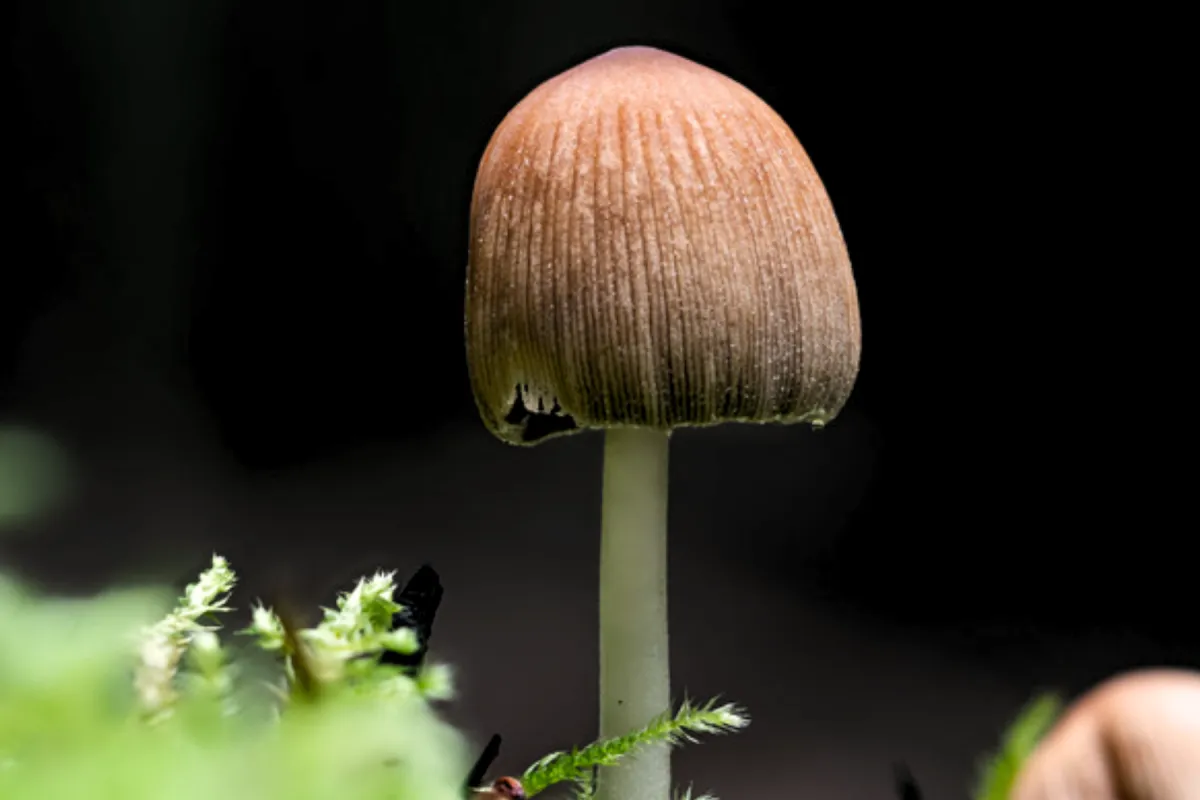
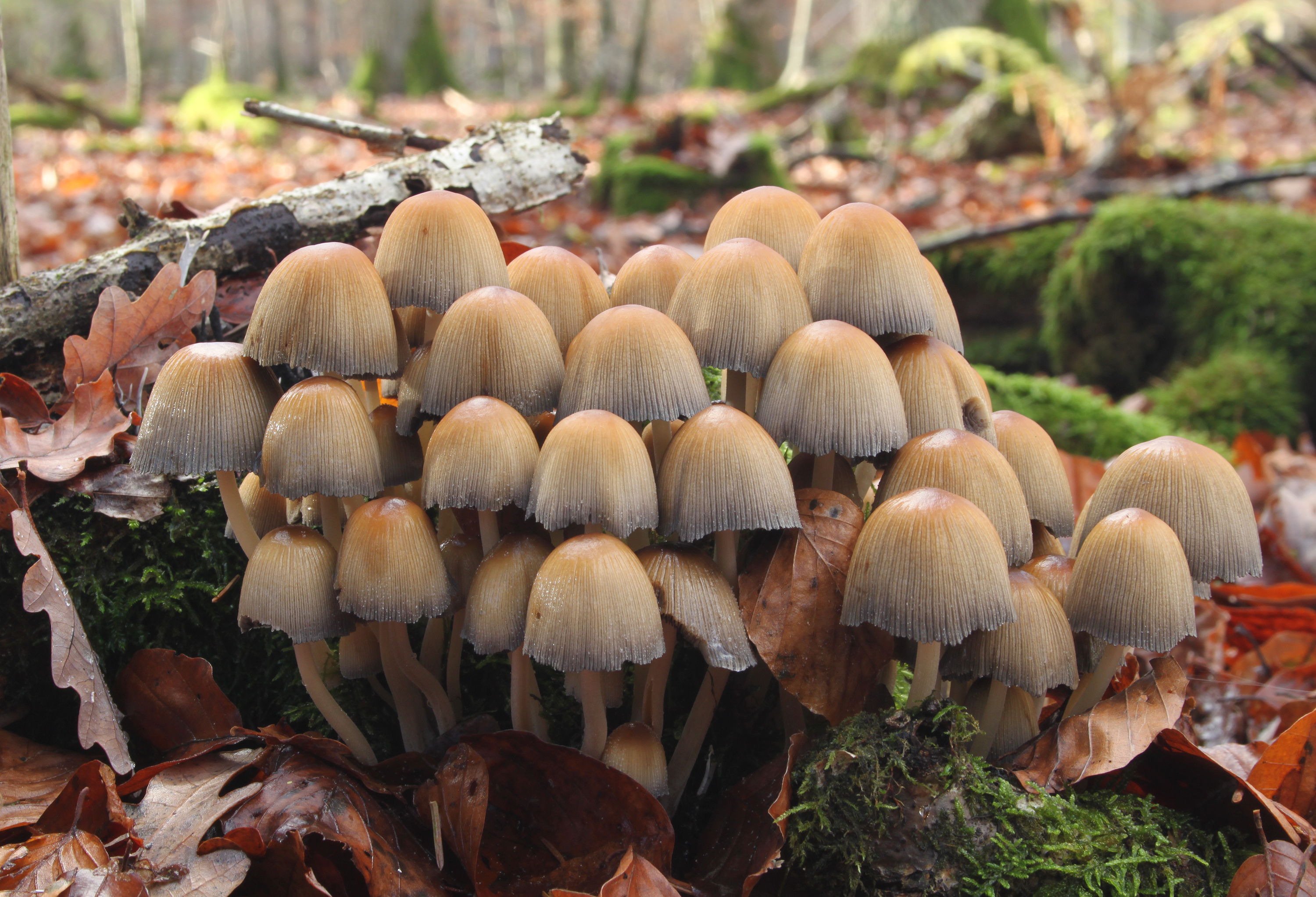
If you walk past a sidewalk tree and notice a cluster of tiny, honey colored mushrooms glittering with the morning dew, you might have met Mica Cap. Common in North America, scientifically named Coprinellus micaceus, Mica Caps quietly break down buried wood like dead roots, helping enrich soil. Long treated as a minor curiosity in field guides, they are getting a second look for nutrients, bioactive compounds, and ecological work.
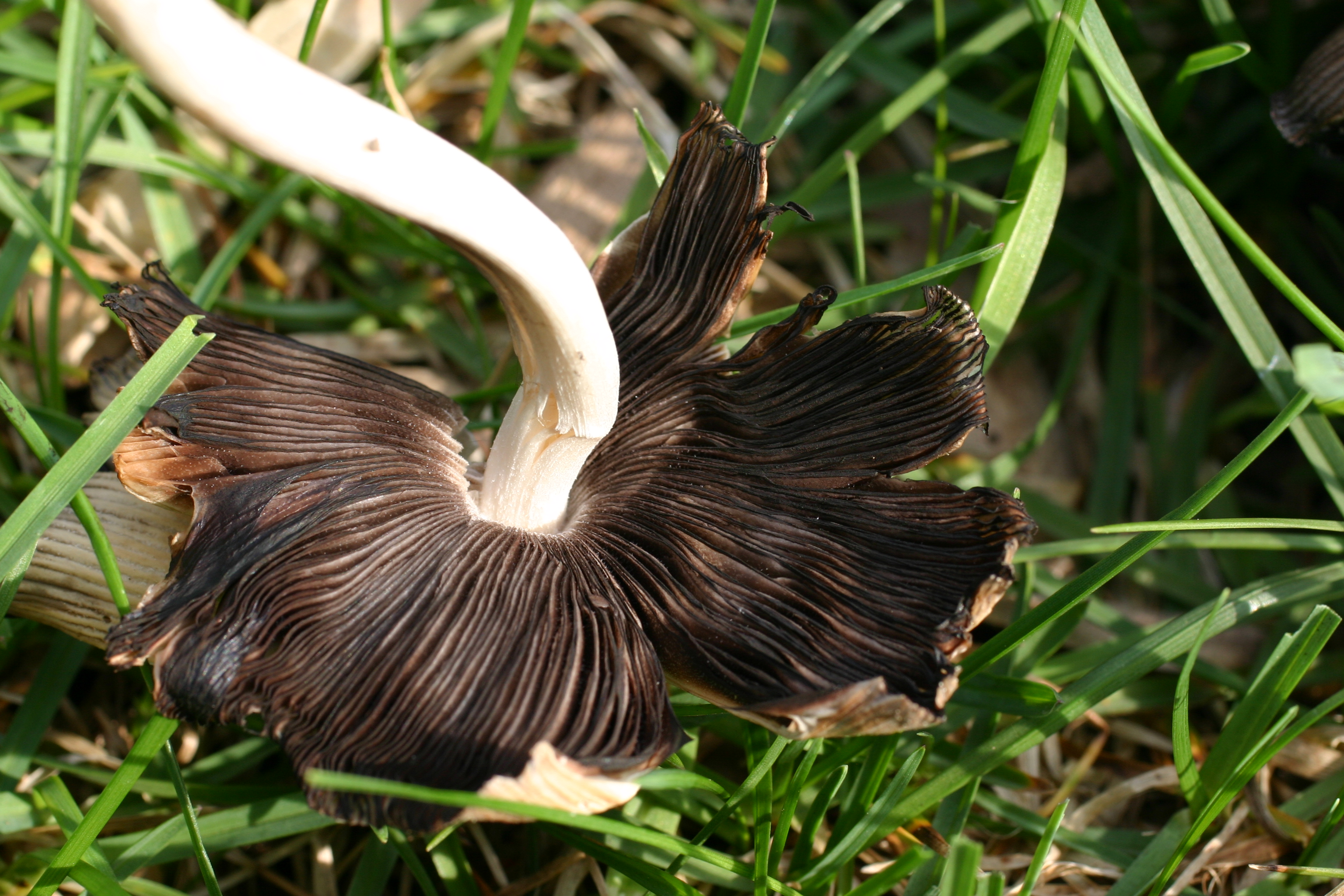
Around the world, relatives of Mica Cap have long been symbols of impermanence and renewal. Their fragile caps appear quickly and then dissolve into inky black fluid, a process called “deliquescence”. Extracted fluid can be used as writing ink.
All of this is still preclinical, but researchers in Europe and Asia have also analyzed Coprinellus micaceus and its close kin for medically interesting compounds. For example, extracts from Mica Caps show antioxidant activity in the lab. Scientists also found “micaceol”, which has modest antibacterial effects in test tubes.
For cooks who move fast, still-young, tightly closed Mica Caps can be sautéed soon after harvest for a mild, pleasant flavor when quickly cooked with eggs, grains, or spring vegetables. Note that similar-looking Inky Caps (Coprinopsis atramentaria) are known to trigger unpleasant reactions when combined with alcohol, and because identification mistakes are easy, many foragers avoid mixing alcohol with any similar mushrooms, including presumed Mica Caps.
Gardeners and hobby mycologists can encourage Mica Caps at home by burying hardwood chips or small logs in shaded, moist beds, or by inoculating outdoor patches with spawn from specialty suppliers. Indoors, they sometimes volunteer in potted plants, a living sign of active organic matter breaking down rather than a problem to be solved. Beyond the backyard, fungi like Mica Cap belong to a wider group of wood rotting mushrooms that scientists study for mycoremediation, the use of fungi to help clean up polluted soils and water.
Join The Mushroom Journey
Peak foraging season runs from spring through fall in many regions, but remember, this article is not a guide to identifying mushrooms and is not medical advice. Always buy mushrooms from reputable sources, cook them thoroughly, and never eat foraged mushrooms without in person confirmation from a qualified human expert. To discover more native gourmet, functional, and practical mushroom videos, products, and events, and to keep learning how fungi like Mica Cap are reshaping our backyards and our future, join the free newsletter at NourishCap.com.
Sources Cited
“Coprinellus micaceus.” Wikipedia, en.wikipedia.org/wiki/Coprinellus_micaceus.
“Coprinellus micaceus (MushroomExpert.com).” MushroomExpert, mushroomexpert.com/coprinellus_micaceus.html.
“Mica Cap.” Minnesota Seasons, minnesotaseasons.com/Fungi/Mica_Cap.html.
“Mica Cap (Coprinellus micaceus).” Zombie Mushrooms, zombiemyco.com/pages/mica-cap-coprinellus-micaceus.
“Coprinellus micaceus, Glistening Inkcap mushroom.” First Nature, first-nature.com/fungi/coprinellus-micaceus.php.
Badalyan, S., et al. “Status Review of the Distribution, Biological Compounds, and …” Maxapress, 2025, maxapress.com/article/id/691bc5c7fa6c581d204789fa.
“Ohtsuka, et al. ‘Polysaccharides from Coprinellus micaceus.’” Ultimate Mushroom, ultimate-mushroom.com/edible/100-coprinellus-micaceus.html.
“New Bioactive Natural Products from Coprinus micaceus.” PubMed, pubmed.ncbi.nlm.nih.gov/17393652.
“Determination of Antioxidant and Antimicrobial Activities of Medically Important Mushrooms.” Journal of Food and Nutrition Research, pubs.sciepub.com/jfnr/2/8/1.
“Mycoremediation: What Are the Benefits?” Om Mushroom, ommushrooms.com/blogs/blog/mycoremediation-m2.
“Mycoremediation: Studies in Mycelium as an Agent of Bioremediation.” Ohio State Pressbooks, ohiostate.pressbooks.pub/sciencebitesvolume2/chapter/3-6-mycoremediation-studies-in-mycelium-as-an-agent-of-bioremediation.
“Health Benefits of Shaggy Mane Mushroom.” WebMD, webmd.com/diet/health-benefits-shaggy-mane-mushroom.
“Coprinus Mushroom Benefits?” DrWeil.com, drweil.com/health-wellness/body-mind-spirit/hair-skin-nails/coprinus-mushroom-benefits.
“Can You Grow Mushrooms on Woodchips?” AHS Ltd, ahs-ltd.co.uk/can-you-grow-mushrooms-on-woodchips.
“How to Grow Mushrooms on Woodchip.” Chelsea Green Publishing, chelseagreen.com/2024/methods-for-growing-mushrooms-in-woodchip.
“A Basic Guide to Mushrooms Commonly Encountered in Potted Plants.” UF/IFAS Extension, edis.ifas.ufl.edu/publication/PP377.
“The Mica Cap Mushroom (Coprinellus micaceus).” Forager | Chef, foragerchef.com/mica-cap-mushroom.
“Coprine: Alcohol Poisoning From Mushrooms?” Nature’s Poisons, naturespoisons.com/2014/04/10/coprine-alcohol-poisoning-from-mushrooms.
“Alcohol Intolerance with Coprine-like Syndrome …” PubMed, pubmed.ncbi.nlm.nih.gov/21370948.
“Coprinoid Mushrooms: The Inky Caps.” MushroomExpert, mushroomexpert.com/coprinoid.html.
“Fruiting Bodies and Submerged Cultures of Coprinus comatus …” PMC, pmc.ncbi.nlm.nih.gov/articles/PMC5306037.
“The Antioxidant Potential of Different Edible and Medicinal Mushrooms.” ScienceDirect, sciencedirect.com/science/article/pii/S0753332222000099.
About the Author
Benjamin Ashpole is a certified forager through the Hoosier Mushroom Society, a mushroom educator, and a media producer. Ben writes a widely syndicated column on North American gourmet and functional fungi to inspire mushroom curiosity. As founder of NourishCap.com, he creates educational videos at youtube.com/@NourishCap that demystify everything from forest foraging and home cultivation to the science behind functional and medicinal species. Drawing on years of field experience and ongoing reporting about global fungal science, to support media production, Ben and his team maintain a marketplace of mushroom product vendors and service providers at NourishCap.com so that everyday people can safely benefit from the hidden fungal world around them. Contact Benjamin if you’d like to know more about a specific mushroom, join a foray, request a presentation, or get help with identification at facebook.com/NourishCap. For identification help via Facebook: share pictures of the mushroom’s top, sides, bottom, and habitat along with the name of the closest city and state.


