Memory Mushroom: How One Scientist Unlocked Lion's Mane Benefits
“The universe is bound together by hidden threads—some stretching across the cosmos, others woven silently through the mycelium beneath our feet.”
The Hidden Threads Beneath Our Feet
Beneath our feet, mycelium forms a living network that nourishes forests and carries signals between roots, an unseen system with the power to nourish, heal, and transform. Lion’s mane mushroom emerges from this hidden world as both food and potential brain-supporting ally, challenging old fears and dismissals around fungi.
Meeting Dr. Shu-Ting Chang
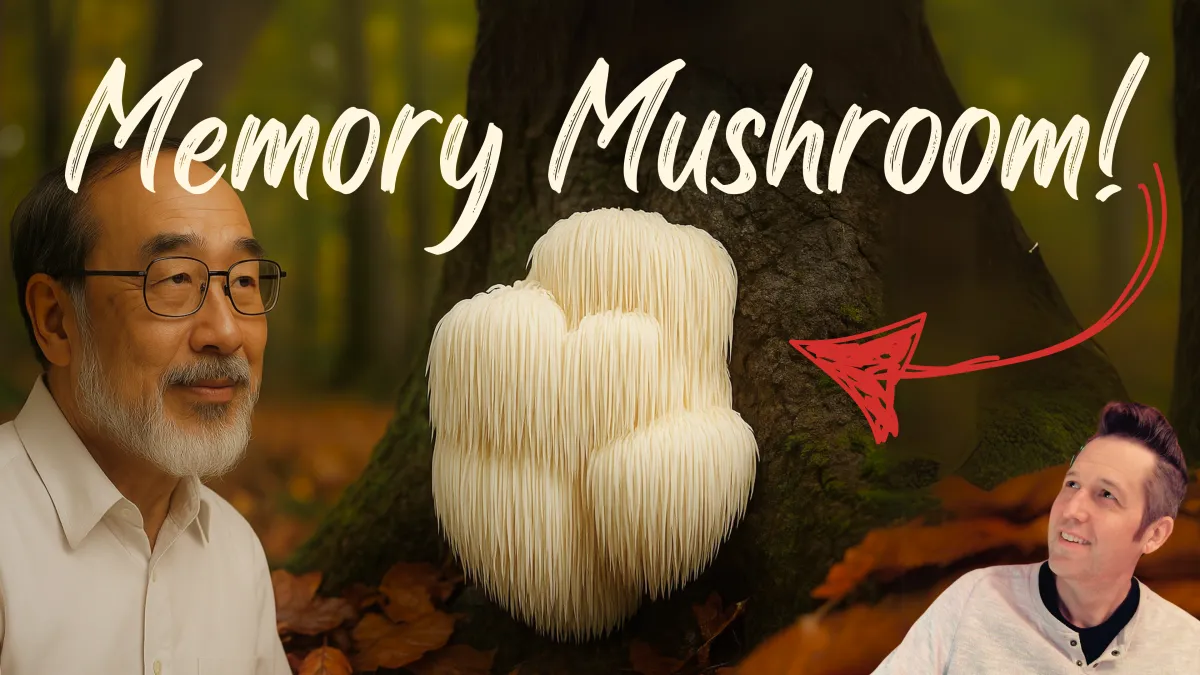
Almost a century ago in China, a young scientist named Shu-Ting Chang looked at mushrooms in a way that would change both his life and the world. He grew up hearing stories from elders about mushrooms that could heal the mind, legends that stayed with him through hardship and change.
Amid war, famine, and political upheaval, Chang imagined mushrooms as tools for renewal, memory, and hope, and he committed himself to unlocking their secrets with science.
Chang was born in 1930 in Goli Village in China’s Chongqi province, a place defined by hardship and resilience. His childhood unfolded in the shadow of conflict and scarcity, where families like his relied heavily on the land and on one another to survive.
In local markets, mushrooms such as lion’s mane were prized not only as delicacies but also as valued medicines, shaping Chang’s early understanding of fungi as both food and healing tools.
Bridging Tradition And Modern Science
After the wars, Chang’s family sent him to Taiwan to pursue a future built on knowledge and opportunity. At National Taiwan University, he immersed himself in botany and microbiology, encountering both ancestral wisdom and cutting-edge science.
He noticed a divide between the healing traditions of his childhood and the modern research he was learning, and this gap became his life’s purpose to bridge.
Chang graduated with top honors in 1953 and then traveled to the United States to earn his master’s degree at the University of Wisconsin. There, he plunged into Western science with the intention of connecting East and West through fungi.
After earning his doctorate in 1960, he turned his gaze homeward and began his career at the Chinese University of Hong Kong, launching work that would influence mushroom science around the world.
The early hardships Chang faced—war, migration, and cultural skepticism—became the roots of his mission. He set out to prove that mushrooms like lion’s mane could heal, nourish, and inspire while standing up to scientific scrutiny.
Armed with both traditional knowledge and academic rigor, he grew determined to share his discoveries far beyond his home country.
Creating A Global Conversation
In 1977, Chang organized the first international training workshop on mushroom technology, sponsored by UNESCO. He brought traditional practitioners and scientists into the same room, creating a rare space where old-world techniques and modern research could meet and evolve together.
By validating folk practices with evidence and mutual respect, he helped build a common language between cultures and disciplines.
One of Chang’s most powerful ideas was simple and brilliant: use agricultural byproducts—things like cotton waste and sawdust—to cultivate edible mushrooms. This approach transformed low-value or discarded materials into nutritious food, blending resourcefulness with scientific rigor and making mushroom cultivation accessible even in economically stressed regions.
He published his findings in both Chinese and international journals, opening doors for global adoption of efficient, low-cost mushroom-growing methods.
Over the years, Chang traveled to 72 countries, training scientists and farmers and sharing methods that reshaped mushroom cultivation on five continents. His seminars and keynote talks promoted the integration of traditional mushroom uses with modern science, inspiring a new generation of researchers and growers.
Among all the species he worked with, lion’s mane stood out for its deep roots in Chinese medicine, its promise for brain health, and its ability to thrive on common, inedible scraps.
Lion’s Mane: From Byproduct To Brain Food
Chang encouraged research into lion’s mane’s effects on memory and cognition, drawing from both ancient wisdom and contemporary scientific findings. He asked a radical question for his time: what if agricultural byproducts could be turned into medicine, not just food?
This vision helped spark focused study on lion’s mane as a mushroom that could potentially support the brain while being grown sustainably and affordably.
In the 1970s and 80s, Chang’s lab became a global hub for mushroom science, especially around lion’s mane. He demonstrated that lion’s mane mycelium could rapidly colonize sterilized sawdust and other agricultural byproducts, reducing dependence on traditional wood logs.
By optimizing substrates, yields increased by up to 60 percent compared to traditional methods, turning once-slow and resource-heavy cultivation into a more efficient, scalable system.
The Science Of Better Substrates
One typical lion’s mane substrate Chang worked with was carefully balanced: 55 percent corn cobs, 20 percent cotton chaff, 20 percent wheat bran, 3 percent cornmeal, 1 percent gypsum, and 1 percent sugar. This mix provided the nutrition and moisture needed for optimal growth, showcasing how precise formulation could elevate yields dramatically.
Switching from logs to sterilized bags cut the time to first harvest from several months to just 6 to 8 weeks, a game-changer for farmers needing reliable, faster production cycles.
Chang didn’t keep these breakthroughs locked away in the lab. He taught them in hands-on workshops, training thousands of growers around the world to adopt efficient, scalable methods.
Lion’s mane’s high enzymatic activity allowed it to break down complex plant materials, making it ideal for sustainable, low-cost cultivation that could thrive almost anywhere.
Compounds That Support The Brain
Beyond cultivation, Chang’s advocacy helped focus attention on lion’s mane’s unique compounds, such as those that stimulate nerve growth and help protect brain cells. These discoveries linked a humble-looking fungus to the cutting edge of brain health research.
As more studies emerged, lion’s mane began to be celebrated for its potential to support memory, focus, and mood, echoing the traditional stories Chang heard as a child.
What The Studies Have Shown So Far
In laboratory studies, lion’s mane extract has been shown to double the length of neuron growth compared to untreated cells, a 100 percent increase. In Alzheimer’s mouse models, supplementation with lion’s mane reduced the time needed to complete memory tasks by 50 percent, indicating significantly improved performance.
Mice given lion’s mane made 36 percent more approaches to novel objects and spent 44 percent longer exploring them, suggesting enhanced recognition memory and curiosity.
In a clinical trial of humans with mild cognitive impairment, those who took lion’s mane for 16 weeks improved their cognitive scores by about 40 percent, compared with roughly 7 percent for the placebo group. In young adults, a single dose led to a 7 percent faster reaction time on cognitive tests within one hour.
Over four weeks, participants reported around 20 percent lower stress compared to their baseline, pointing to potential mood-supportive effects alongside cognitive benefits.
A Prolific Life’s Work
Throughout his career, Chang authored more than 200 scientific articles, wrote or edited 21 books, and organized over 40 international conferences and workshops. His influence helped countless people deepen their expertise in mushroom cultivation, biology, and medicinal use.
Meanwhile, lion’s mane research itself expanded from fewer than 10 papers in 1990 to over 250 by 2024, reflecting a global surge of interest in this remarkable mushroom.
Chang’s methods turned agricultural byproducts into valuable food, helping reduce landfills and pollution risk for millions of people. This approach multiplied the impact of every field and forest by converting waste into nourishment and income.
Since the 1970s, global mushroom production has climbed from under 1 million to over 40 million metric tons per year, a more than 40-fold increase in just five decades.
Jobs, Incomes, And A Growing Market
In part thanks to Chang’s vision and his training work in 72 countries, mushroom farming now supports over 100,000 jobs in the United States alone. In countries like India and Vietnam, smallholder farmers report annual incomes of 20,000 to 50,000 dollars per hectare from mushrooms, often double or triple what they earn from traditional crops.
Lion’s mane, once rare outside Asia, is now a staple in health food stores and kitchens worldwide, with the mushroom market projected to reach 136 billion US dollars by 2032.
Why Lion’s Mane Matters To Me
My own journey with mushrooms began with my grandparents, who taught me how to find them and respect them as more than just ingredients. Today, as a certified forager, gourmet grower, and founder of NourishCap, mushrooms are woven into every part of my life and work.
Now that I take lion’s mane daily, I notice sharper focus and greater mental clarity—benefits that align with the kinds of effects Chang and others have documented in their research.
To me, mushrooms are bridges that connect tradition and innovation, survival and discovery, soil and mind. They carry stories from elders and data from labs, all in the same fruiting body or jar of mycelium.
Chang’s life shows how honoring both ancient wisdom and modern science can turn a humble mushroom into a global resource for nutrition, brain health, and sustainability.
Join The Mushroom Journey
Subscribe to NourishCap's channel and our newsletter to stay up to date on new guides, reviews, and stories for anyone curious about understanding, growing, or working with mushrooms.
Sources Cited
Mushrooms: Cultivation, Nutritional Value, Medicinal Effect, and Environmental Impact, Chang & Miles, 2004. https://sayedmaulana.wordpress.com/wp...
Sokół, S., et al. (2016). Biology, cultivation, and medicinal functions of the mushroom Hericium erinaceus. https://pdfs.semanticscholar.org/eaad...
Seonghun Kim. (2020). Antioxidant Compounds for the Inhibition of Enzymatic Browning by Hericium erinaceus. https://www.ncbi.nlm.nih.gov/pmc/arti...
Mori et al (2009). Improving Effects of the Mushroom Yamabushitake (Hericium erinaceus) on Mild Cognitive Impairment: A Double-blind Placebo-controlled Clinical Trial. https://www.tcm.cz/files/materialy-ke...
Nagano, M., et al. (2010). Reduction of depression and anxiety by 4 weeks Hericium erinaceus intake. https://pubmed.ncbi.nlm.nih.gov/20834180
UQ News (2023). Mushrooms magnify memory by boosting nerve growth. https://www.uq.edu.au/news/article/20...
A Birthday Tribute from the WSMBMP to Professor Shu-Ting Chang (2015). https://www.saas.sh.cn/wsmbmp/newsand...\_38229
Honorary Fellow Citation Professor Chang Shu Ting. https://www.cpr.cuhk.edu.hk/wp-conten...
IMARC Group (2024). Mushroom Market Size, Share Analysis, Growth Report 2033. https://www.imarcgroup.com/mushroom-m...
The Business Research Company (2024). Global Mushroom Market Report 2025. https://www.thebusinessresearchcompan...
Cornford, Charnley (2025). Hericium erinaceus: A possible future therapeutic treatment for the prevention and delayed progression of Alzheimer's disease. https://www.cambridge.org/core/journa...
Brandalise et al (2017). Dietary Supplementation of Hericium erinaceus Increases Mossy Fiber-CA3 Hippocampal Neurotransmission and Recognition Memory. https://pmc.ncbi.nlm.nih.gov/articles...
Docherty et al (2023). The Acute and Chronic Effects of Lion’s Mane Mushroom Supplementation on Cognitive Function, Stress and Mood in Young Adults. https://pmc.ncbi.nlm.nih.gov/articles...


