Healers Grow in Trees Near You: Elm Oyster, Hypsizygus ulmarius
By: Benjamin Ashpole
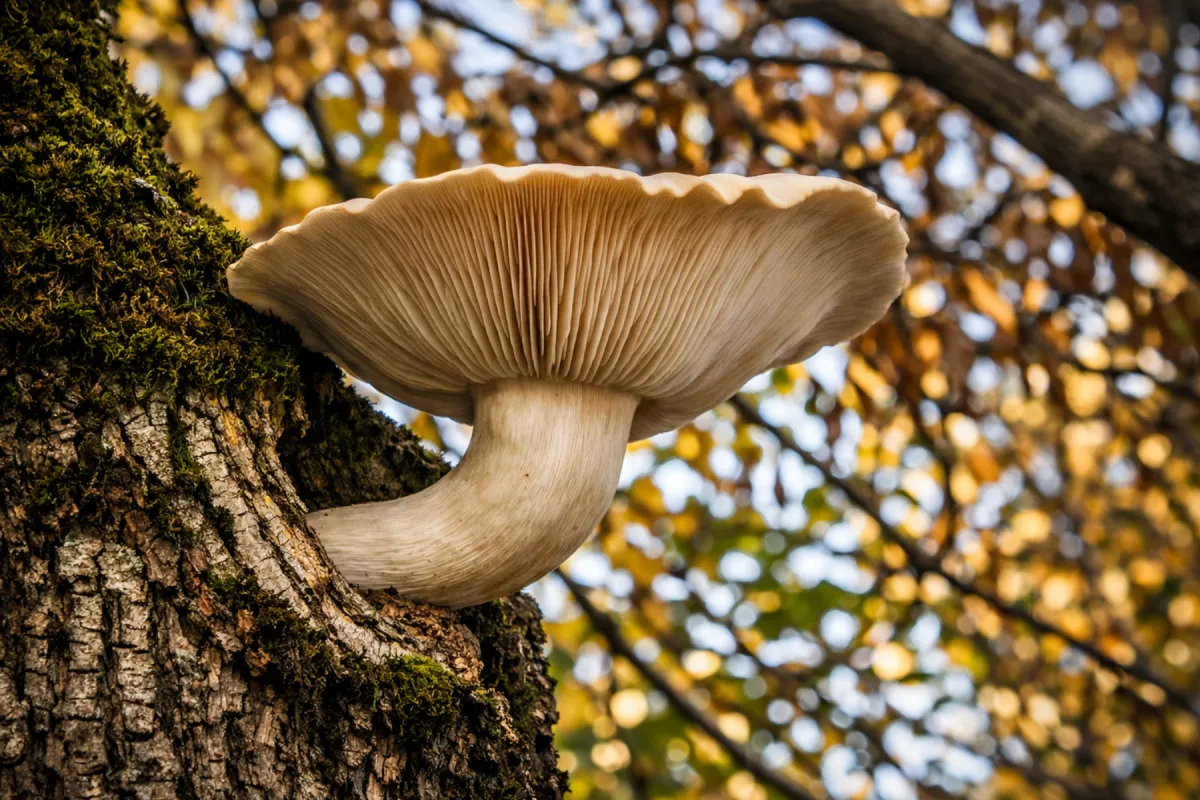
High in dying elm, maple, and beech trees across North America, the Elm Oyster mushroom (Hypsizygus ulmarius) has environmental, medicinal, and culinary properties. Despite its name, this isn't a true oyster mushroom. The Lakota people called it channakpa, meaning "tree ear," harvesting these white-capped clusters from hardwood trunks. As a brown rot fungus with lignin-degrading capabilities, it transforms dead wood into forest-usable nutrients.
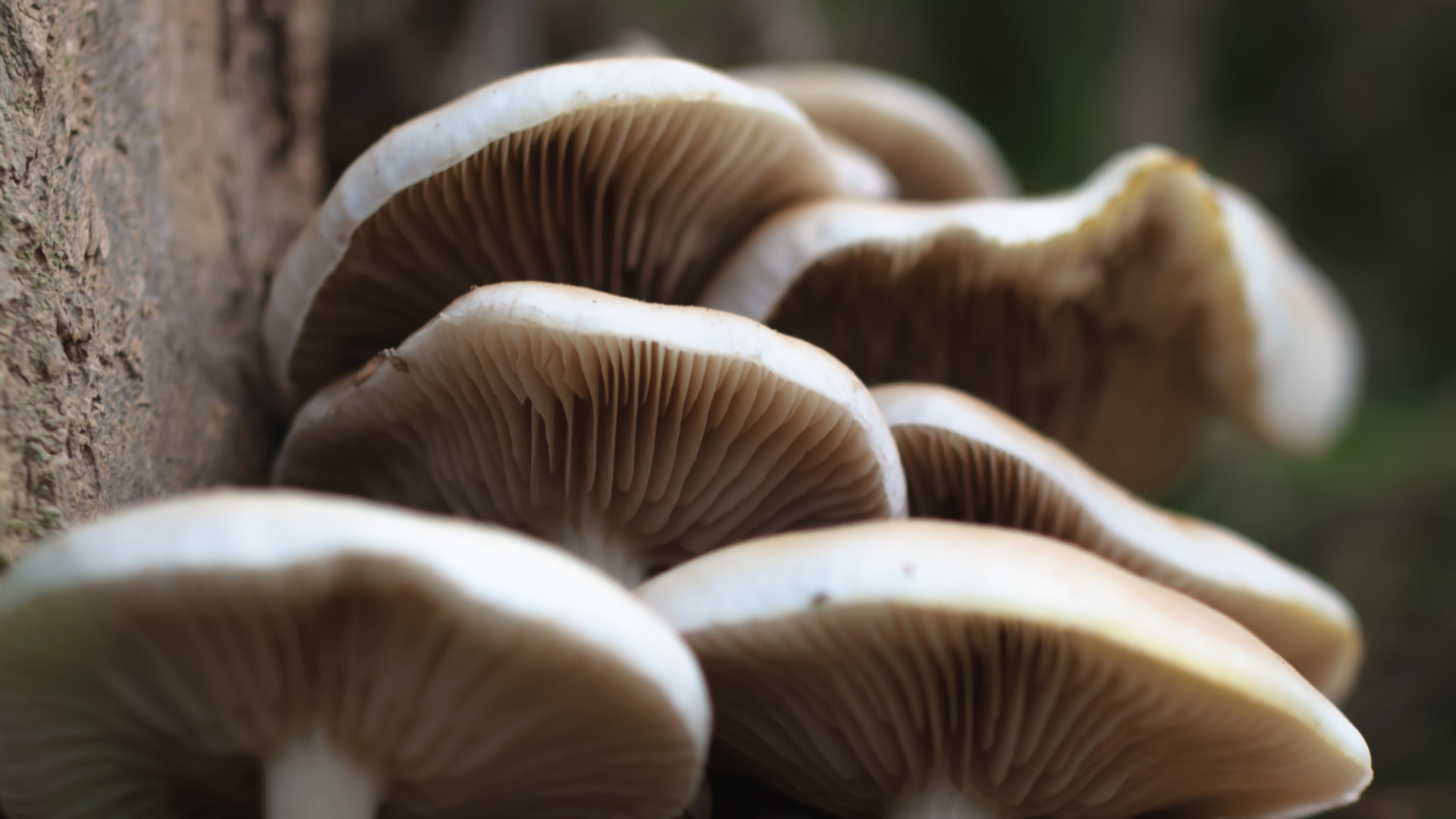
Historically, European and Indigenous communities have foraged Elm Oysters. So far, the species has received less cultivation attention than more famous mushrooms. Modern growers have begun to change that, developing methods to raise Elm Oysters indoors on straw and other farm byproducts. The shift from wild-harvested rarity to cultivated availability reflects growing commercial interest in this mushroom’s health benefits and good flavor.
Scientific research confirms Elm Oysters pack extraordinary nutritional and medicinal value. They contain high beta-glucan levels—compounds lowering cholesterol by triggering gut bacteria to produce fatty acids that reduce liver cholesterol production. Studies document powerful antioxidant effects, with polysaccharides showing 85% inhibition of oxidative stress markers. The mushrooms naturally produce lovastatin, the compound mimicked by prescription cholesterol medications. Research demonstrates hepatoprotective (liver-protective) effects. Additional benefits include immune activation through interferon-gamma, anti-inflammatory properties, and neuroprotective compounds potentially reducing dementia risk. A serving provides B vitamins, potassium, iron, and protein.
Their firm texture makes Elm Oysters exceptional in stir-fries, soups, and meat substitutes. Their nutty flavor intensifies with cooking. Like all mushrooms, Elm Oysters are more digestible after cooking them; heat breaks down their chitin cell walls. People with mold allergies or weakened immunity should consult healthcare providers before consuming mushrooms.
Home cultivation is accessible: they grow indoors on pasteurized straw, achieving biological efficiency exceeding 90%. Suppliers sell ready-to-fruit kits requiring only misting and light, or you can inoculate hardwood logs for outdoor production. Beyond food, Elm Oysters demonstrate mycoremediation potential, with projects using them to help treat soils contaminated by lead and the pesticide chlordane, and projects to test their ability to break down creosote‑treated railway ties.
Join The Mushroom Journey
Peak foraging season runs August through December, but this article provides neither identification guidance nor medical advice. Like most mushrooms, Elm Oysters have some look-alikes. Purchase mushrooms only from trusted vendors and cook thoroughly. Never consume wild-foraged specimens without verification by a human expert. For hundreds of native gourmet and functional mushroom videos, products, and events, subscribe to the free newsletter at NourishCap.com.
Sources Cited
"A Comprehensive Review on Multifunctional Bioactive Properties of Elm Oyster Mushroom." PMC, 25 Dec. 2024, pmc.ncbi.nlm.nih.gov/articles/PMC11782987/.
"Antioxidant, Anti-Inflammatory, and Antitumor Activities of Cultured Mycelium and Fruiting Body of the Elm Oyster Mushroom Hypsizygus ulmarius (Bull.) Redhead (Agaricomycetes)." PubMed, 31 Dec. 2015, pubmed.ncbi.nlm.nih.gov/27481157/.
"Commercial Cultivation of the Elm Oyster Mushroom Hypsizygus Ulmarius." PubMed, 31 Dec. 2021, pubmed.ncbi.nlm.nih.gov/36374985/.
"Edible Mushrooms and Beta-Glucans: Impact on Human Health." PMC, 24 June 2021, pmc.ncbi.nlm.nih.gov/articles/PMC8308413/.
"Effects of Fungal Supplementation on Endurance, Immune Function, and Cognition: A Scoping Review." Frontiers in Nutrition, 24 Oct. 2025, www.frontiersin.org/journals/nutrition/articles/10.3389/fnut.2025.1670416/full.
"Elm Oyster - Hypsizygus Ulmarius." Minnesota Seasons, 19 Jan. 2026, www.minnesotaseasons.com/Fungi/Elm_Oyster.html.
"Elm Oyster Identification - Hypsizygus Ulmarius." Edible Wild Food, 31 Oct. 2024, www.ediblewildfood.com/elm-oyster.aspx.
"Elm Oyster Mushroom." Foraging Texas, 30 Nov. 2014, www.foragingtexas.com/2014/12/elm-oyster-mushroom.html.
"Exploring the Biochemical and Productivity Implications of Cultivation Medium Variation on Hypsizygus ulmarius (Bull.)." Horizone Publishing, 30 Sept. 2024, horizonepublishing.com/journals/index.php/PST/article/view/3012.
"Foraging Elm Oyster Mushrooms (Hypsizygus ulmarius)." Forager Chef, 20 Oct. 2023, foragerchef.com/elm-oyster-mushroom/.
"Hypsizygus Ulmarius." First Nature, 31 Dec. 2021, www.first-nature.com/fungi/hypsizygus-ulmarius.php.
"Hypsizygus Ulmarius." Wikipedia, 29 Apr. 2021, en.wikipedia.org/wiki/Hypsizygus_ulmarius.
"Investigation of Lovastatin from Three Oyster Mushroom Species." Fungi Farm, 4 Jan. 2026, fungifarm.com/oyster-mushroom/investigation-of-lovastatin-from-three-oyster-mushroom-species/.
"Mycoremediation Brings the Fungi to Waste Disposal and Ecosystem Restoration." Mongabay, 14 Sept. 2021, news.mongabay.com/2021/09/mycoremediation-brings-the-fungi-to-waste-disposal-and-ecosystem-restoration/.
"Mycoremediation Project." CommonWealth Urban Farms, 14 Jan. 2013, commonwealthurbanfarms.com/mycoremediation-project/.
"Purification, Chemical, Structural Characterization and Biological Activity of Polysaccharide from Blue Oyster Mushroom Hypsizygus ulmarius." ADS Abstract Service, 31 July 2024, ui.adsabs.harvard.edu/abs/2024BioCB..1419889T/abstract.
"Shimeji." Wikipedia, 7 Sept. 2006, en.wikipedia.org/wiki/Shimeji.
About the Author
Benjamin Ashpole is a certified forager through the Hoosier Mushroom Society, a mushroom educator, and a media producer. Ben writes a widely syndicated column on North American gourmet and functional fungi to inspire mushroom curiosity. As founder of NourishCap.com, he creates educational videos at youtube.com/@NourishCap that demystify everything from forest foraging and home cultivation to the science behind functional and medicinal species. Drawing on years of field experience and ongoing reporting about global fungal science, to support media production, Ben and his team maintain a marketplace of mushroom product vendors and service providers at NourishCap.com so that everyday people can safely benefit from the hidden fungal world around them. Contact Benjamin if you’d like to know more about a specific mushroom, join a foray, request a presentation, or get help with identification at facebook.com/NourishCap. For identification help via Facebook: share pictures of the mushroom’s top, sides, bottom, and habitat along with the name of the closest city and state.


