Growing Here and Worldwide: the Button Mushroom
By: Benjamin Ashpole
If you have seen sliced Button Mushrooms on pizza, you have met one of the most successful “hidden” farm species on Earth. Long before it reached our supermarkets, Agaricus bisporus quietly learned to turn rich compost and manure into food, then followed humans into gardens, caves, and climate‑controlled barns. Today, the same species that pops up from pasture soils around {{contact.periodical_locality}} also underpins a global industry, feeds our immune systems, and anchors home mushroom projects from jars to grow bags.
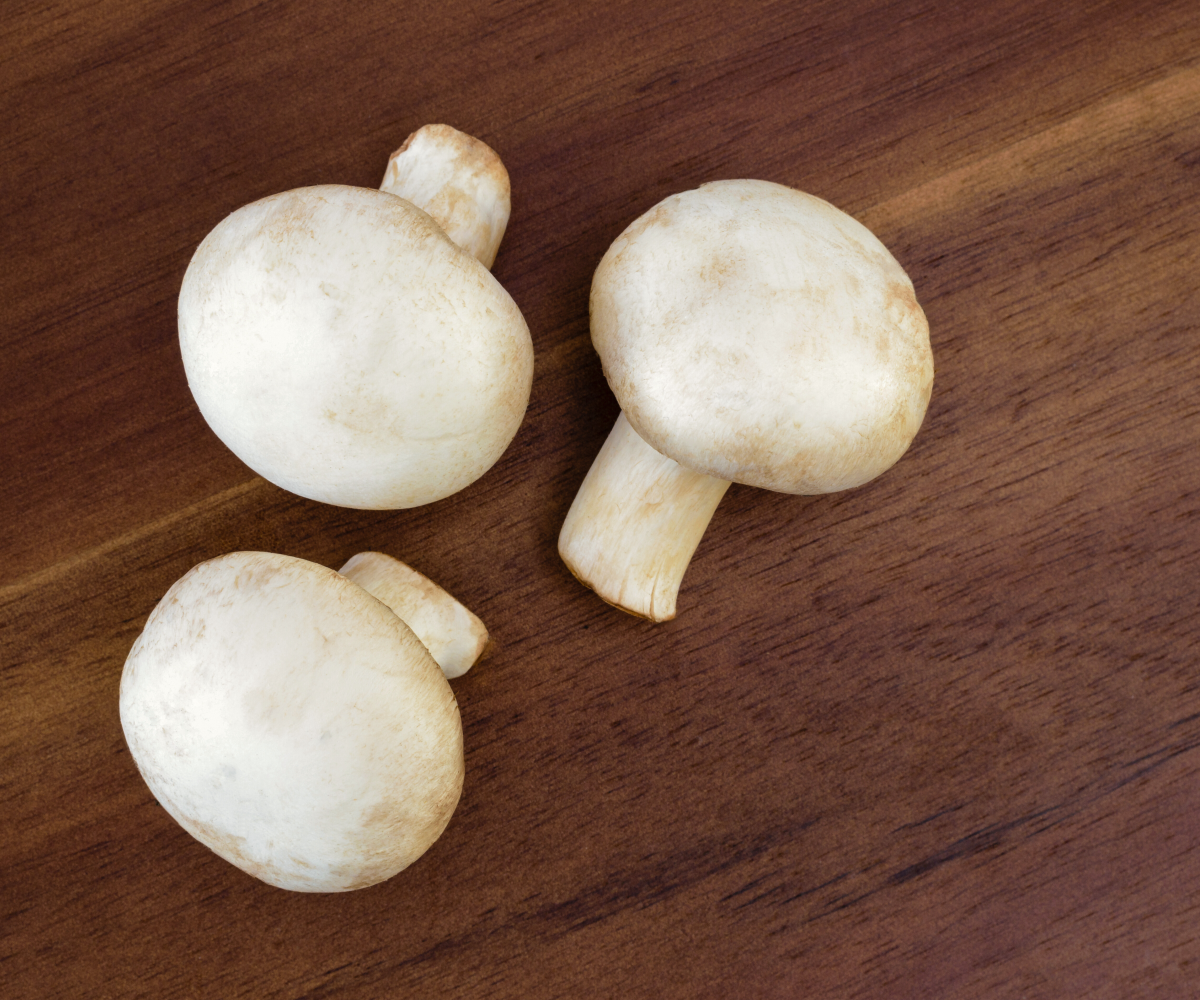
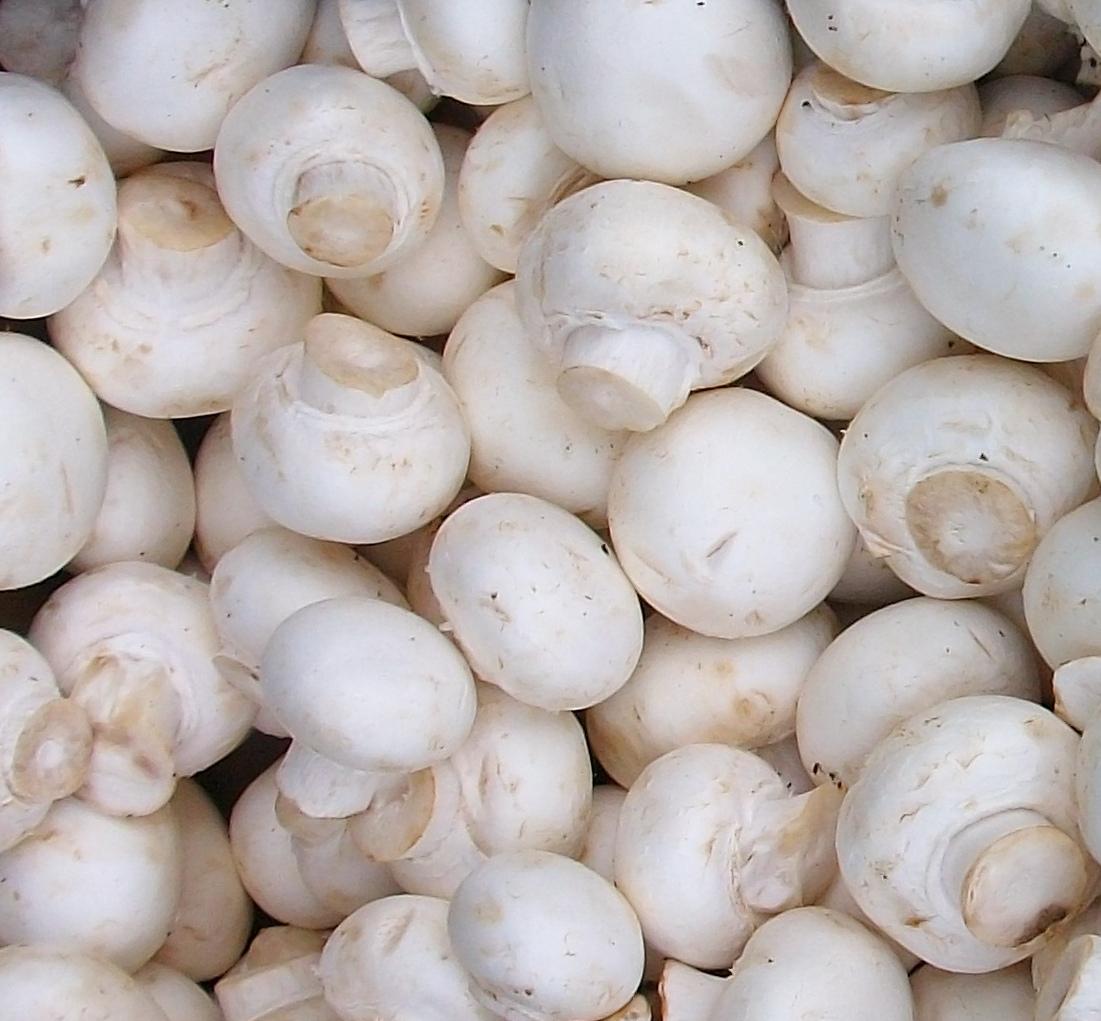
The story starts in 17th‑century France, where growers discovered that this mushroom thrived first in open melon beds, then in the cool limestone quarries under Paris, and spread from there to England and the United States. From those early experiments, modern growers refined indoor composting methods so efficiently that a single species, A. bisporus, now dominates world mushroom production, with a dedicated market valued at roughly 5 to 22 billion dollars globally depending on how you count fresh, processed, and value‑added products.
Nutritionally, this “ordinary” mushroom is anything but plain. A 100 gram serving of fresh Button Mushrooms provides about 20 to 25 calories, several grams of protein and fiber, and meaningful amounts of B vitamins like riboflavin and niacin, plus minerals such as potassium, phosphorus, and selenium. Laboratory and human studies show that its polysaccharides, especially beta glucans, can modulate immune activity, may support healthier blood sugar and cholesterol profiles, and feed beneficial gut microbes that produce short‑chain fatty acids linked to digestive and metabolic health.
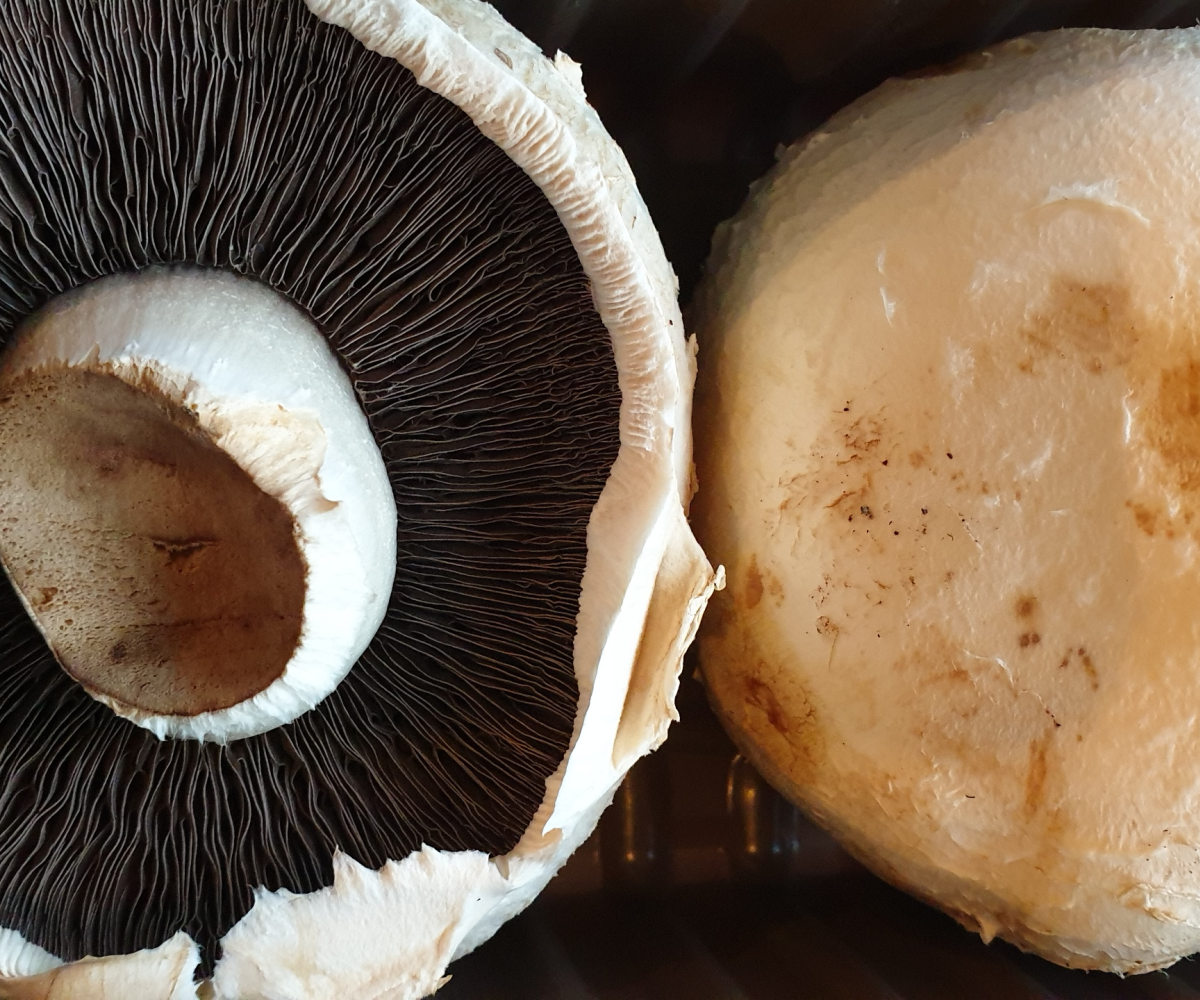
In the kitchen, the same species wears multiple name tags: closed white “button,” brown “cremini,” and broad “portobello” caps. Whether for roasting, grilling, stuffing, or drying into powders and extracts for soups and functional products, these are all the same mushroom species, differing in appearance only due to maturity, light exposure, or cultivar.
For home experimenters, Button Mushrooms can be grown indoors on prepared blocks or kits, in small climate‑controlled tents, or in cool basements that mimic the old quarry caves. Beyond dinner, the mycelium that powers industrial crops is being studied for soil improvement, waste composting, and even as a component in emerging mycelium‑based materials for packaging and insulation.
Join The Mushroom Journey
Peak foraging season for Pheasant’s Back tends to run from spring into early summer, but some specimens fruit through the fall. Remember that this article is not a guide to identifying mushrooms and not medical advice. Always buy mushrooms from reputable sources and cook them well. Never eat foraged mushrooms without a qualified human expert confirming the species in person first. To discover more native gourmet, functional, and practical mushroom videos, products, and events, join the free newsletter at NourishCap.com.
Sources Cited
“Agaricus bisporus.” Wikipedia, en.wikipedia.org/wiki/Agaricus_bisporus.
“History of mushroom cultivation.” Lowimpact.org, www.lowimpact.org/posts/infoarticle/history-of-mushroom-cultivation/.[1]
“Agaricus Bisporus Market Size, Share, Trends & Analysis, 2033.” Market Data Forecast, www.marketdataforecast.com/market-reports/agaricus-bisporus-market.[4]
“Agaricus Bisporus Market Size, Share, Industry Trends and Forecast.” Consa Insights, www.consainsights.com/reports/agaricus-bisporus-market.[2]
“Agaricus Bisporus Market Demand and Growth Opportunities 2024.” USDA Analytics, www.usdanalytics.com/industry-reports/agaricus-bisporus-market.[5]
“All the benefits of the agaricus bisporus mushroom.” HSN, www.hsnstore.eu/blog/nutrition/mushrooms/agaricus-bisporus/.[6]
“White Mushrooms: Nutrition, Benefits, and Uses.” Healthline, www.healthline.com/nutrition/white-mushroom-nutrition.[10]
“β-glucans from Agaricus bisporus mushroom products drive Trained Immunity in vitro.” Frontiers in Immunology, pmc.ncbi.nlm.nih.gov/articles/PMC10902450/.
“Agaricus bisporus (button mushroom).” CABI Compendium, www.cabidigitallibrary.org/doi/full/10.1079/cabicompendium.3500.[12]
“Mushrooms, manure, and the secret of French food.” Parisian Fields, parisianfields.com/2013/08/04/mushrooms-manure-and-the-secret-of-french-food/.
“Warning on False or True Morels and Button Mushrooms with Potential Toxicity Related to Hydrazinic Compounds.” Toxins, pmc.ncbi.nlm.nih.gov/articles/PMC7472412/.
About the Author
Benjamin Ashpole is a certified forager through the Hoosier Mushroom Society, a mushroom educator, and a media producer. Ben writes a widely syndicated column on North American gourmet and functional fungi to inspire mushroom curiosity. As founder of NourishCap.com, he creates educational videos at youtube.com/@NourishCap that demystify everything from forest foraging and home cultivation to the science behind functional and medicinal species. Drawing on years of field experience and ongoing reporting about global fungal science, to support media production, Ben and his team maintain a marketplace of mushroom product vendors and service providers at NourishCap.com so that everyday people can safely benefit from the hidden fungal world around them. Contact Benjamin if you’d like to know more about a specific mushroom, join a foray, request a presentation, or get help with identification at facebook.com/NourishCap. For identification help via Facebook: share pictures of the mushroom’s top, sides, bottom, and habitat along with the name of the closest city and state.


